
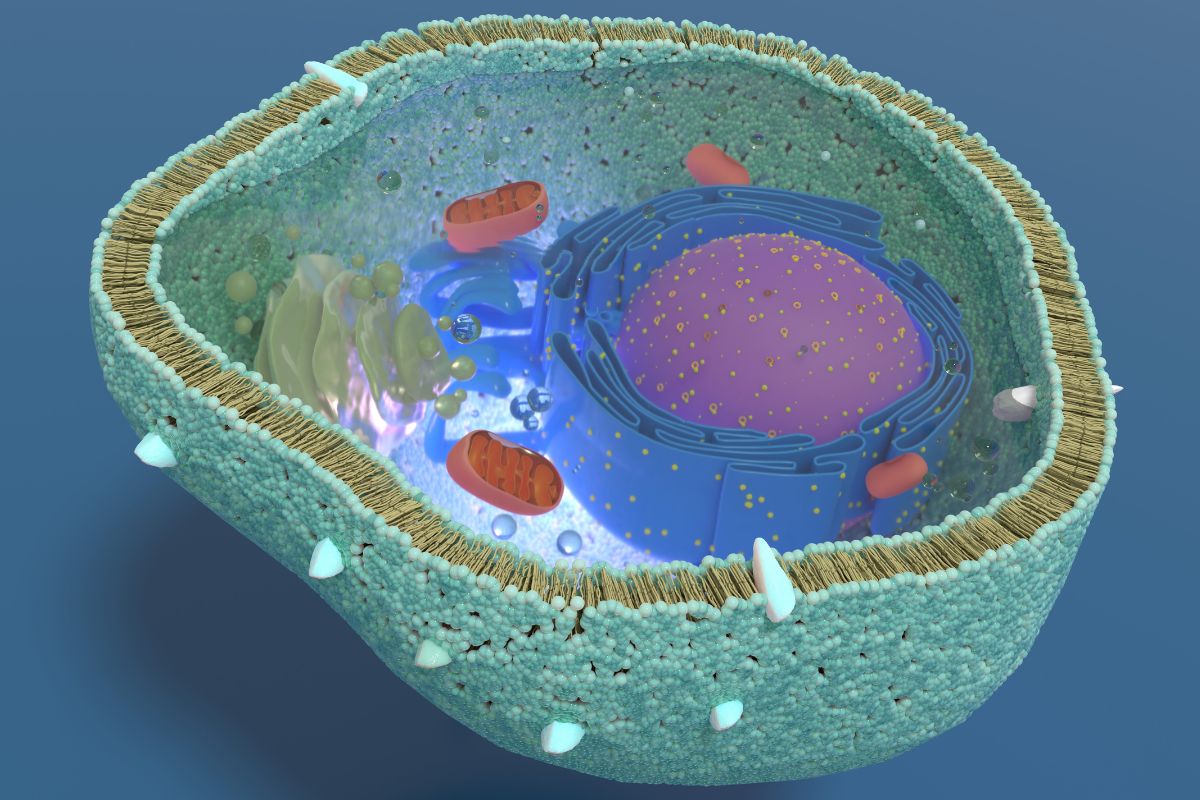
Mitochondria are widely known as the powerhouses of the cell, supplying the energy required for movement, growth, tissue repair and everyday bodily functions. Their activity is not fixed but constantly adapts to changing energy demands and nutrient levels. A new study suggests that a single amino acid, leucine, plays a surprising role in this process.
Researchers led by Professor Thorsten Hoppe at the University of Cologne have uncovered how leucine helps mitochondria work more efficiently. The team found that leucine stabilizes specific proteins on the mitochondrial surface, improving the organelles’ ability to generate energy. The findings were published in Nature Cell Biology under the title Leucine inhibits degradation of outer mitochondrial membrane proteins to adapt mitochondrial respiration.
Leucine as more than a building block
Leucine is an essential amino acid, meaning humans must obtain it through their diet because the body cannot synthesize enough on its own. It is abundant in protein-rich foods including dairy products, meat, beans and lentils. Traditionally, leucine has been associated with building and maintaining muscle tissue.
The new research suggests that leucine’s influence extends beyond protein synthesis. The researchers discovered that leucine helps prevent the breakdown of proteins located on the outer mitochondrial membrane. These proteins act as important gatekeepers, transporting molecules into mitochondria so they can be used for energy production.
By protecting these outer membrane proteins from degradation, leucine allows mitochondria to operate more efficiently. Cells can then increase energy output during periods of nutrient abundance. First author Qiaochu Li noted that cellular energy production responds directly to nutrient status, with leucine levels acting as an important signal.
Quality control protein SEL1L at the center
Researchers traced this effect to a quality-control protein called SEL1L, which helps cells identify and dispose of faulty or misfolded proteins. Protein surveillance is essential because damaged proteins can interfere with cellular function and contribute to disease. SEL1L forms part of this protective system by directing problematic proteins toward degradation.
According to the study, leucine appears to reduce SEL1L activity in a targeted way. When SEL1L is less active, fewer proteins on the outer mitochondrial membrane are broken down. As a result, more of these transport and signaling proteins remain intact, supporting mitochondrial function and increasing respiration.
Li emphasized that deliberately adjusting leucine or SEL1L levels could, in principle, enhance cellular energy production. However, the researchers caution that SEL1L is also essential for removing damaged proteins. Disrupting this balance too strongly could increase energy output in the short term while potentially creating longer-term cellular damage.
Links to fertility and cancer biology
To investigate the broader effects of leucine metabolism, the researchers turned to the microscopic roundworm Caenorhabditis elegans, a widely used model organism in biology. When the worms had defects in breaking down leucine, their mitochondria functioned poorly and fertility declined. This suggests that intact leucine processing is important for reproductive health.
The team also examined human lung cancer cells and identified mutations in leucine metabolic pathways that appeared to support tumor cell survival. These alterations may help cancer cells adapt their energy production to stressful conditions, including limited nutrients or oxygen. The connection could have implications for emerging cancer treatments targeting cellular metabolism.
The findings contribute to growing research showing that nutrients act not only as fuel or building materials but also as regulators of cellular behavior. In this case, leucine acts as a signal that helps adjust mitochondrial respiration in response to nutrient availability. Such signaling may influence how both healthy and malignant cells respond to changing environments.
Implications for disease and future research
By revealing how leucine interacts with SEL1L and mitochondrial membrane proteins, the study opens new avenues for investigating diseases characterized by disrupted energy production. These include some metabolic disorders, neurodegenerative conditions and cancers that rely heavily on altered mitochondrial function. Modulating this pathway could, in theory, help restore a more normal energy balance in affected cells.
Any therapeutic approach would need to be precisely targeted because interfering with protein quality control carries significant risks. Future research will likely examine how particular cell types, including muscle cells, neurons and cancer cells, respond to changes in leucine signaling. Researchers are also interested in whether diet or carefully designed supplements could influence this pathway in people.
The research was funded through Germany’s Excellence Strategy within the framework of CECAD, several Collaborative Research Centres supported by the German Research Foundation, an ERC Advanced Grant focused on protein quality control and support from the Alexander von Humboldt Foundation. Together, these investments are helping researchers clarify how everyday nutrients influence some of the most fundamental processes of life at the cellular level.
