
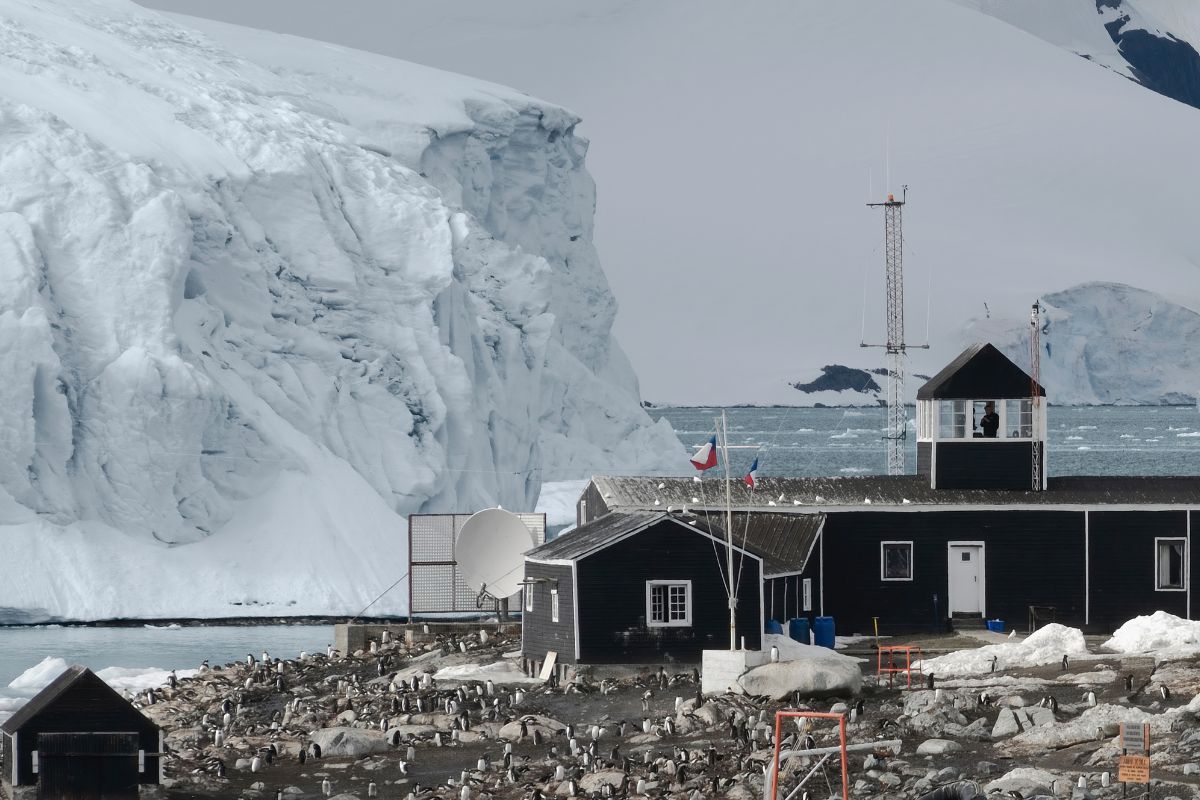
Spending ten months cut off from the world at an Antarctic research station sounds like an extreme test of endurance. For a team of 12 people at the Concordia base, it also became a rare natural laboratory for studying how much contact with others truly supports wellbeing. The findings challenge simple assumptions about loneliness and togetherness.
Humans are often described as social beings who thrive on company and shared experiences. Conversations, friendly encounters and the simple presence of others can improve mood and strengthen a sense of safety. Yet many people also recognize the need to shut the door after a long day and enjoy complete silence for a while.
The line between healthy social contact and overload is thin and highly individual. To better understand this balance, researchers led by Andrea Cantisani and Jan B. Schmutz followed crews overwintering at the remote Concordia Station in Antarctica. Their study, published in Proceedings of the National Academy of Sciences, explored how social ties and wellbeing change under extreme isolation.
Life in an extreme environment
Concordia Station is one of the most isolated inhabited places on Earth. During the long Antarctic winter, months pass without the possibility of traveling in or out, while crews live in a confined environment with harsh weather and limited privacy. These conditions make the station a valuable analogue for long-duration space missions.
In the study, 12 participants were observed over approximately 10 months. Researchers wanted to understand how relationships, trust and emotional wellbeing changed over time in such a closed environment. Rather than relying solely on self-reported experiences, they used technology to capture participants’ everyday interactions.
Crew members wore special sensors that recorded their physical proximity to others throughout the mission. This allowed researchers to compare what participants reported about their social lives with how frequently and for how long they were actually near one another. Four times during the winter, participants also completed detailed questionnaires.
The surveys assessed loneliness, perceived conflicts, mutual trust and how well participants believed the team was functioning. Combining objective proximity data with subjective experiences allowed researchers to build a more detailed picture of social life in confinement. The approach is now being closely watched by space agencies preparing for future missions to the Moon and Mars.
When constant contact backfires
One of the most striking findings involved the sheer amount of social contact. It might seem intuitive that people who spend more time around others would feel less lonely and more integrated. At Concordia, however, the pattern was more complicated and sometimes counterintuitive.
Longer and more frequent periods of close contact were associated with more conflict and greater distrust. Participants who spent substantial amounts of time in close proximity to others also tended to rate their own functioning more negatively. In a cramped station, constant company could become a source of strain rather than comfort.
This does not mean that relationships themselves were harmful or that participants were unsociable. Instead, the findings highlight how limited opportunities for privacy can turn ordinary interactions into a source of stress. Without the ability to withdraw, even otherwise positive contact may become overwhelming over many months.
In everyday life, most people can regulate their social exposure relatively freely. We can meet friends after work and then return home alone, change environments, visit a park, take a weekend trip or simply close a bedroom door. At an Antarctic research station, the ability to regulate contact is far more restricted.
Small groups within the small crew
As the mission progressed, researchers observed another pattern familiar from isolated and extreme environments. Although only 12 people lived at the station, they gradually formed smaller subgroups. Shared cultural backgrounds and language often influenced who preferred to spend time together.
This tendency is not surprising. In demanding or unfamiliar circumstances, people naturally seek out those who feel easier to understand. Companions with similar experiences can strengthen feelings of safety and belonging while providing emotional relief from everyday stress.
Problems can emerge when these close-knit circles begin to replace the identity of the wider team. In a group of only 12 people, dividing into several closed clusters can weaken overall communication and trust. For missions in which safety and success depend on seamless cooperation, such fragmentation can become a significant concern.
Space agencies and polar programs increasingly recognize that technical skills alone are not enough. Crew composition, interpersonal compatibility and conflict-management strategies are also considered important for mission success. Research conducted at Concordia may help refine training, selection and support for future crews.
Is loneliness ever good for us?
The Concordia findings might appear to suggest that social contact is harmful and isolation beneficial, but the picture is more nuanced. The researchers stress that their results do not demonstrate that spending long periods alone is healthy. Chronic loneliness remains strongly associated with poorer mental and physical health.
Several explanations could account for the association between frequent contact and lower wellbeing. People already struggling with their mood or relationships might seek additional interaction in search of support. A high number of encounters may also include neutral or stressful experiences rather than exclusively supportive ones.
The study therefore suggests that simply counting interactions is not enough to understand social wellbeing. Quality, choice and context may matter at least as much as quantity. A small number of supportive, voluntary conversations can be very different from constant compulsory contact in a crowded environment.
Broader research supports this perspective. Large studies have linked strong, meaningful social ties with lower risks of depression and even dementia, while persistent social stress can contribute to anxiety, burnout and sleep problems. For many people, planned solitude can serve as an opportunity for recovery rather than a sign of social withdrawal.
How much contact do we need?
The Antarctic experiment highlights that there is no single answer to how much social contact is ideal. For some people, an evening spent with others brings energy and enjoyment. Others may feel drained after several hours of conversation and need quiet time to recover.
Some people function best when they can regularly alternate between connection and solitude. Moving between social engagement and periods of privacy can provide space to process emotions and maintain balance. In this sense, having the freedom to choose may itself be an important component of wellbeing.
The Concordia study suggests that healthy relationships involve both closeness and boundaries. People need others for companionship and a sense of connection, but they also need opportunities to retreat. Shared activities and teamwork can coexist with silence and personal space.
In a world increasingly concerned about loneliness and social isolation, the findings add an important nuance. Wellbeing may depend not only on how many interactions people have but also on whether they can shape those interactions according to their needs. Being able to decide when to be around others and when to be alone may matter alongside the relationships themselves.
For future explorers traveling to the Moon, Mars or deeper into space, this insight has practical implications. Designing habitats, schedules and psychological support systems that allow both intensive teamwork and genuine privacy could be essential. Lessons learned at the end of the Earth may ultimately help protect crews far beyond it.
