
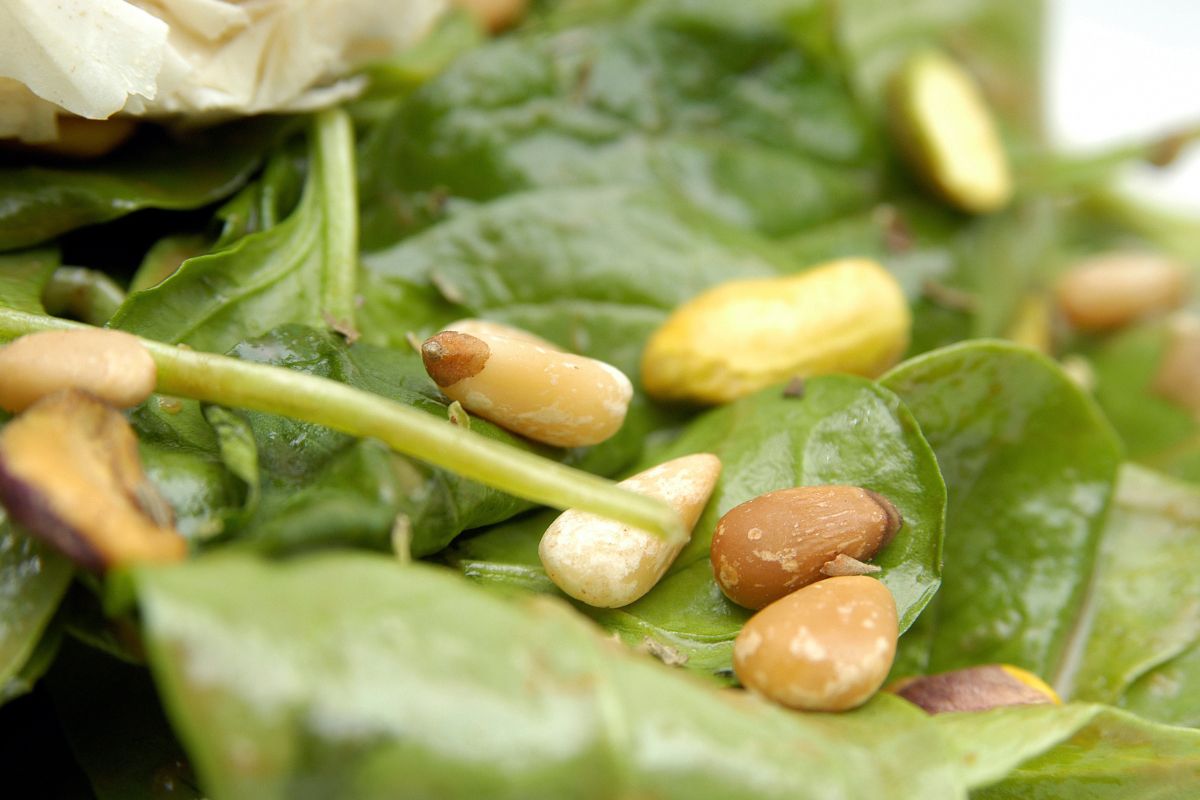
A compound found naturally in spinach, nuts and other plant foods may aggravate inflammation in people with inflammatory bowel disease, according to new research from the University of North Carolina School of Medicine. The findings point to oxalate, long known for its role in kidney stones, as a potential contributor to intestinal damage in susceptible patients.
The study, published in Cellular and Molecular Gastroenterology and Hepatology, was led by dietitian and scientist Anna Salvador in the laboratory of gastroenterologist Shehzad Sheikh. The team combined human tissue analysis, stool testing, dietary assessments, animal models and cell experiments to investigate how oxalate behaves in an inflamed gut. Their findings suggest that oxalate may not simply be a bystander but could actively worsen disease.
How oxalate behaves in the gut
Oxalate is present in plant foods, and in healthy people much of it passes through the intestines and is excreted in stool. This process depends partly on transporter proteins that move oxalate across the intestinal wall. In tissue collected from patients with ulcerative colitis and Crohn’s disease, two of these transporters, SLC26A2 and SLC26A3, were consistently less active.
Lower transporter expression was observed even in areas without obvious inflammation and declined further as tissue damage became more severe. When transport is impaired, more oxalate remains in the gut lumen instead of being efficiently handled and cleared. The researchers propose that this excess oxalate may amplify existing inflammation in the intestinal lining.
Crohn’s patients show higher oxalate
When researchers compared people with Crohn’s disease with individuals who did not have IBD, they found significantly higher concentrations of oxalate in the stool of those with Crohn’s disease. Importantly, detailed dietary questionnaires and DNA-based analysis of plant material found in stool indicated that the two groups were consuming similar amounts of plant foods.
This suggests that the difference may lie not in what patients are eating but in how their intestines process oxalate. According to the authors, this is the first time DNA metabarcoding has been used to assess diet in an IBD population, providing an objective layer of information alongside traditional dietary reporting.
Animal and cell data support the link
To investigate cause and effect, the researchers conducted experiments in mice. Animals fed an oxalate-enriched diet alongside a chemical trigger for colitis were 60% less likely to survive than mice consuming a standard diet.
In mouse strains genetically predisposed to developing spontaneous colitis, additional dietary oxalate caused the disease to appear earlier and progress more severely. Genes responsible for oxalate transport were already suppressed in these animals before oxalate loading, closely reflecting the pattern observed in human tissue.
Laboratory cell experiments provided further evidence of a direct inflammatory effect. Oxalate intensified inflammatory responses in macrophages and dendritic cells, two types of immune cells involved in coordinating immune activity in the gut.
Clues to more aggressive Crohn’s disease
The researchers also examined whether genes involved in oxalate transport might provide clues about how Crohn’s disease progresses over time. In a preliminary analysis, lower expression of another transporter, SLC26A6, was associated with stricturing Crohn’s disease, a form of the condition in which scarring causes sections of the intestine to narrow.
Nearly three-quarters of patients with low SLC26A6 expression had this more aggressive disease pattern. The authors emphasize that larger studies are required to confirm the association, but suggest that oxalate transporter activity could eventually help identify patients at greater risk of severe complications.
Such information might one day allow clinicians to monitor higher-risk patients more closely or develop interventions tailored to the biological mechanisms contributing to their disease.
What this means for IBD diets
The findings do not support eliminating plant foods from the diet, as these foods remain important sources of nutrients and contribute to overall health. Instead, the research suggests that in genetically susceptible individuals with reduced oxalate transporter function, even moderate exposure to oxalate could contribute to intestinal inflammation.
It is possible to maintain a nutritionally adequate, largely plant-based diet while moderating foods particularly high in oxalate, including spinach, beets, rhubarb and certain nuts. However, the authors caution that formal recommendations for restricting oxalate in people with IBD would be premature until larger and longer-term studies determine whether specific dietary changes actually reduce symptoms or disease flares.
The findings therefore point toward a more individualized approach rather than a universal low-oxalate diet for everyone with Crohn’s disease or ulcerative colitis.
Microbiome and future treatment options
The gut microbiome could provide another potential route for reducing oxalate exposure. Certain bacteria, including Oxalobacter formigenes, naturally break down oxalate in the intestine, but these microorganisms appear to be less abundant in people with IBD.
Restoring or increasing populations of oxalate-degrading bacteria could, in theory, reduce intestinal oxalate levels without requiring strict dietary restriction. This raises the possibility that future treatments could target both diet and the microbiome.
Researchers are now discussing studies that would track stool oxalate levels, diet, microbiome composition and markers of inflammation over time in larger groups of patients. The goal is to determine who is most vulnerable to oxalate-related intestinal damage and whether microbiome-based therapies, personalized diets or a combination of the two can meaningfully reduce disease activity.
The research was funded by the Helmsley Charitable Trust, the U.S. National Institute of Diabetes and Digestive and Kidney Diseases, the Chan Zuckerberg Initiative, Schmidt Sciences, the Burroughs Wellcome Fund and other NIH sources. Co-authors from UNC-Chapel Hill, Texas A&M University and Duke University say the findings could help pave the way toward more personalized, mechanism-based dietary advice for people living with Crohn’s disease and ulcerative colitis.
