
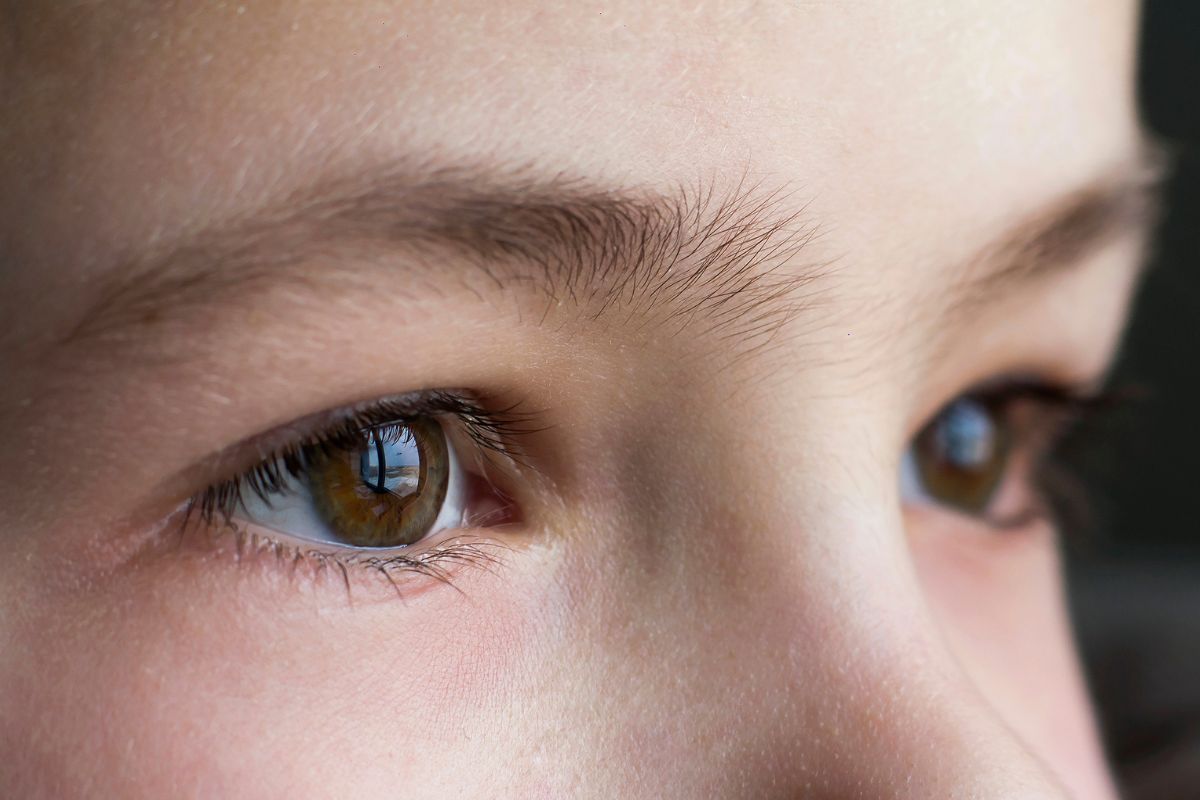
The eyes are often described as windows to the soul, but researchers now suggest they might also reveal the hidden rhythms of attention. In a new study, subtle fluctuations in pupil size differed in children with attention deficit hyperactivity disorder, potentially offering researchers another way to investigate the condition.
ADHD is a common neurodevelopmental disorder characterized by persistent patterns of inattention, hyperactivity or impulsivity that interfere with daily life. Diagnosis currently relies on clinical interviews, behavioral reports and medical assessments, with no single objective test available. Scientists are therefore investigating biological markers that could eventually complement existing diagnostic methods.
How the pupil study was designed
Researchers from the Indraprastha Institute of Information Technology Delhi reanalyzed eye-tracking data from 50 children aged 10 to 12 in Chile. Of these, 28 had combined-type ADHD and 22 had no neurodevelopmental diagnosis and served as a comparison group. None of the participants had been diagnosed with other major neurological conditions.
The children completed a computerized memory task designed to test both working memory and resistance to distraction. They watched dots appear on a grid and attempted to remember their positions. After a distracting image briefly appeared, another dot was shown, and the children had to determine whether it matched a location they had seen earlier.
Each child completed the task 160 times while an eye tracker measured pupil diameter 1,000 times per second. This allowed researchers to examine not only average pupil size but also how responses varied from moment to moment. Statistical models were then used to analyze the measurements while adjusting for age, IQ and task difficulty.
What the scientists discovered
According to model estimates, unmedicated children with ADHD showed approximately 23% greater trial-to-trial variability in pupil responses than children without ADHD. In other words, their pupils responded less consistently each time a similar challenge appeared. Within individual trials, however, their pupil fluctuations were smaller than those observed among their peers.
This contrast suggests that different measures of variability may capture different aspects of attention-related physiology. One pattern could reflect how attention shifts between tasks over time, while another may track moment-to-moment engagement after a task begins. Among unmedicated children with ADHD, greater pupil variability between trials was associated with lower accuracy on the memory task.
The researchers interpreted the findings cautiously. Pupil size is influenced not only by attention but also by light, arousal, fatigue and activity in brain systems involved in regulating alertness. Pupil behavior therefore provides an indirect window into attention rather than a direct measurement of a person’s mental state.
Medication and its complex effects
A subset of 17 children with ADHD completed the task twice, providing insight into how medication might influence pupil dynamics. They performed the task once after a 24-hour break from methylphenidate and again while taking their usual medication. While medicated, their pupils tended to respond more strongly and showed less variability between trials.
Overall, their pupil-response patterns while taking medication appeared more similar to those of the control group. This could suggest greater consistency of attention, although the researchers caution against drawing firm conclusions. Methylphenidate can directly affect nervous system pathways that control the pupils, making it difficult to separate cognitive improvements from physiological effects of the medication itself.
The researchers also lacked detailed information about each child’s dose, specific formulation and exact timing of medication relative to testing. Additionally, the two sessions were separated by an average of about six months, leaving room for natural maturation, practice effects and other life changes to influence the results.
Limits, implications and next steps
Despite sophisticated statistical modeling, some important comparisons between individual participants narrowly missed conventional thresholds for statistical significance after correction for multiple tests. The findings are therefore intriguing but not sufficiently established for clinical use, and the authors emphasize the need for larger studies and independent replication.
The experiment was also conducted in a controlled laboratory setting using a relatively simple visual memory task. Real-world environments such as classrooms and homes are considerably more complex, with competing distractions and emotional influences. It remains unclear whether the same pupil patterns would consistently emerge outside the laboratory.
Even if future research confirms these findings, eye tracking is unlikely to replace clinical interviews, teacher observations or detailed developmental histories. Instead, it could potentially become an additional tool for monitoring how an individual’s attention fluctuates over time or responds to treatments ranging from medication to behavioral interventions.
The study contributes to a broader effort in ADHD research to identify measurable biological signals, including brain-imaging markers, genetic patterns and performance on cognitive tasks. So far, no single biomarker has proved sufficiently reliable for routine diagnosis, and international guidelines continue to recommend comprehensive, multi-step assessments.
For now, the eyes cannot diagnose ADHD, and parents should not expect a quick eye-tracking test in a pediatrician’s office. However, the findings suggest that subtle rhythms in pupil size may reflect the shifting, fading and returning of attention from one moment to another, giving scientists another perspective on a complex condition.
The research was published in Scientific Reports and forms part of continuing efforts to understand the biological mechanisms underlying ADHD and improve long-term outcomes for affected children and their families.
