
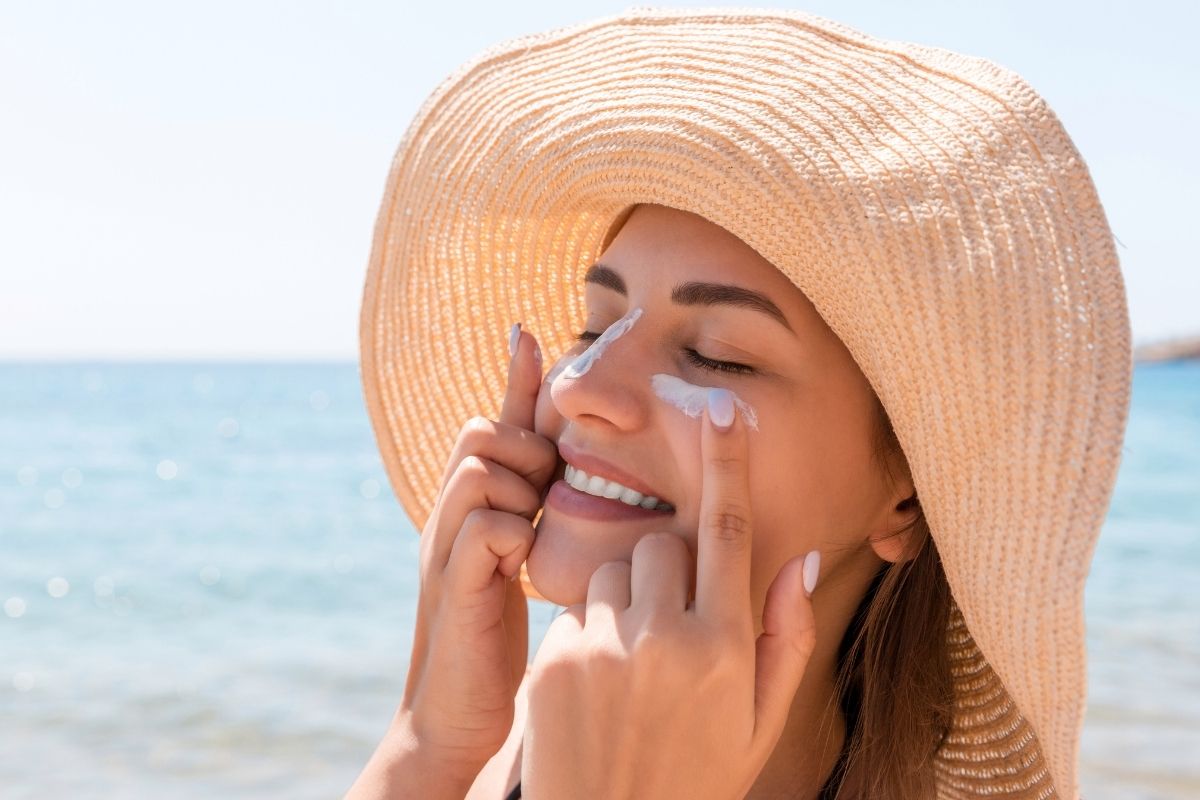
The Sun sustains life on Earth, but its ultraviolet radiation can also damage DNA and contribute to skin cancer. For decades, sunscreen protection in the United States has relied on a relatively limited selection of UV filters, even as newer ingredients became available elsewhere in the world.
That is beginning to change with bemotrizinol, or BEMT, a broad-spectrum UV filter that has been used internationally for more than two decades. Its arrival in the US sunscreen market would represent the first addition of a new sunscreen active ingredient in nearly 30 years, potentially expanding the options available for protection against UVA radiation.
Why bemotrizinol matters
Bemotrizinol is not a new ingredient internationally. Developed in Switzerland in the late 1990s, it has been used since around 2000 in the European Union and subsequently in markets including parts of Asia, Australia and Canada. Its much slower path to the US market reflects differences in sunscreen regulation, with sunscreen active ingredients regulated as over-the-counter drugs in the United States.
One of BEMT’s most important characteristics is its broad absorption across both UVB and UVA wavelengths. This is particularly relevant at the longer-wavelength end of the UVA spectrum, where some filters historically available in US sunscreens provide less protection.
UVA and UVB radiation both reach the Earth’s surface, but their effects on skin differ. UVA penetrates more deeply into the skin and contributes to photoaging, while both UVA and UVB exposure are involved in processes that can contribute to skin cancer.
Expanding the range of available filters could therefore give sunscreen manufacturers greater flexibility to formulate products with strong and stable protection across a broader portion of the ultraviolet spectrum.
How BEMT improves protection
Bemotrizinol provides absorption extending into long-wavelength UVA, including the region approaching 400 nanometers. This can complement other sunscreen filters and help strengthen overall broad-spectrum protection.
Another important property of BEMT is its photostability. Sunscreen filters can lose effectiveness when exposed to sunlight, and some ingredients require additional compounds in a formulation to improve their stability.
Avobenzone, for example, is known to be photounstable when used on its own and is therefore typically formulated with stabilizing ingredients. Bemotrizinol, by contrast, is highly photostable, making it useful both as a UV filter itself and as part of formulations containing other filters.
High photostability does not mean that a BEMT-containing sunscreen can simply be applied once and expected to provide all-day protection. Sunscreen can be removed through swimming, sweating, toweling and ordinary physical contact, so standard recommendations about adequate application and reapplication remain important.
Comfort, safety and the environment
Sunscreen effectiveness in everyday life depends not only on laboratory measurements but also on whether people are willing to apply an adequate amount consistently. Texture, appearance and how a product feels on the skin can therefore influence real-world protection.
Bemotrizinol can be incorporated into formulations designed to provide broad-spectrum protection without necessarily producing the heavy feel or visible residue associated with some sunscreen products. However, the cosmetic properties of a finished sunscreen depend on the entire formulation rather than on a single active ingredient.
BEMT is also a relatively large molecule with limited penetration through the skin, a characteristic relevant to evaluations of systemic exposure. Questions about absorption have received increasing attention after studies showed that several sunscreen active ingredients can be detected in the bloodstream following repeated application.
Detection in the bloodstream, however, does not by itself demonstrate that an ingredient is harmful. Safety conclusions depend on toxicological evidence, exposure levels and regulatory assessment rather than simply on whether measurable systemic absorption occurs.
Environmental effects are similarly complex. Some sunscreen ingredients, including oxybenzone and octinoxate, have raised concerns because laboratory and environmental studies have investigated their potential effects on marine organisms. These concerns have contributed to restrictions on certain sunscreen ingredients in some jurisdictions.
Bemotrizinol may have a different environmental profile, but evidence about its long-term effects across marine ecosystems remains limited. It would therefore be premature to describe the ingredient as environmentally neutral.
Market rollout and public health impact
Bemotrizinol has been developed for the US market under the trade name Parsol Shield by DSM-Firmenich. Bringing a new sunscreen active ingredient through the US regulatory process requires extensive evidence addressing factors including safety, effectiveness and exposure.
Its introduction could eventually allow manufacturers to formulate sunscreens with combinations of filters that have long been available to consumers in other parts of the world.
The potential public health significance extends beyond the properties of the filter itself. Sunscreen is most effective as part of a broader sun-protection strategy that includes seeking shade, wearing protective clothing and limiting excessive UV exposure.
Regular protection beginning early in life is particularly important because ultraviolet damage accumulates over time. Effective sun protection during childhood and adolescence can reduce cumulative UV exposure, although precise estimates of how much any single intervention reduces an individual’s lifetime skin cancer risk vary between studies.
Bemotrizinol therefore should not be viewed as a replacement for existing sun-safety measures or as a filter that makes prolonged sun exposure harmless. Its significance lies in expanding the range of technologies available for creating broad-spectrum, photostable and potentially more cosmetically acceptable sunscreens.
For US consumers, access to BEMT could help narrow a longstanding difference between the sunscreen filters available domestically and those used internationally. If improved formulations provide strong UVA protection while also being pleasant enough for people to use consistently, their greatest advantage may ultimately come from making effective sun protection easier to maintain.
