
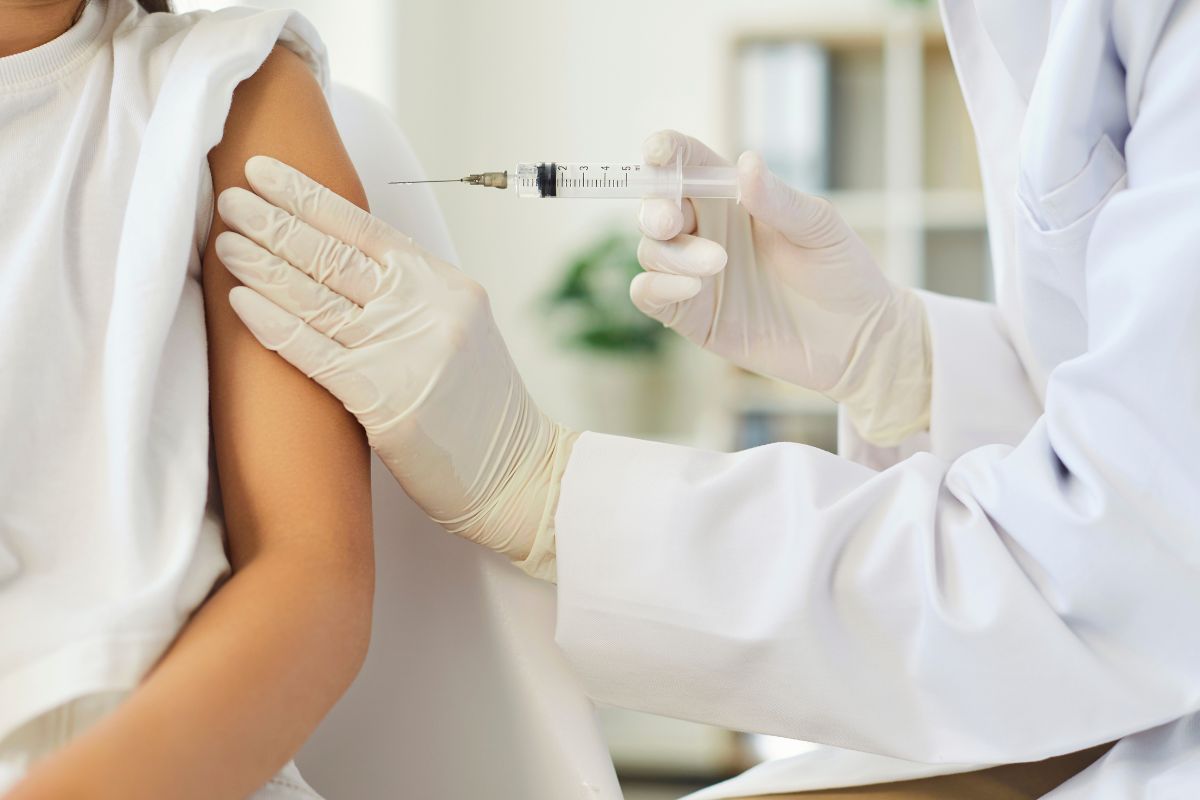
Measles cases in the United States have reached their highest levels in more than three decades, raising concerns that the country could soon lose the measles elimination status it achieved in 2000. Public health experts say declining vaccination rates and sustained local transmission have placed decades of progress at risk.
The growing concern is supported by several recent analyses. Researchers warn that, unless vaccination coverage improves, the United States could lose its elimination certification as early as 2026 after years of increasing outbreaks in undervaccinated communities.
What Measles Elimination Actually Means
Although the United States achieved measles elimination in 2000, that did not mean the virus had disappeared completely.
Jessica Steier, founder of Unbiased Science, told ScienceAlert that elimination means measles is no longer spreading continuously within a country’s borders. Imported infections can still occur through international travel, but strong vaccination coverage and rapid public health responses are expected to prevent sustained transmission.
According to international public health standards, elimination is defined as at least 12 consecutive months without endemic transmission in a specific region, supported by effective disease surveillance.
Experts now warn that this definition may no longer accurately describe the current situation in the United States, where multiple outbreaks involving local transmission have emerged.
Most Recent Cases Were Acquired Locally
Researchers from the Johns Hopkins University Bloomberg School of Public Health report that the majority of the 2,295 measles cases recorded in the United States so far this year were acquired through local transmission rather than imported from other countries or states.
Lauren Gardner, a data scientist involved in the Johns Hopkins measles tracking project, noted that statewide vaccination averages can conceal areas of low vaccine coverage.
Even when overall state vaccination rates appear acceptable, some counties fall well below recommended levels, creating pockets where the highly contagious virus can spread rapidly.
The Pan American Health Organization, the World Health Organization’s regional office for the Americas, is expected to reassess measles elimination status across the region in November as countries continue recovering from disruptions caused by the COVID-19 pandemic.
Meanwhile, researchers from Boston Children’s Hospital and Harvard Medical School recently reported in The Lancet that the United States is on track to lose its measles elimination status in 2026 if current transmission patterns continue.
Declining Vaccination Rates Increase Risk
Public health experts point to declining uptake of the measles, mumps, and rubella (MMR) vaccine as the primary reason for the recent increase in cases.
Although national vaccination coverage has declined only modestly during the past five years, experts emphasize that relatively small decreases can have major consequences when they occur within the same communities.
Gardner noted that unvaccinated individuals are becoming infected at substantially higher rates than those who have received the recommended MMR vaccinations.
To maintain herd immunity against measles, public health authorities recommend that at least 95% of people within each community receive the vaccine. Experts caution that national or statewide averages can be misleading when many local communities remain well below that threshold.
Steier identified declining MMR vaccination coverage as the main driver of the current outbreak. She also pointed to expanding non-medical vaccine exemptions in some states and limited public health resources that make outbreak detection and control more difficult.
Misinformation and Public Health Challenges
Researchers also highlight the continued spread of vaccine misinformation, particularly through social media, as an important contributor to declining vaccination rates.
According to Steier, false claims about vaccine safety have discouraged some families from using what health authorities consider the most effective protection against measles.
Several states have recently debated or introduced changes to school vaccination requirements, with some expanding religious or philosophical exemptions. Public health experts warn that increasing exemption rates can rapidly weaken community protection against highly contagious diseases.
Gardner argues that reversing the current trend will require sustained investment in public health infrastructure, including faster case detection, thorough contact tracing, and stronger community outreach to improve confidence in vaccination programs.
Rebuilding Protection Could Take Years
Both Steier and Gardner emphasize that maintaining measles elimination requires continuous public health efforts, even during periods when case numbers remain low.
Restoring vaccination coverage to recommended levels and regaining official elimination status, if it is lost, may require many years of coordinated work by healthcare providers, public health agencies, and policymakers.
The recent rise in measles cases illustrates how quickly vaccine-preventable diseases can return when immunization rates decline. The upcoming review by regional and international public health organizations is expected to provide an important assessment of whether the United States can interrupt sustained transmission before its elimination status is formally withdrawn.
