
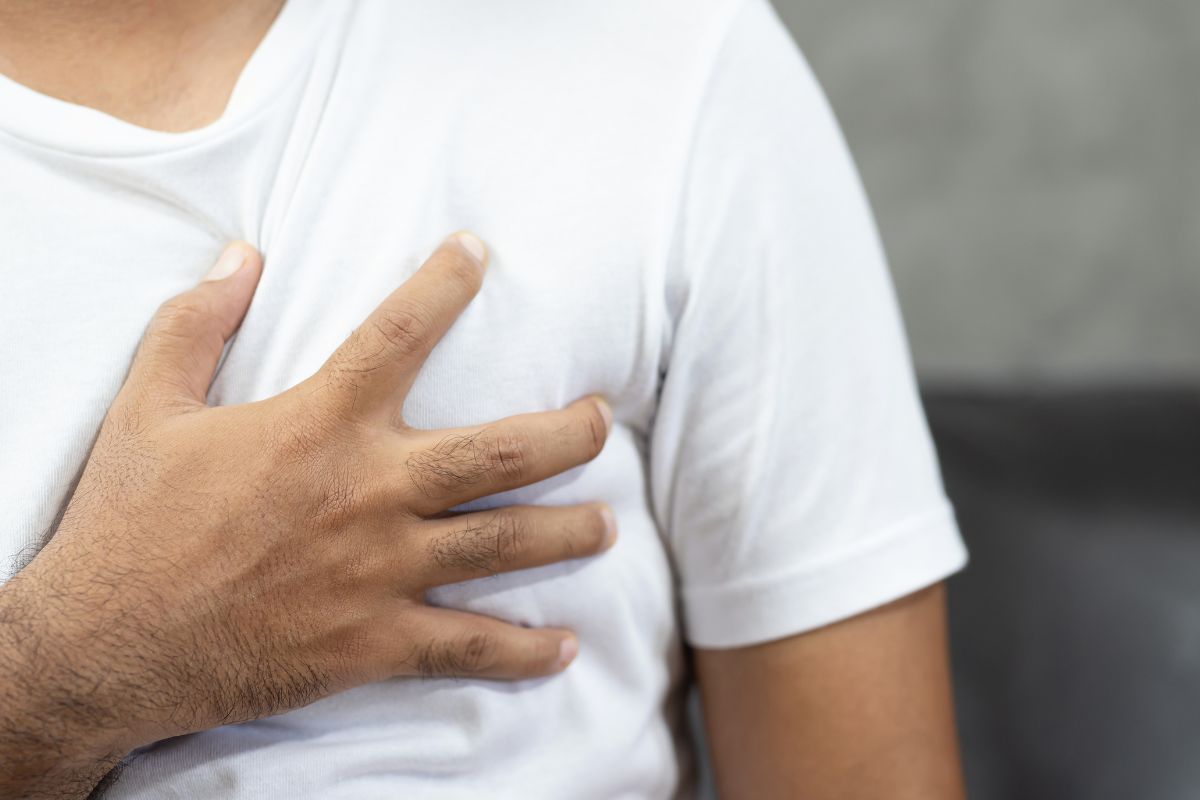
A 65-year-old woman in Europe was admitted to the emergency department after her daughter’s wedding in what physicians describe as an exceptionally rare case of “happy heart syndrome.” She arrived with chest pain and shortness of breath—symptoms that initially appeared consistent with a heart attack.
Doctors urgently evaluated her for a blocked coronary artery, the most common cause of myocardial infarction. Although tests indicated reduced blood flow to the heart, imaging revealed no coronary blockage, leaving clinicians searching for another explanation.
Further examination identified a characteristic ballooning of the left ventricle, the heart’s main pumping chamber. This temporary change in shape weakens the heart’s ability to pump blood effectively and is the hallmark of a condition known as takotsubo cardiomyopathy, also called takotsubo syndrome (TTS).
What Is Happy Heart Syndrome?
Takotsubo cardiomyopathy is most commonly triggered by intense emotional stress, including grief, shock, or interpersonal conflict, which is why it is often referred to as broken heart syndrome. In much rarer cases, however, it can also develop after an intense positive emotional experience, such as overwhelming joy, relief, or celebration—a phenomenon known as happy heart syndrome.
The woman’s symptoms developed in the days following the wedding, and she also reported a milder episode of chest pain several months earlier. Her physicians concluded that both episodes were most likely related to takotsubo syndrome triggered by intense positive emotions rather than by traditional cardiovascular risk factors.
Although takotsubo syndrome is usually reversible, it is not considered harmless. Potential complications include dangerous heart rhythm disturbances, heart failure, blood clots, and, in severe cases, sudden cardiac death. The authors emphasize that even patients who recover completely require careful medical monitoring.
A Condition That Can Mimic a Heart Attack
Takotsubo syndrome closely resembles an acute heart attack. Patients often experience similar chest pain, electrocardiogram abnormalities, and elevated cardiac biomarkers despite having no blocked coronary arteries.
Research suggests that approximately 1% to 3% of patients initially believed to have a heart attack, but later found to have unobstructed coronary arteries, may actually have takotsubo syndrome.
Happy heart syndrome represents only a small proportion of these cases. Available studies indicate that roughly 4% of documented takotsubo cases are triggered by positive emotional events, including weddings, birthday celebrations, lottery wins, or other joyful surprises.
Researchers note that the true frequency may be higher. Because symptoms can be relatively mild or short-lived, some cases may go unrecognized if chest discomfort is attributed to fatigue, anxiety, or indigestion following emotionally significant events.
How Intense Emotions Affect the Heart
Takotsubo syndrome was first described in 1983 at Hiroshima City Hospital in Japan. The name “takotsubo” comes from a traditional Japanese octopus trap, whose distinctive shape resembles the ballooning appearance of the left ventricle observed during the condition.
The precise biological mechanisms responsible for takotsubo syndrome remain incompletely understood. Current evidence suggests that a sudden surge of stress hormones, particularly catecholamines such as adrenaline, temporarily stuns the heart muscle and disrupts its normal pattern of contraction.
Both broken heart syndrome and happy heart syndrome involve activation of the sympathetic nervous system. Researchers suspect, however, that differences in the body’s hormonal response to positive and negative emotional events may influence how the left ventricle changes shape and how severe symptoms become.
Different Patterns, Similar Risks
Cardiac imaging studies suggest that happy heart syndrome more frequently affects the middle or basal portions of the left ventricle, whereas classic broken heart syndrome more commonly involves the apex, or tip, of the heart. These differences may help cardiologists distinguish between subtypes of takotsubo syndrome and other heart conditions.
Although some evidence suggests that happy heart syndrome may be associated with milder symptoms and somewhat better short-term outcomes, experts caution that it should not be considered benign. Both forms of takotsubo syndrome can result in heart failure, blood clot formation, and persistent structural changes if not managed appropriately.
Cardiologist John Madias of the Icahn School of Medicine at Mount Sinai has called for greater awareness of takotsubo syndrome among both healthcare professionals and the public. He also notes that men appear to account for a higher proportion of reported happy heart syndrome cases than is seen with classic broken heart syndrome.
Raising Awareness Among Patients and Physicians
The authors of the case report emphasize that physicians should consider takotsubo syndrome in patients presenting with heart attack-like symptoms, even when traditional cardiovascular risk factors are absent, particularly if symptoms follow an emotionally significant event—whether positive or negative.
Because takotsubo syndrome closely resembles a heart attack, many patients appropriately undergo emergency coronary angiography to exclude life-threatening arterial blockages. Greater awareness of the condition, however, may help clinicians recognize characteristic patterns more quickly and guide appropriate treatment once coronary artery disease has been ruled out.
The 65-year-old woman described in the report ultimately made a full recovery following supportive medical treatment. According to the authors, she remains in good health and looks forward to future family celebrations with a greater understanding of the powerful effects that intense emotions can occasionally have on the heart.
Experts stress that people should not fear experiencing happiness, which is overwhelmingly associated with positive physical and mental health. Instead, they emphasize that recognizing the rare cardiovascular effects of intense emotional experiences may help ensure prompt diagnosis and appropriate care when symptoms occur.
