
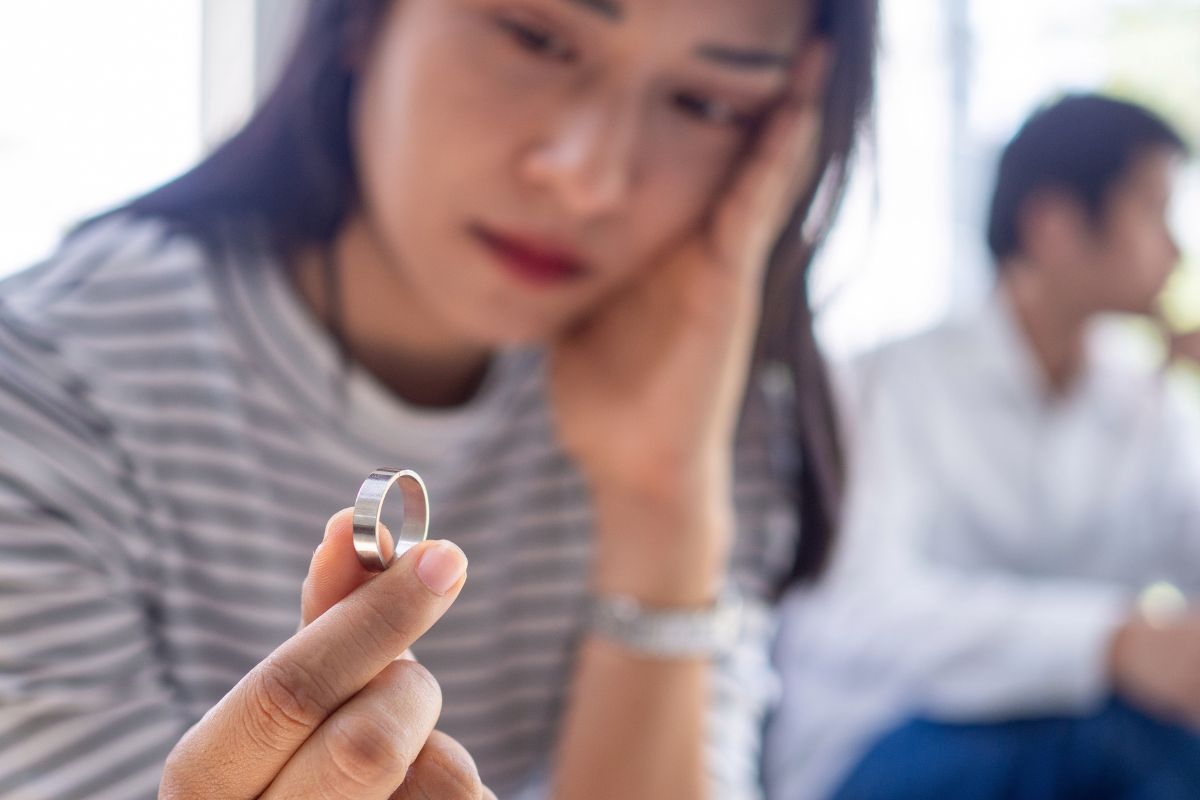
Living in a marriage without love rarely begins with open conflict. Emotional coldness usually develops gradually until indifference and distance become the new, distorted normal. From the outside, such a family may appear stable, but behind closed doors emotional disconnection often dominates.
Partners increasingly behave like housemates managing a shared household and raising children together. Conversations become limited to practical matters, while discussions about feelings, dreams, and future plans gradually disappear. Emotional and physical intimacy often fades over time.
When love gives way to indifference
One sign of this type of marriage is living together without emotional engagement. Couples discuss grocery shopping, childcare schedules, household bills, and home repairs but avoid conversations about their inner lives. Topics involving emotions are quietly pushed aside.
A woman may increasingly feel invisible. Her husband no longer notices changes in her appearance, shows little interest in how her day went, or fails to respond when she feels tired or upset. He may not be openly hostile or abusive, but persistent emotional indifference can gradually erode a person’s sense of being valued.
Over time, affectionate gestures such as hugs, casual touches, and spontaneous expressions of tenderness may disappear. Physical intimacy may cease altogether or become a routine obligation lacking emotional connection. Evenings are often spent separately, with each partner absorbed in a phone, television series, or work, until silence replaces meaningful conversation.
Why many women stay
From the outside, the question, “Why doesn’t she leave?” may seem straightforward. For a woman who has spent five, ten, or fifteen years in such a marriage, however, separation often means acknowledging that a significant part of her life was devoted to a relationship that never brought the happiness she expected.
Hope often remains that things can still improve if she tries harder, becomes more patient, or invests even more effort into the relationship. This emotional investment in the past may keep someone attached to a relationship where mutual affection has largely disappeared, sustained by the belief that one day the partner will suddenly change.
Fear of loneliness and uncertainty may also play an important role. Many women convince themselves that, at 35 or 45 years old, especially if they have children, no one else will want to build a relationship with them. After years of declining self-esteem, the idea of starting over can feel overwhelming.
Financial dependence can make the decision even more difficult. A shared mortgage, high housing costs, maternity leave, or low income may make independent living seem financially impossible. Women may feel forced to choose between emotional emptiness with financial stability or freedom accompanied by economic uncertainty.
Childhood patterns and social pressure
Relationship patterns often begin forming in childhood. If a girl grows up watching her mother spend years living beside an emotionally distant father, that dynamic may become her definition of a normal relationship. In the absence of obvious abuse, addiction, or violence, emotional coldness may appear relatively acceptable.
Another powerful influence is the belief that parents should stay together “for the sake of the children.” Many women convince themselves that children need both parents under one roof, even if warmth and emotional closeness are absent. Family psychologists note that children are often sensitive to emotional tension and distance between parents, and these experiences may influence how they later approach their own relationships.
Social pressure may further reinforce the decision to stay. In smaller communities or more conservative environments, divorce may still be viewed as a personal failure. The desire to preserve the appearance of a successful family for relatives, colleagues, or social media can become another obstacle to leaving an unhappy marriage.
How emotional coldness affects mental health
Living with a partner who rarely expresses love or emotional warmth can become a source of chronic stress. Many women begin searching for flaws within themselves, trying to explain their partner’s indifference. Over time, they may lose confidence in their attractiveness and their belief that they deserve a loving relationship.
Long-term psychological stress has been associated with an increased risk of depression, sleep disturbances, headaches, chronic fatigue, and other stress-related health problems. Although emotional neglect does not directly cause specific illnesses, prolonged stress can negatively affect both mental and physical well-being.
To reduce emotional pain, some people gradually become emotionally detached themselves. Interest in hobbies, career ambitions, personal development, and future plans may diminish. They continue fulfilling the roles of mother, employee, and spouse, but internally may feel increasingly disconnected from themselves.
The first step toward change
Remaining in a marriage without love does not necessarily provide true stability. In some cases, it may involve sacrificing one’s own emotional well-being. Acknowledging the painful reality that “I don’t feel loved here” is often difficult, but many therapists consider honest self-reflection the first step toward meaningful change. Without recognizing the problem, it is difficult to evaluate possible solutions or seek support.
Psychologists often recommend seeking professional help to rebuild self-esteem and better understand available options and personal resources. At the same time, support from trusted friends, family members, or support groups can provide valuable emotional stability without judgment.
Children raised in emotionally distant marriages may carry some of these relationship patterns into adulthood. Choosing to leave a persistently unhealthy relationship can also demonstrate that healthy love does not require constant self-sacrifice or emotional suffering.
Living with an emotionally unavailable partner often requires maintaining the appearance of happiness for the outside world. Letting go of that illusion and choosing emotional well-being instead is rarely easy, but for many people it becomes an important step toward recovery and an opportunity to model healthier relationships for the next generation.
