
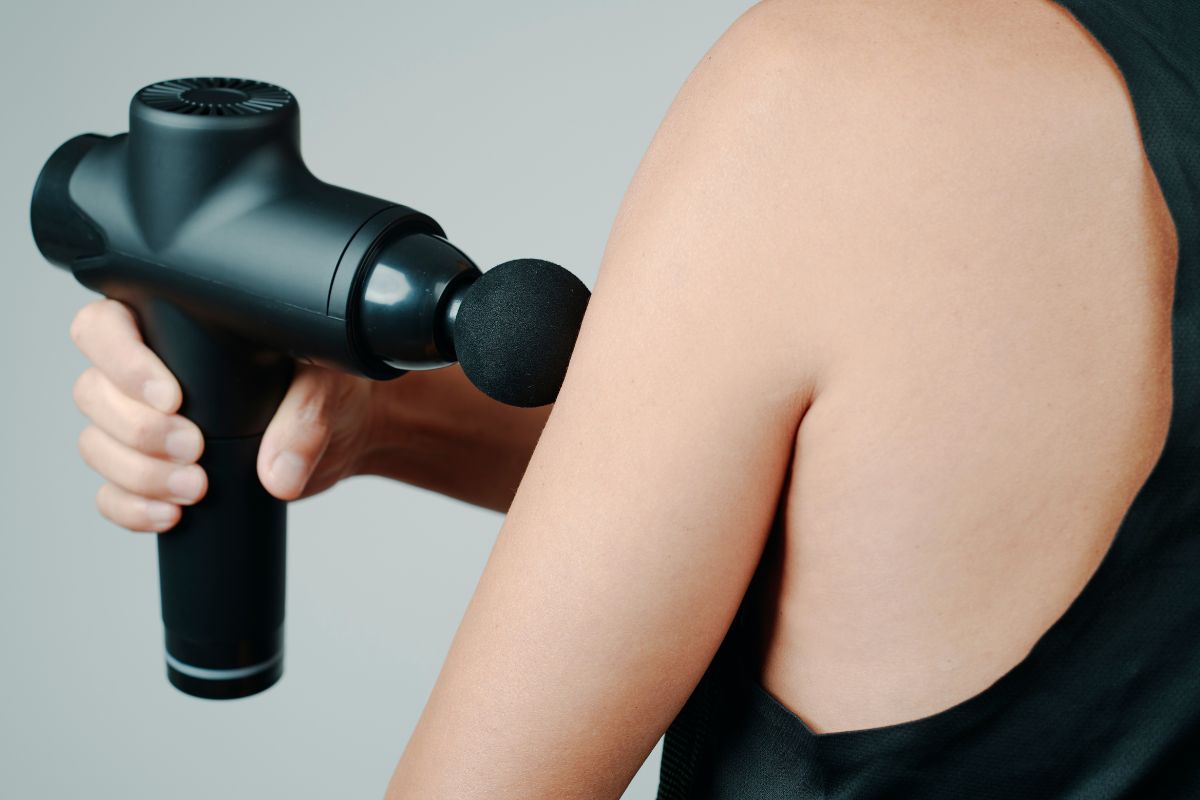
A case report published in BMJ Case Reports by ophthalmologists Niamh O’Connell and Ashraf Khan from the Princess Alexandra Eye Pavilion in the United Kingdom is warning consumers never to use massage guns on or near their eyes. The report describes a man in his 20s who developed multiple retinal injuries after repeatedly placing a percussive massage device directly on his closed eyes to relieve eye strain.
The authors say the case highlights growing concerns about the safety of percussive massage devices, which are widely available but are generally marketed as wellness products rather than regulated medical devices.
Massage Gun Use Led to Serious Eye Injuries
The patient reported using a massage gun approximately once a week for three months in an attempt to reduce eye fatigue. During each session, he applied the device for several minutes both around his eyes and directly over his closed eyelids.
He had no previous eye disease or known medical conditions that would have increased his risk of retinal injury.
Doctors found multiple retinal tears in both eyes, along with commotio retinae, a form of retinal bruising caused by blunt trauma. In his right eye, part of the retina had separated from the wall of the eye, resulting in a condition known as retinal dialysis, which can lead to permanent vision loss if left untreated.
Symptoms Initially Had No Obvious Cause
The man sought medical attention after developing persistent floaters and flashes of light, known medically as photopsia. Because he reported no recent head injury, eye trauma, or family history of retinal disease, clinicians initially struggled to determine what had caused the damage.
Only after doctors specifically asked whether he had used any unusual products or devices around his eyes did the patient reveal that he had been applying a massage gun directly to his eyelids.
According to the authors, this information was essential in identifying the likely cause of his injuries.
Prompt Treatment Helped Preserve Vision
Doctors treated the retinal tears and partial retinal detachment using laser therapy to stabilize the damaged tissue.
Fortunately, the patient sought medical care only six days after his symptoms began, allowing treatment before permanent vision loss occurred. He ultimately recovered without lasting impairment of his eyesight.
The researchers note, however, that previous reports have described people experiencing retinal detachment and reduced vision following massage gun use near the eyes. They believe this is the first documented case involving retinal dialysis together with multiple retinal tears in both eyes linked to a percussive massage device.
Massage Guns Are Designed for Muscles, Not the Eyes
Massage guns, also known as percussive therapy devices, have become increasingly popular among athletes and the general public for relieving muscle soreness and promoting recovery after exercise.
These devices deliver rapid mechanical pulses into soft tissues and are marketed as helping improve circulation, reduce muscle stiffness, and decrease post-exercise discomfort.
Although some research supports short-term benefits when massage guns are used correctly on large muscle groups, most studies have focused on healthy individuals and athletic recovery. There is little evidence supporting their use on delicate parts of the body or for non-muscular conditions.
The authors also point out that many massage guns are sold as consumer wellness products rather than medical devices, meaning they are not typically subject to the same level of regulatory review before reaching the market.
According to the patient, the instruction manual included no clear warning advising users to avoid placing the device on or near the eyes.
Experts Call for Better Safety Information
The case raises broader questions about the regulation of percussive massage devices. Because they are generally not marketed to diagnose or treat medical conditions, safety requirements, product labeling, and usage instructions vary considerably between manufacturers.
The authors note that there is currently no universally accepted guidance regarding safe treatment duration, pressure levels, or body areas suitable for massage gun use.
They also reference another published case in which massage gun use on the thighs was associated with rhabdomyolysis, a serious condition involving the breakdown of muscle tissue that can damage the kidneys.
Medical experts advise avoiding the use of massage guns on sensitive structures such as the eyes, neck, carotid arteries, and areas where bones lie close to the skin. Instead, users should follow manufacturer instructions carefully and use the devices only on appropriate muscle groups.
Doctors Urge Consumers to Seek Prompt Medical Care
The authors say healthcare professionals should routinely ask patients about their use of home wellness devices when investigating unexplained injuries or symptoms, as these products may not be mentioned unless specifically discussed.
They also call for clearer warning labels, improved safety guidance, and additional research into both the benefits and potential risks of percussive massage devices.
For consumers, the message is straightforward: massage guns may be useful for muscle recovery when used properly, but they should never be applied to or around the eyes. Anyone who develops new floaters, flashes of light, blurred vision, or other sudden visual changes after using one should seek immediate medical attention.
As massage guns continue to gain popularity, the authors emphasize that proper education and careful use are essential to preventing avoidable injuries.
