
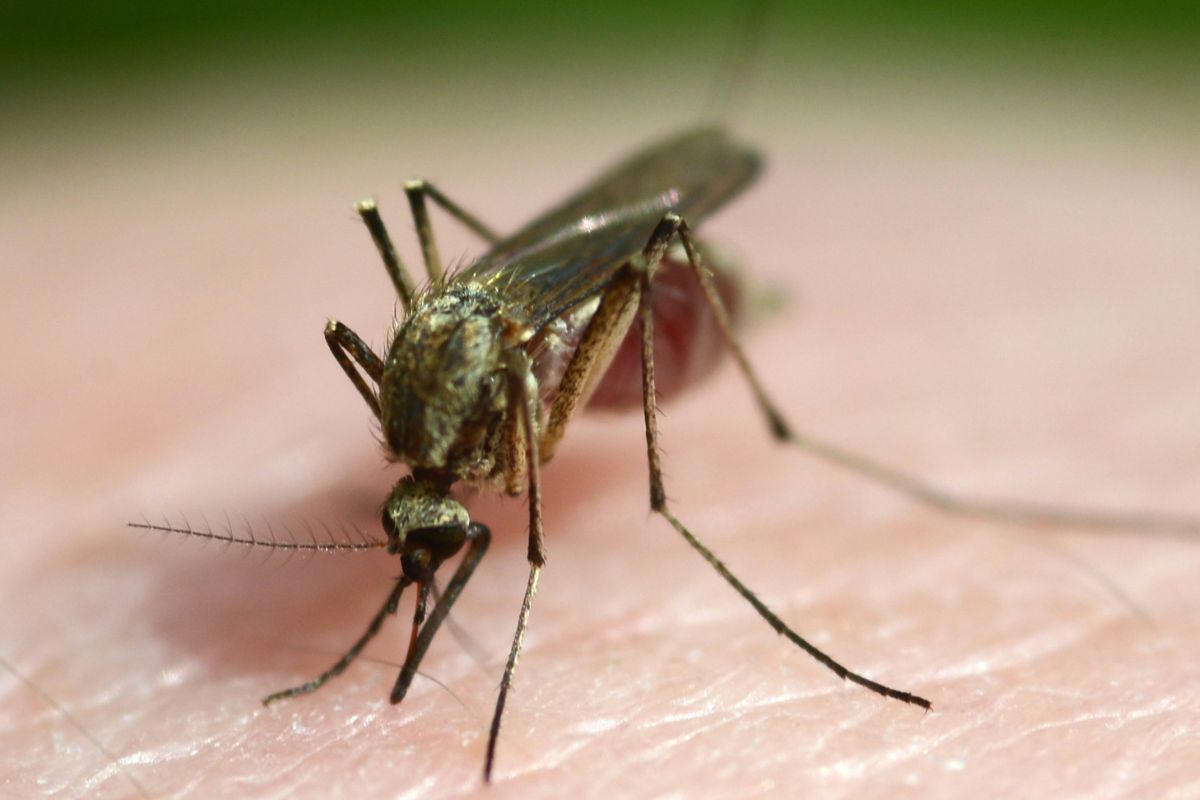
Many people feel they are singled out by mosquitoes while others nearby escape with barely a bite. New research is helping explain why some individuals consistently attract more mosquitoes than others.
Scientists now agree that the effect is real, although it is not constant. Mosquitoes respond to a combination of signals that change over time, including skin odors, exhaled carbon dioxide, body heat, and surrounding humidity.
How Mosquitoes Find Their Targets
Only female mosquitoes bite because they require blood to produce eggs. They use highly sensitive receptors to detect human cues and quickly decide which person to approach.
At distances of several dozen meters, mosquitoes are primarily attracted by carbon dioxide in human breath. As they move closer, body odor becomes increasingly important, working together with CO₂ to guide them toward specific individuals.
During the final stage of approach, body temperature and moisture help mosquitoes locate exposed skin. This layered detection system explains why some people are bitten more often, especially during physical activity or in hot weather.
No Evidence For The Blood Type Theory
Several popular beliefs about mosquito preferences are not supported by current evidence. Studies have not found convincing proof that mosquitoes consistently favor one blood type over another.
Researchers have also found no reliable links between mosquito attraction and skin color, eye color, or hair color. These visible characteristics appear far less important than the chemical compounds naturally released from the skin.
Instead, scientists focus on odor. Human skin and its microbiome produce hundreds of volatile compounds, some of which appear especially attractive to mosquitoes, while others may be neutral or even repellent.
Skin Chemicals And Pregnancy
Recent laboratory research involving Aedes aegypti mosquitoes, which can transmit dengue and yellow fever, examined how the insects responded to the scent of 42 women. Researchers identified 27 odor compounds that mosquitoes could reliably detect.
Women who attracted the most mosquitoes, including several in the second trimester of pregnancy, produced higher levels of a compound released when skin oils break down. Even modest increases in this chemical significantly increased mosquito attraction.
The compound, called 1-octen-3-ol, or “mushroom alcohol,” has long been recognized in animal scent research. The findings suggest it may play an important role in helping mosquitoes identify preferred human hosts.
Alcohol, Climate, And Mosquito Attraction
Lifestyle factors can also influence mosquito attraction. Studies conducted in Africa and Europe found that drinking beer can make people more attractive to Anopheles mosquitoes, which are responsible for spreading malaria.
Beer consumption may increase body temperature and carbon dioxide production while also altering skin odor. In one Dutch study, participants who had consumed beer within the previous 24 hours were about 35 percent more attractive to mosquitoes than non-drinkers.
The importance of this research is growing as climate change and global travel allow mosquitoes to expand into new regions. Species such as the Asian tiger mosquito, capable of transmitting chikungunya, are now appearing in parts of Europe where they were previously uncommon.
How To Reduce Mosquito Bites
Understanding the chemistry behind mosquito attraction may eventually lead to more effective repellents and traps. For now, experts recommend relying on proven protective measures.
Loose-fitting, long-sleeved clothing, insecticide-treated bed nets, and approved insect repellents remain among the most effective ways to prevent bites. Avoiding excessive alcohol consumption, limiting outdoor activity during peak mosquito hours, and reducing overheating may also help.
As researchers continue to identify the scent profiles that attract mosquitoes, people who seem to be mosquito magnets may eventually benefit from more personalized prevention strategies. The goal is to transform these discoveries into better tools for reducing both nuisance bites and mosquito-borne diseases.
