
Major depressive disorder (MDD) is a common and serious mental health condition that affects how people think, feel, and function in everyday life. It is already a leading cause of disability worldwide, and researchers predict it could become one of the most widespread and costly illnesses by 2030. Although many antidepressant options exist, choosing the right treatment is often difficult. Nearly one in three patients do not improve after their first prescribed medication, leaving many to endure months of trial and error.
A major reason for this uncertainty is the lack of reliable and objective tools that can help clinicians predict which treatment is most likely to work for a particular patient. In most cases, decisions still rely on symptoms, medical history, and clinical experience rather than biological indicators. A study published in General Psychiatry examined whether a traditional Chinese medicine (TCM) could be as effective as a standard antidepressant and whether brain imaging could help forecast who benefits most from each approach.
Comparing a traditional herbal remedy with a standard antidepressant
Researchers ran a randomized, double-blind, placebo-controlled clinical trial involving 28 outpatients diagnosed with MDD at the Fourth People’s Hospital of Taizhou. In this type of study, participants are randomly assigned to groups, and neither patients nor researchers know who receives which treatment, helping limit bias. A placebo-controlled design allows scientists to distinguish real treatment effects from placebo responses.
Participants were split into two groups. One group received Yueju Pill, a traditional Chinese herbal medicine, plus a placebo version of escitalopram. The other group received escitalopram, a widely used antidepressant, plus a placebo version of Yueju Pill. This setup allowed the team to compare outcomes under similar conditions.
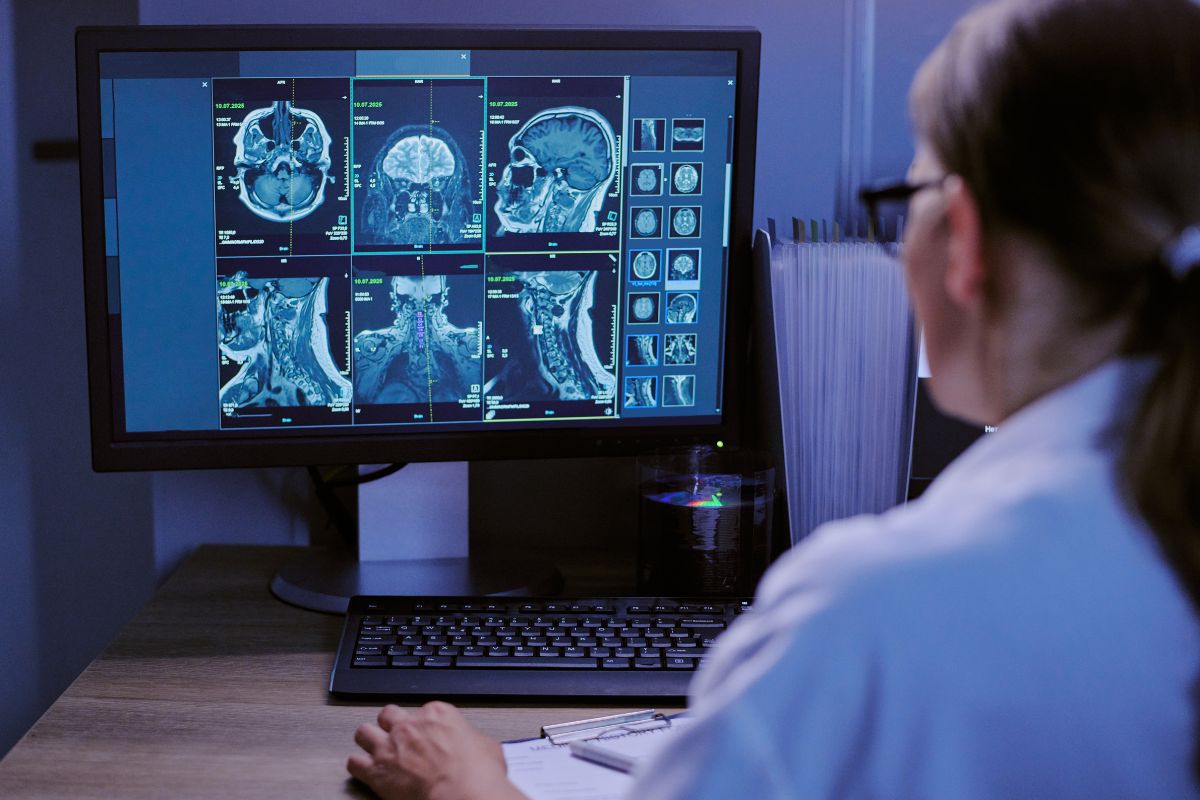
To measure changes in symptoms, the researchers used the 24-item Hamilton Depression Rating Scale (HAMD-24). They also collected blood samples and conducted MRI scans to assess biological and structural brain changes linked to treatment response.
Similar symptom relief, but different biological signals
After treatment, both groups showed improvement in depression symptoms, suggesting Yueju Pill and escitalopram produced comparable clinical benefits in this small sample. However, a notable biological difference appeared in blood tests. Only the Yueju Pill group showed a significant rise in serum brain-derived neurotrophic factor (BDNF), a protein involved in supporting neuron growth, connectivity, and mood regulation. Previous research has associated lower BDNF levels with depression, making this increase an important finding.
The MRI results offered additional clues. The team found that patterns within networks of brain structures could help predict changes in depression scores in both treatment groups. These networks reflect how brain regions are organized and how their features relate to one another.
Even more distinct patterns emerged among patients who took Yueju Pill. In that group, certain brain features—based on sulcus depth and cortical thickness, which describe aspects of brain surface folding and the thickness of the brain’s outer layer—were specifically linked to who improved most. Further analyses suggested the brain’s visual network played a particularly strong role in predicting both symptom improvement and BDNF increases in the Yueju Pill group.
A step toward more personalized depression care
Together, the results suggest that MRI-based brain network patterns may help predict how individual patients with MDD will respond to Yueju Pill treatment. More broadly, the research supports the idea that brain imaging could help move depression treatment away from purely symptom-based decisions and toward more personalized approaches.
If confirmed in larger studies, such tools could help clinicians better match patients to therapies with a higher likelihood of success, reducing delays and improving outcomes. The researchers suggested that brain-network data could be used in predictive models to estimate treatment response and guide whether a patient is a good candidate for Yueju Pill.
The study adds to growing evidence that combining traditional remedies with modern brain imaging may offer new pathways toward precision treatment for depression.
