
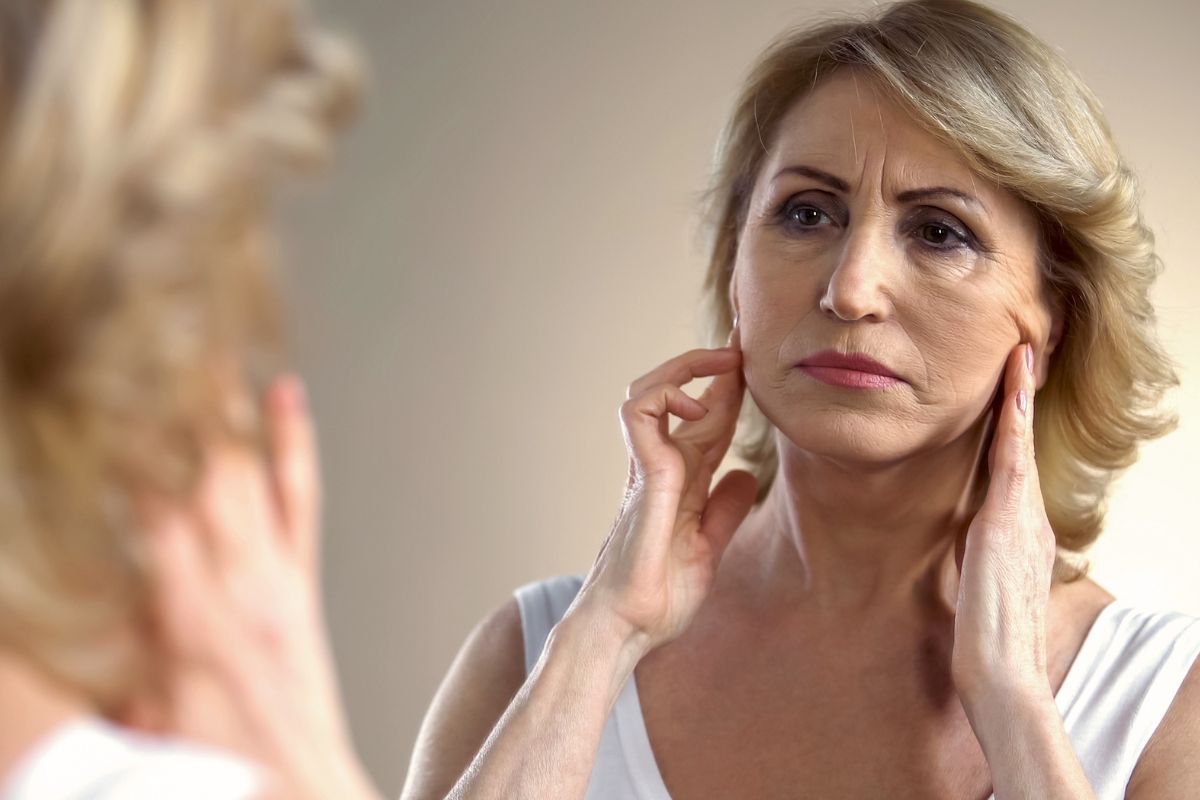
Feeling anxious about getting older—especially fearing a decline in health—may do more than affect your mood. A study from NYU’s School of Global Public Health suggests that, for women, these worries may be linked to faster biological aging as measured in the blood.
The research, published in Psychoneuroendocrinology, points to a connection between psychological experiences of aging and biological processes in the body. The authors say their findings add to growing evidence that chronic stress and distress can influence health in measurable ways.
“Our research suggests that subjective experiences may be driving objective measures of aging,” said Mariana Rodrigues, a PhD student at NYU and the study’s first author. She added that anxiety about aging may not be only a psychological issue, but one that could leave biological traces with potential health implications.
Many adults worry about aging, including concerns about illness, physical decline, and loss of independence. Previous research has linked long-term psychological distress to changes in epigenetics—chemical markers that influence how genes are switched on or off—which can be used to estimate biological age.
Rodrigues noted that while anxiety and depression have long been tied to physical health outcomes, researchers have paid less attention to whether worrying specifically about aging is associated with the aging process itself.
Why aging anxiety may be stronger in women
The researchers suggest women may be particularly vulnerable to aging-related anxiety due to social pressures around youth and appearance, as well as concerns connected to fertility and life transitions during midlife.
Midlife can also bring expanding caregiving responsibilities, such as supporting aging parents. Seeing close relatives become ill or frail may heighten fears about experiencing similar health problems later on, according to Rodrigues.
How the study measured biological aging
To explore the link between aging anxiety and biological aging, the team analyzed data from 726 women enrolled in the Midlife in the United States (MIDUS) study. Participants reported the extent to which they worried about becoming less attractive, developing health problems as they aged, or being too old to have children.
Researchers also analyzed blood samples using two widely used “epigenetic clocks.” One method estimated the pace of biological aging (DunedinPACE), while another assessed cumulative biological damage over time (GrimAge2).
Women who reported higher overall anxiety about aging tended to show faster aging based on the DunedinPACE measure. Earlier studies have associated accelerated epigenetic aging with physical decline and an increased risk of age-related disease.
Not all worries were equally related to biological aging. Concerns about health decline showed the strongest association with faster aging. In contrast, worries about appearance and fertility did not show a significant link to epigenetic aging in this analysis. The researchers suggest health concerns may persist longer, while worries related to beauty and reproduction may decrease as people get older.
What the findings do—and do not—prove
The authors say the results reinforce how closely mental and physical health are connected, even though they are often treated as separate issues.
“Our research identifies aging anxiety as a measurable and modifiable psychological determinant that seems to be shaping aging biology,” said Adolfo Cuevas, an associate professor at NYU and the study’s senior author.
However, the researchers caution that the study represents only a snapshot in time. It cannot prove that aging anxiety causes faster biological aging, and other factors may be involved. Certain coping behaviors linked with anxiety—such as smoking or alcohol use—could partly explain the relationship. When the researchers adjusted for these health behaviors, the association weakened and was no longer statistically significant.
The team says more research is needed to clarify how aging-related anxiety might influence long-term biological aging and what types of support may be most effective in helping people manage these fears.
“Aging is a universal experience,” Rodrigues said. “We need to start a discourse about how we as a society—through our norms, structural factors, and interpersonal relationships—address the challenges of aging.”
The study was coauthored by Jemar R. Bather and supported by funding from the National Institute of Diabetes and Digestive and Kidney Diseases.
