
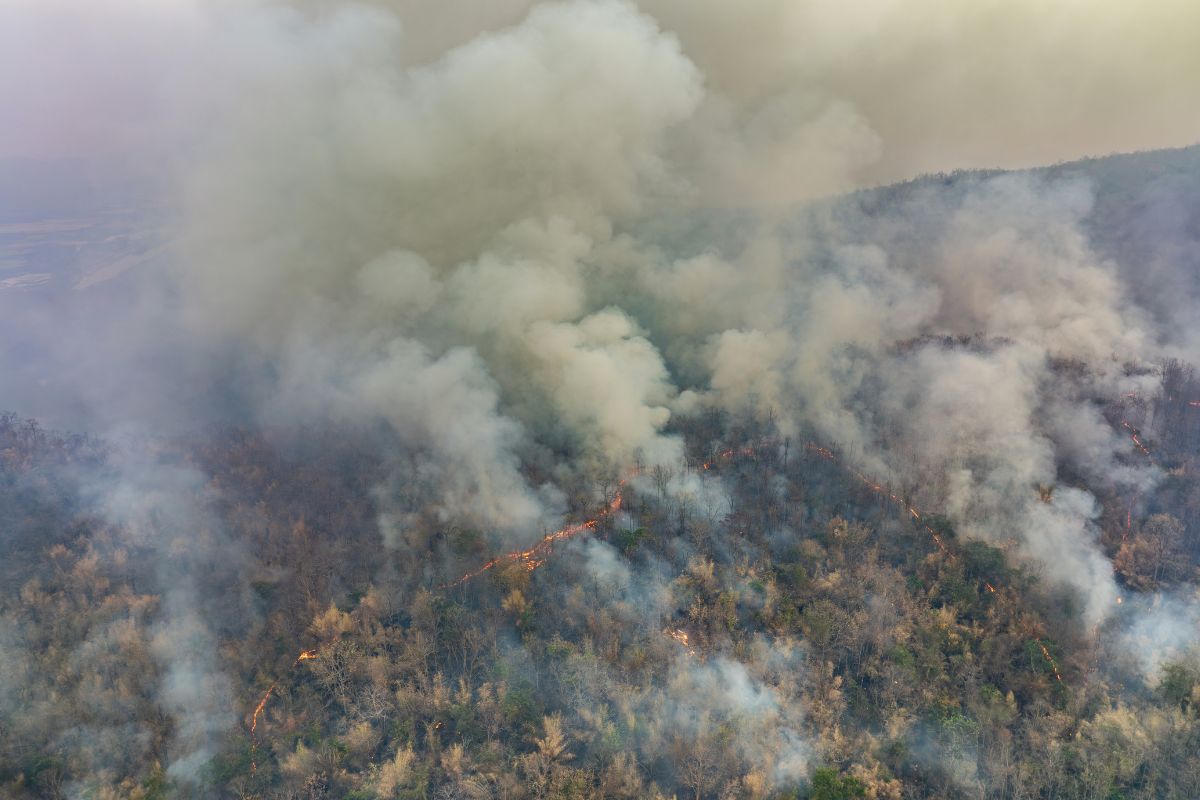
Wildfire smoke has become an increasingly common feature of summer skies across North America, but researchers warn that its most serious effects extend far beyond temporary coughing and irritated eyes. A growing body of evidence links prolonged exposure to wildfire smoke with an increased risk of cardiovascular disease, stroke, mental health problems, and other chronic health conditions.
Smoke from wildfires in Canada, the western United States, and other regions can travel hundreds or even thousands of miles, affecting air quality far from the fires themselves. Researchers estimate that repeated exposure to wildfire smoke already contributes to tens of thousands of premature deaths each year, with the health burden expected to increase as wildfire seasons become longer and more intense.
What Wildfire Smoke Contains
Wildfire smoke is a complex mixture of pollutants that includes fine particulate matter (PM2.5), nitrogen dioxide, ozone, aromatic hydrocarbons, and trace amounts of heavy metals. These microscopic particles are small enough to bypass many of the body’s natural defenses and penetrate deep into the lungs.
When wildfires burn through urban or industrial areas, the composition of the smoke can become even more hazardous. Burning plastics, treated wood, electronics, and other manufactured materials may release toxic substances such as lead, arsenic, and additional heavy metals, increasing health risks for nearby communities and regions located downwind.
How Fine Particles Affect the Body
PM2.5 particles measure less than 2.5 micrometers in diameter, allowing them to reach the smallest airways and, in some cases, enter the bloodstream. Once inside the body, these particles can trigger inflammation and oxidative stress, processes that damage cells and contribute to the development of chronic disease.
Healthcare providers frequently observe increases in asthma attacks, bronchitis, and other respiratory illnesses during periods of heavy wildfire smoke. However, accumulating evidence also indicates that worsening air quality is associated with increased rates of cardiovascular events, including heart attacks and strokes, even among people living far from wildfire-prone regions.
Health Risks Beyond the Lungs
Research published in the European Heart Journal found that long-term exposure to wildfire-related PM2.5 is associated with an increased risk of stroke among older adults. Researchers suggest that inflammation and changes affecting blood vessels may worsen underlying cardiovascular disease and increase susceptibility to serious events.
Growing evidence also points to effects on brain health. Studies have linked wildfire smoke exposure with cognitive impairment as well as higher rates of anxiety and depression. Scientists propose that ultrafine particles may affect the brain either directly or indirectly through widespread inflammation.
Pregnant individuals may also face increased risks. Several studies have associated wildfire smoke exposure with preterm birth and low birth weight. Longer-term exposure has additionally been linked to an elevated risk of certain cancers and autoimmune diseases, raising further concerns as wildfire smoke becomes more frequent.
No Clearly Safe Level of Long-Term Exposure
Multiple research groups have reported that no clear lower threshold appears to exist for long-term exposure to wildfire smoke. Health effects have been observed even when air pollution levels remain within ranges often considered moderate on public air quality indexes.
A 2025 study published in Nature estimated that wildfire-related PM2.5 could contribute to as many as 1.9 million excess deaths worldwide between 2026 and 2055 if current trends continue. The researchers concluded that the health burden could affect people of all ages, including children and individuals living with asthma, cancer, cardiovascular disease, and other chronic illnesses.
Increasing Wildfire Activity
According to the U.S. National Interagency Fire Center, more than 3.8 million acres had already burned in the United States this year, more than double the average annual area burned three decades ago. Researchers attribute this increase to a combination of warmer temperatures, prolonged drought, and changing land management practices, all of which contribute to larger and longer-lasting wildfire seasons.
As a result, communities located far from active fires are increasingly experiencing repeated episodes of unhealthy air quality. Scientists warn that the cumulative effects of recurring smoke exposure may ultimately pose a greater public health challenge than isolated extreme wildfire events.
Reducing Exposure During Smoke Events
Although most people exposed to wildfire smoke for several days will not require hospitalization, common short-term symptoms include coughing, sore throat, chest tightness, headaches, fatigue, and eye irritation. Some symptoms may persist even after air quality improves, particularly among people with underlying heart or lung conditions.
Public health agencies recommend reducing outdoor activity when air quality deteriorates, especially for children, older adults, pregnant individuals, and those with cardiovascular or respiratory disease. Wearing a properly fitted N95 or similar respirator can reduce exposure to fine particulate matter, although it does not eliminate exposure to all airborne pollutants.
Experts also recommend keeping windows and doors closed during smoke events, sealing obvious air leaks, and using portable air cleaners equipped with HEPA filters whenever possible. For individuals without adequate filtration at home, public buildings such as libraries or community centers with filtered ventilation may provide cleaner indoor air during periods of severe smoke.
As wildfire seasons continue to intensify, researchers argue that wildfire smoke should be recognized as a recurring public health threat rather than a temporary environmental nuisance. They emphasize that greater investment in early warning systems, building ventilation, clean-air shelters, and long-term health monitoring will be essential to reducing the health impacts of increasingly frequent smoke exposure.
