
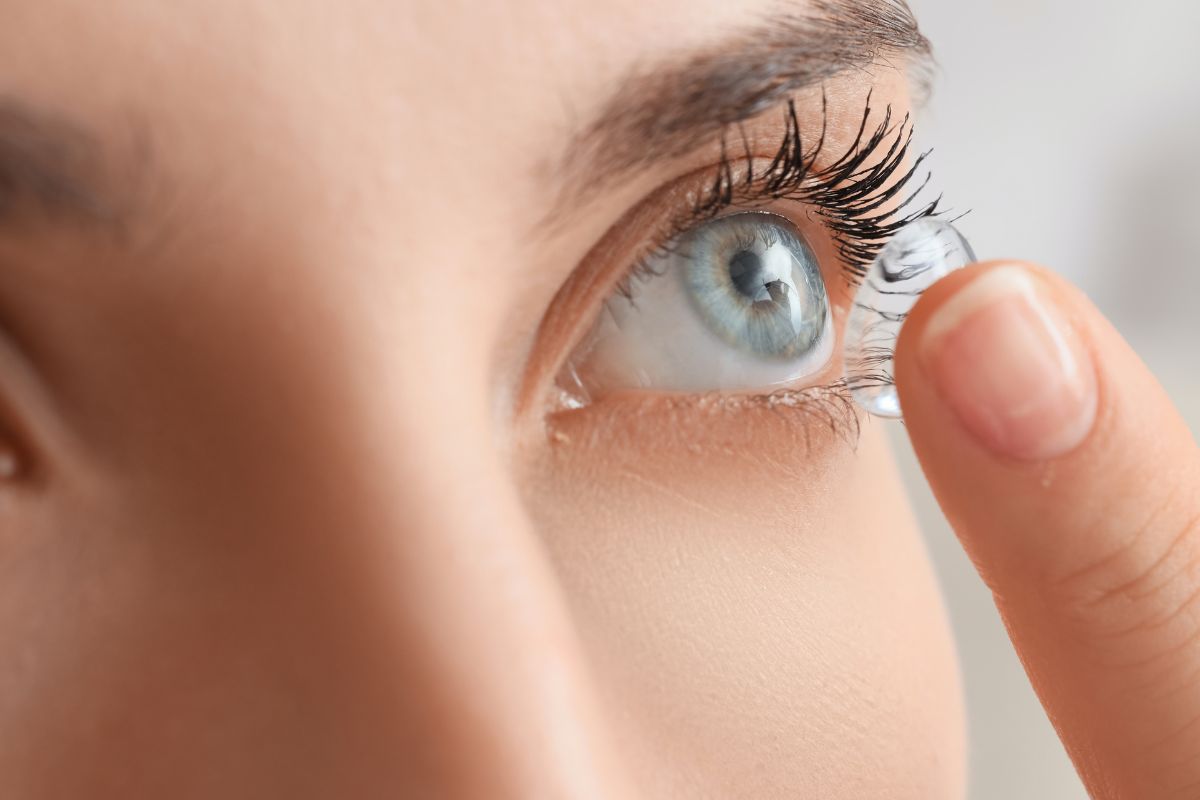
Soft contact lenses are susceptible to tiny scratches from everyday handling and cleaning. Over time, these microscopic defects can damage both the lens and the wearer’s eyes. Larger scratches typically require the lenses to be discarded, increasing both costs and plastic waste.
Chemists Jung-Hyun Choi and Byoung-Ki Cho of Dankook University in South Korea have now developed a soft contact lens material capable of repairing surface scratches after approximately one hour of exposure to ordinary ultraviolet light. Their prototype is designed to make contact lenses both safer and more durable.
How the Self-Healing Lenses Work
The new lenses are made from a hydrogel containing a disulfide cross-linker, a small molecule with a sulfur-to-sulfur bond. These bonds can break when the material is scratched and then re-form under UV light, effectively reconnecting damaged polymer chains.
The disulfide cross-linker is combined with methacrylate polymers, which form the long molecular chains that give the lens its structure. When a scratch occurs, some of these chains are disrupted, but exposure to UV light enables the disulfide bonds to reconnect the damaged network.
The researchers also incorporated a second polymer to improve resistance to scratching and bacterial fouling. They then compared the new disulfide-based hydrogel, known as DS-Hydrogel, with a control hydrogel that used a conventional cross-linker without sulfur bonds.
Performance Under UV Light and Daily Use
When exposed to UV light, the DS-Hydrogel showed clear visual healing of surface scratches, whereas the control hydrogel exhibited no noticeable repair. Laboratory testing indicated that the self-healing process restored approximately 90 percent of the material’s structural stability.
The new material also maintained water content comparable to that of standard soft contact lenses, an important factor for comfort and oxygen transmission to the eye. In addition, it demonstrated greater scratch resistance, suggesting that lenses made from the material may be less likely to scratch and better able to recover when they do.
According to the study, surface scratches caused by blinking, handling, or cleaning are much more common than full-thickness cuts in commercial hydrogels. These microscratches can scatter light, create glare, and provide surfaces for protein and microbial adhesion, potentially increasing discomfort and the risk of infection.
Potential Impact and Future Development
Previous self-healing contact lens materials typically required elevated temperatures to trigger the repair process, limiting their practical applications. The ability to induce healing at room temperature using standard UV light represents a significant step toward real-world use.
The authors suggest that existing UV-based contact lens cleaning systems could eventually serve as repair stations, restoring scratched lenses during routine disinfection. This approach could help extend lens lifespan, reduce plastic waste, and lower costs for regular wearers.
Before the material can be commercialized, however, the lenses will require extensive safety and regulatory testing, particularly because they are worn in direct contact with delicate eye tissues. Questions also remain regarding long-term stability, repeated healing cycles, and performance across different lens prescriptions.
Even so, the disulfide-cross-linked hydrogel platform points to a broader strategy for developing more durable ophthalmic devices. If successfully scaled, similar chemistry could potentially be applied to other medical hydrogels that experience wear, including wound dressings, corneal implants, and drug-delivery films.
The research, published in ACS Applied Polymer Materials, highlights growing interest in smart biomaterials capable of self-repair, resisting fouling, and responding to everyday environmental conditions. For millions of contact lens users, these advances could eventually lead to fewer lens replacements and improved eye health.
