
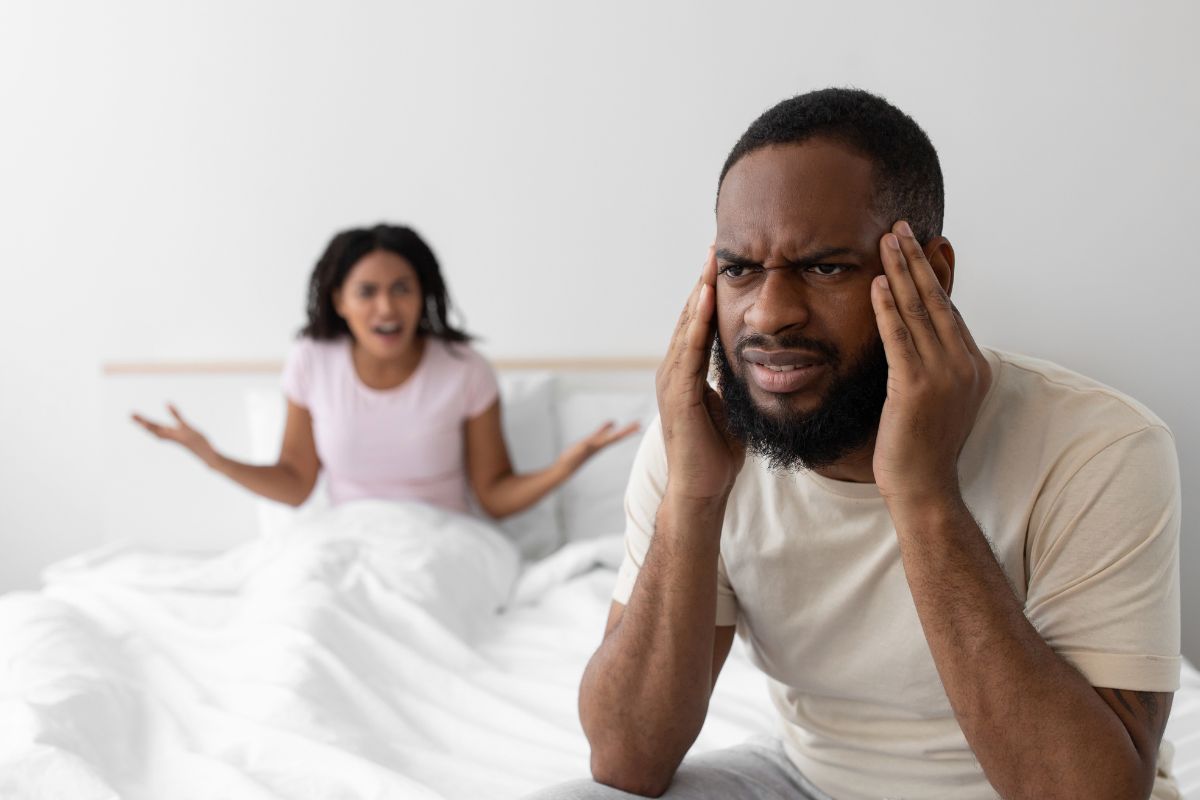
Love in long-term relationships rarely disappears overnight. Psychologists note that feelings usually fade gradually, and this process is often reflected in everyday conversations and changes in a partner’s behavior. When a husband becomes emotionally distant, the way he speaks may be one of the earliest signs that he is withdrawing from the relationship.
Psychotherapist Yulia Hrytsenko explains that many spouses look for one decisive sign that their partner has fallen out of love. In reality, emotions rarely end abruptly. Instead, feelings typically change step by step. That is why it is important to pay attention to shifts in daily communication and to a partner’s willingness to stay emotionally engaged.
Emotional Indifference Instead of Arguments
According to Hrytsenko, the strongest sign that love is fading is not frequent conflict but emotional indifference. A man who still loves his partner remains emotionally invested, even when he feels angry, disappointed, or hurt. He argues, defends his point of view, and still tries to improve the relationship.
When he begins what the therapist describes as an “emotional divorce,” however, he gradually stops participating in meaningful conversations. Discussions that were once passionate may be replaced by dismissive responses or complete avoidance. Although this may appear calmer on the surface, it often reflects a growing loss of emotional investment.
The psychologist emphasizes that the absence of arguments should not automatically be interpreted as harmony. Sometimes it simply means that one partner has given up trying because they no longer believe discussion will change anything. Over time, this emotional withdrawal can transform a couple from true partners into people who merely share the same home.
Phrases That Reveal Emotional Distance
Anyone can occasionally say something hurtful when tired, stressed, or frustrated. But when love begins to fade, certain phrases tend to appear repeatedly and become part of everyday communication. They often reflect emotional distance and a desire to avoid closeness.
Therapists stress that tone of voice is just as important as the words themselves. If a husband’s responses no longer show interest in finding solutions together but instead focus on ending conversations as quickly as possible, this may be an important warning sign. Emotional coldness often speaks louder than any individual sentence.
Common examples include statements that shift all responsibility for the relationship onto the other person, dismiss shared problems, or suggest complete indifference. These phrases are often accompanied by a flat tone of voice, little eye contact, and reluctance to continue the discussion.
Can the Relationship Be Saved?
According to Yulia Hrytsenko, rebuilding a marriage is only possible when both partners genuinely want to repair it. She compares marriage to a dance performed by two people. When only one person keeps trying to save the relationship, emotional exhaustion and resentment often follow because the balance between partners disappears.
In therapy, she frequently sees people confuse two very different situations: “I no longer love my partner” and “I am emotionally exhausted.” Chronic stress, burnout, depression, or overwhelming life pressures can leave people with little emotional energy for intimacy. In such cases, emotional distance may reflect exhaustion rather than the loss of love itself.
For this reason, understanding the real cause of the change is essential before reaching conclusions. If emotional withdrawal stems from burnout or prolonged stress, honest conversations or couples therapy can often help restore closeness. Working together with a therapist may clarify unmet expectations, improve communication, redistribute responsibilities, and strengthen mutual support.
When It May Be Time to Accept the End
The situation becomes more difficult if one partner has already emotionally ended the relationship and no longer wishes to work on it. In these cases, attempts to reconnect are often met with emotional coldness, and conversations become limited to brief, practical exchanges. Rather than ignoring these signs or endlessly trying to prove one’s worth, acknowledging reality may become necessary.
Hrytsenko emphasizes that accepting the end of a relationship can be deeply painful, but it is often the first step toward rebuilding emotional stability. Professional support may help people process grief, reduce feelings of guilt, and establish healthier personal boundaries. These steps can benefit both emotional recovery and the development of healthier relationships in the future.
Yulia Hrytsenko is a licensed psychologist and psychotherapist specializing in Gestalt therapy. She is accredited by the National Association of Gestalt Therapists of Ukraine, has maintained a private practice since 2017, and has been leading therapeutic groups since 2021. She is currently continuing her professional training in the third stage of supervisor education.
