
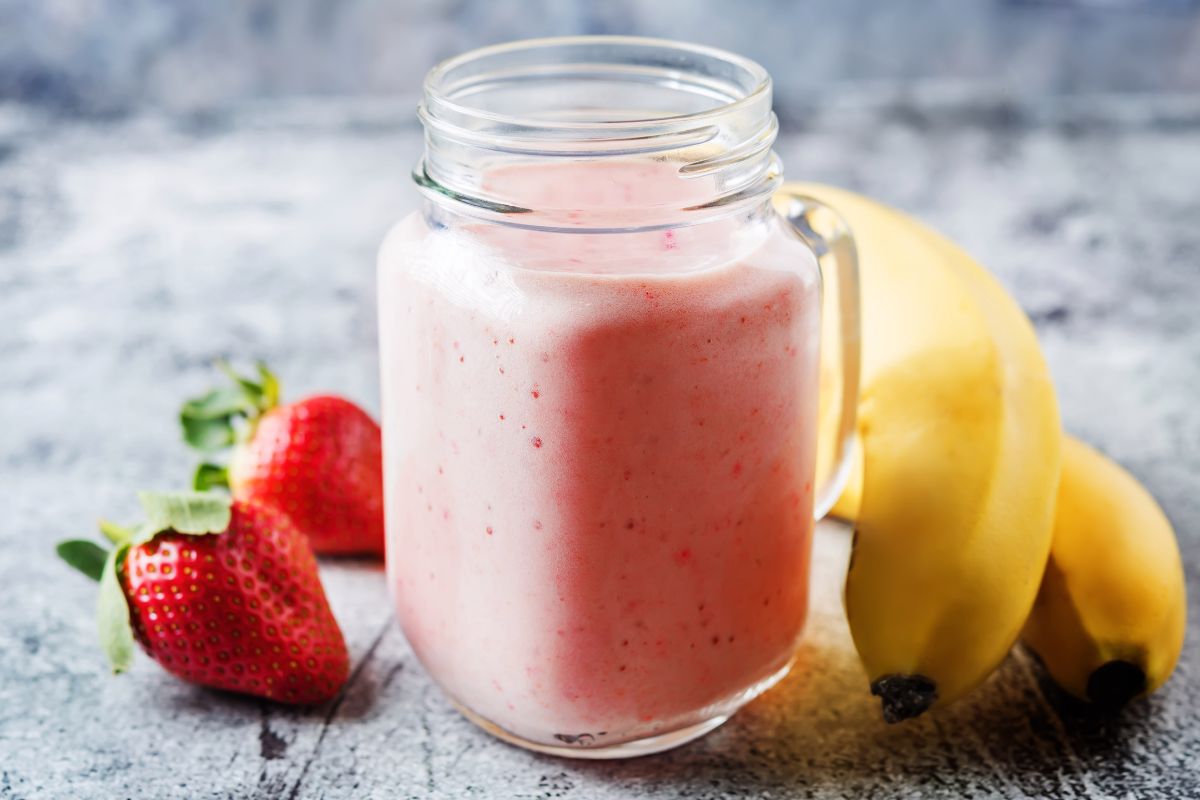
New research suggests that adding a banana to a berry smoothie could significantly reduce the drink’s antioxidant benefits. While bananas are highly nutritious, their natural enzymes appear to interfere with the absorption of key compounds found in berries and other plant-based foods.
Scientists at the University of California, Davis focused on flavonols, a group of antioxidants associated with improved cardiovascular and brain health. Flavonols are abundant in berries, tea, cocoa, apples, and other plant foods, yet many people consume less than the recommended amounts.
How bananas affect flavonol absorption
In a small controlled study published in 2023 in the journal Food & Function, eight volunteers consumed either a flavonol-rich berry smoothie or a flavonol capsule. Blood tests showed clear increases in flavonol metabolites after both interventions, confirming that the body absorbed these compounds.
However, when participants consumed a banana-berry smoothie, their blood levels of flavonol metabolites were 84% lower than those observed after the flavonol-rich control. Lead researcher and nutrition scientist Javier Ottaviani said the team was surprised by the extent to which a single banana reduced flavonol absorption.
The researchers believe the effect is driven by polyphenol oxidase (PPO), an enzyme responsible for the browning of bananas after they are peeled. PPO can react with flavonols in the smoothie, reducing the amount of these antioxidant compounds that remains available for absorption in the gastrointestinal tract.
What the experiments revealed
To investigate this mechanism, the researchers compared a high-PPO banana-berry smoothie left at room temperature with a berry-only smoothie. After one hour, the banana-containing smoothie contained substantially fewer flavonols, indicating that PPO activity had degraded the antioxidants over time.
When PPO activity in the bananas was chemically inhibited, flavonol concentrations remained much closer to those measured in the berry-only smoothie. These findings supported the hypothesis that PPO is a key factor limiting flavonol availability before the beverage is even consumed.
In another experiment, 11 participants consumed two separate beverages at the same time—one containing banana and the other containing berries. Although separating the drinks prevented PPO in the banana beverage from directly interacting with the flavonols in the berry beverage, blood tests still showed lower flavonol metabolite levels than when no banana beverage was consumed.
Implications for everyday diets
The study was small and included only male participants, so the authors emphasize that further research involving larger and more diverse populations is needed. Nevertheless, the findings highlight how food combinations and preparation methods can influence the health benefits of plant-based diets.
Observational and clinical studies have linked flavonols with a lower risk of cardiovascular disease, improved vascular function, and potential cognitive benefits. If commonly consumed smoothie combinations reduce flavonol absorption, people may not receive the full protective effects of these compounds.
Experts emphasize that bananas remain an excellent source of potassium, dietary fiber, and essential vitamins. The findings do not suggest avoiding bananas altogether. Instead, people aiming to maximize flavonol intake may benefit from pairing bananas with fruits that have lower PPO activity or enjoying berry smoothies without bananas.
The authors conclude that nutritional recommendations should consider not only which fruits and vegetables people consume but also how these foods are stored, prepared, and combined. As interest in functional foods continues to grow, future studies are expected to investigate additional fruit combinations and preparation methods that may optimize flavonol bioavailability.
