
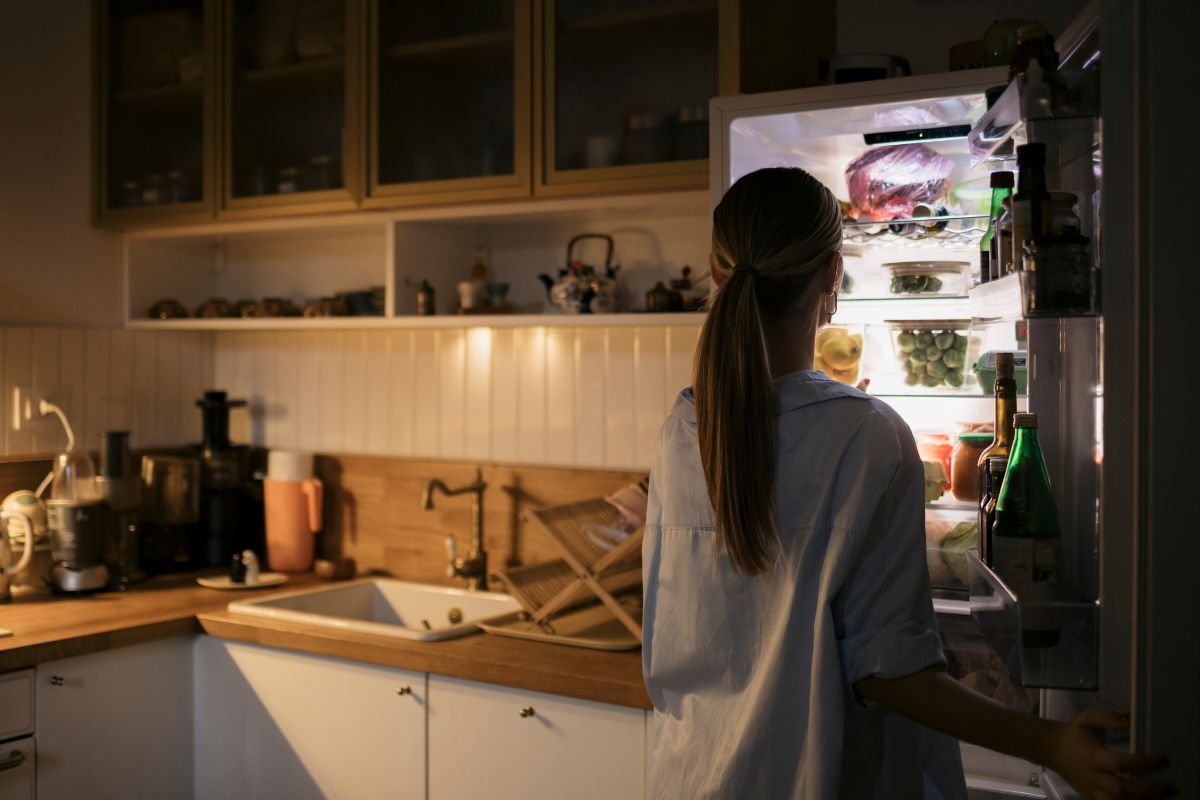
Opening the refrigerator, looking inside for a few seconds and closing the door without taking anything out is an almost universal habit. While it may seem like a sign of hunger, psychologists say the behavior often has little to do with the body’s actual need for food. The explanation comes from decades of research in psychology, neuroscience, and nutrition science examining how emotions, habits, and environmental food cues influence eating behavior.
Researchers distinguish between two different types of hunger that help explain why people repeatedly find themselves standing in front of the refrigerator, even shortly after eating.
Two Different Types of Hunger
The first is homeostatic hunger, the body’s natural biological mechanism for maintaining energy balance. When blood glucose levels fall or the stomach is empty, hormones such as ghrelin signal the brain that it is time to eat. This type of hunger exists to keep us alive.
The second is hedonic hunger, which is driven by pleasure rather than physical need. In this case, people eat because food looks appealing, smells good, improves mood, or provides emotional comfort—even when the body has sufficient energy.
The concept of hedonic hunger was popularized by psychologist Michael Lowe of Drexel University, whose research highlighted how modern environments constantly expose people to food advertisements, restaurant promotions, food delivery apps, and tempting aromas that stimulate eating even without true hunger.
Because the human brain evolved during periods when food was scarce, it is programmed to respond strongly to these food-related cues. In today’s food-rich environment, this survival mechanism often leads people to check the refrigerator simply because the brain expects a potential reward.
Why the Brain Keeps Pulling You Toward the Refrigerator
The brain’s reward system plays a major role in this behavior. Dopamine, one of its key neurotransmitters, is involved in motivation, anticipation, and reward seeking. Research led by neuroscientist Nora Volkow at the U.S. National Institute on Drug Abuse has shown that highly processed foods activate many of the same reward pathways involved in addictive behaviors.
Interestingly, dopamine activity is often highest before eating rather than afterward. The anticipation of finding something enjoyable can be rewarding on its own. Simply opening the refrigerator and scanning the shelves may provide a small dopamine response, even if no food is actually eaten.
This process closely matches the habit loop described by Charles Duhigg, based on research conducted at the Massachusetts Institute of Technology (MIT). A cue—such as walking into the kitchen or seeing the refrigerator—triggers a routine of opening the door, followed by the anticipated reward of finding food or experiencing a brief sense of satisfaction.
After repeated exposure, the brain learns that the refrigerator offers an easy opportunity for comfort or stimulation. Eventually, checking inside becomes an automatic response whenever boredom, stress, or idle moments arise.
Boredom, Stress, and Late-Night Snacking
Psychologists identify boredom, stress, and fatigue as the three most common triggers of unnecessary refrigerator visits.
When people feel bored, the brain naturally seeks stimulation and increased dopamine activity. Food provides a quick and easily available source of reward.
Research led by Andrew Moynihan found that boredom increases the desire to snack even when individuals are not physically hungry. Eating temporarily breaks monotony and provides a brief sense of enjoyment during repetitive work or study.
Stress can intensify these cravings even further. Elevated cortisol—the body’s primary stress hormone—has been associated with greater appetite for high-calorie, sugary, and fatty foods. These foods may temporarily reduce emotional distress, reinforcing emotional eating habits.
Sleep deprivation also alters appetite regulation. Research by Eve Van Cauter at the University of Chicago has shown that insufficient sleep increases ghrelin levels while reducing leptin, the hormone responsible for signaling fullness. At the same time, fatigue weakens self-control, making impulsive snacking more likely.
When Does Refrigerator Checking Become a Problem?
For most people, repeatedly opening the refrigerator is simply an automatic daily habit rather than a medical concern.
Habit researcher Wendy Wood of the University of Southern California estimates that approximately 43% of everyday behaviors occur automatically, without conscious decision-making. Refrigerator checking often falls into this category.
However, the behavior may warrant attention if it occurs dozens of times each day, regularly leads to nighttime eating, or progresses into episodes of binge eating and loss of control. Over time, these patterns can contribute to weight gain and other health problems.
If emotional eating becomes frequent or difficult to control, healthcare professionals recommend speaking with a physician, registered dietitian, or mental health professional. Persistent emotional eating may be associated with chronic stress, anxiety, depression, or eating disorders that benefit from appropriate treatment.
Breaking the Refrigerator Habit
Experts recommend changing the environment instead of relying solely on willpower.
Keeping healthier foods, such as vegetables and fruit, at eye level while placing highly processed snacks out of immediate view can subtly influence food choices. Since people often eat what they see first, small environmental adjustments can reduce unnecessary snacking.
Another evidence-based strategy comes from psychologist Peter Gollwitzer’s research on implementation intentions. Rather than making a vague goal like “I’ll stop opening the refrigerator,” people create a specific action plan such as:
“If I feel like opening the refrigerator, I will first drink a glass of water.”
This brief pause interrupts the automatic habit loop and gives the brain time to determine whether the urge comes from genuine hunger or simply emotion or routine.
Replacing refrigerator checks with other short activities—such as stretching, walking around the room, drinking water, or taking several slow breaths—can gradually weaken the habit. Over time, these small changes help shift behavior from automatic reactions toward more mindful decisions about eating.
