
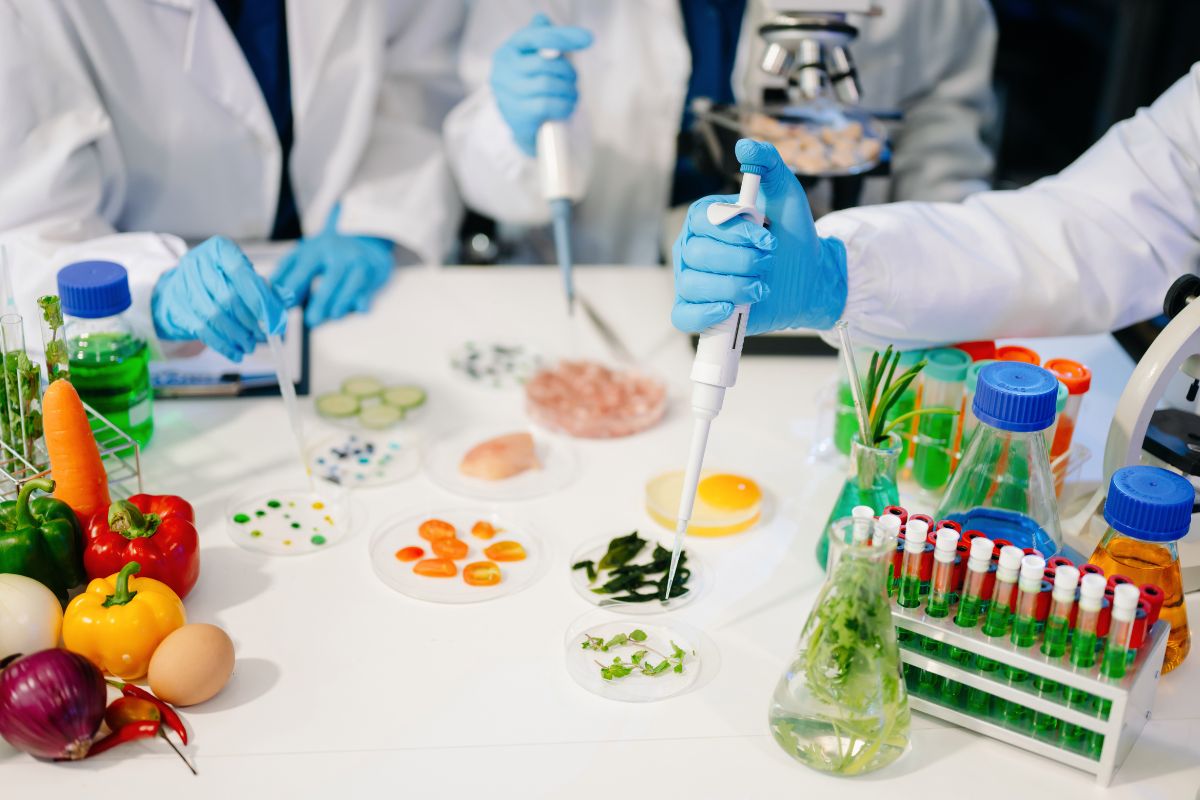
For decades, public health advice has encouraged people to reduce their intake of fat, sugar, and salt to prevent disease. Yet rates of obesity and diet-related illnesses continue to rise worldwide, suggesting that our current understanding of food is incomplete.
Researchers now believe that focusing solely on calories and a handful of well-known nutrients captures only a fraction of what food actually does in the body. The emerging picture is of a far more complex chemical universe on our plates.
Hidden Chemistry in Everyday Food
Traditional nutrition science has focused on proteins, fats, carbohydrates, vitamins, and minerals. Together, these account for roughly 150 familiar nutrients that dominate dietary guidelines and food labels worldwide.
However, recent estimates suggest that the human diet actually contains more than 26,000 distinct chemical compounds. The vast majority of these molecules remain poorly studied, and little is known about how they influence health or disease.
To describe this vast unknown, some scientists borrow a concept from astrophysics and refer to it as “nutritional dark matter.” Just as dark matter in space is invisible yet exerts a powerful gravitational influence, these uncharted food compounds may quietly shape our biology.
From Genes to the Foodome
The contrast with genetics is striking. When the human genome was first sequenced in 2003, many expected it to unlock the full story of disease risk. Yet genetic variation explains only about 10% of common chronic diseases.
The remaining risk is largely driven by environmental factors, with diet playing a central role. Poor diet is now linked to approximately one in five deaths among adults over the age of 25, and in Europe it contributes to nearly half of all cardiovascular deaths.
To bridge this gap, scientists are developing a new field known as foodomics. It combines genomics, proteomics, metabolomics, and nutrigenomics to trace how thousands of food-derived molecules interact with genes, proteins, cells, and metabolic pathways.
Why Some Diets Protect the Heart
One of the best-studied examples is the Mediterranean diet, which is rich in fruits, vegetables, whole grains, legumes, nuts, olive oil, and fish while being relatively low in red meat and sweets. Large clinical trials have shown that it reduces the risk of cardiovascular disease and premature death.
Foodomics research is now revealing some of the hidden chemistry underlying these benefits. One important clue is a molecule called trimethylamine N-oxide (TMAO), which is produced when gut bacteria break down compounds found in red meat and eggs.
Elevated blood levels of TMAO are associated with increased inflammation, atherosclerosis, and cardiovascular events. Intriguingly, plant foods such as garlic contain compounds that appear to inhibit its formation, potentially shifting the balance away from cardiovascular risk.
The Gut Microbiome as a Chemical Factory
Gut microbes are central to this emerging picture. When undigested food reaches the colon, trillions of bacteria transform its compounds into new molecules capable of influencing immunity, metabolism, and even brain function.
Ellagic acid, a compound found in foods such as pomegranates, berries, and certain nuts, is one example. Specific gut bacteria convert it into urolithins, a family of molecules that help maintain healthy mitochondria, the tiny structures responsible for generating energy within our cells.
Not everyone’s microbiome can produce these beneficial compounds to the same extent. This may help explain why some individuals appear to derive greater benefits than others from similar diets, highlighting the need for more personalized nutritional approaches.
Diet, Epigenetics, and Lifelong Risk
Food can also influence gene activity without altering the DNA sequence itself through epigenetic mechanisms. These changes can modify how genes are switched on or off, with effects that may persist for decades.
A historic example comes from the Dutch famine of 1944–45, during which pregnant women experienced severe food shortages. Their children later exhibited higher rates of heart disease, type 2 diabetes, and schizophrenia than those born before or after the famine.
Subsequent analyses showed that these adults carried distinct epigenetic marks associated with their mothers’ nutritional deprivation. This suggests that extreme nutritional stress during fetal development can leave a biological imprint that influences health throughout life.
Mapping the Food Universe
To systematically chart this nutritional dark matter, international research teams have launched large-scale mapping initiatives. Projects collectively referred to as the Foodome aim to catalogue tens of thousands of food-derived molecules and identify their biological targets.
Early work has already documented more than 130,000 distinct compounds, linking many of them to human proteins, gut microbes, and disease pathways. Researchers hope to create an atlas that connects specific foods with measurable biological effects in the human body.
Such an atlas could help explain why similar diets produce different outcomes in different individuals, why certain foods appear protective in one context but harmful in another, and which molecules could inspire new therapies or functional foods.
What This Means for Future Diets
Understanding nutritional dark matter is still in its infancy, and most discoveries remain far from routine clinical practice. For now, the broad recommendation to consume more whole, minimally processed plant foods and fewer ultra-processed products remains well supported by current evidence.
However, as foodomics advances, it may reshape dietary guidelines by placing less emphasis on individual nutrients and greater emphasis on complex food matrices and chemical interactions. Dietary recommendations may one day be tailored to an individual’s genetic profile and gut microbiome.
In the long term, mapping the hidden chemistry of food may transform how we prevent and treat disease. Just as uncovering cosmic dark matter is changing our understanding of the universe, decoding nutritional dark matter may fundamentally change how we think about nutrition, aging, and human health.
