
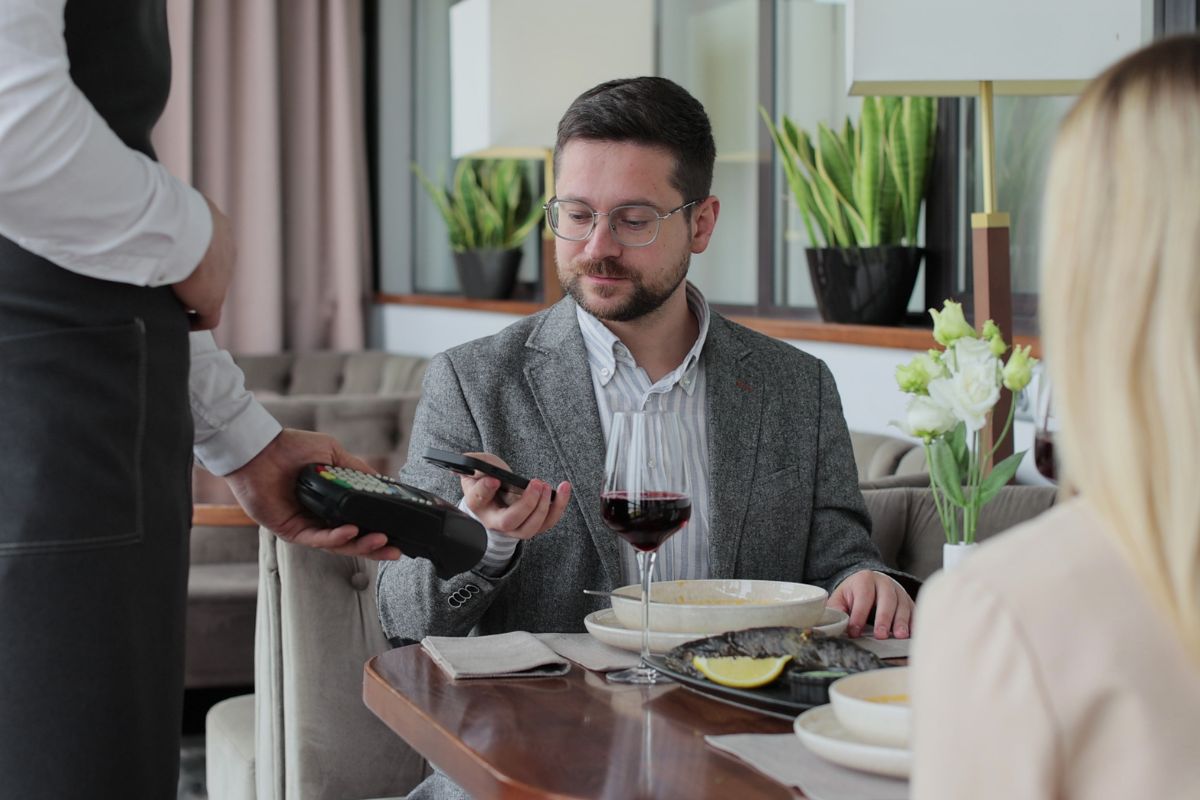
Men who cover a larger share of expenses when spending time with female friends may be signaling romantic or sexual interest, according to new research published in the Journal of Evolution & Human Behavior. The study found that women also tend to interpret this financial generosity as a sign of attraction rather than simple friendship.
Researchers examined how heterosexual men and women navigate mixed-gender friendships. Although many people describe these relationships as purely platonic, previous studies suggest that romantic and sexual attraction often plays a role.
The research team, led by Ryan T. Dobson, investigated whether behaviors such as paying for meals, drinks, or entertainment function as subtle courtship signals. Their work was based on evolutionary theories suggesting that men are more likely to display resources and generosity when expressing romantic interest.
These theories are supported by findings showing that women, on average, place greater importance on a partner’s willingness and ability to invest resources. The researchers compared this explanation with an alternative possibility: that paying more simply reflects how much a person values a friendship, regardless of romantic motives.
How The Study Was Conducted
The study involved 581 undergraduate students from a university in the southwestern United States and was conducted during the spring 2024, fall 2024, and spring 2025 academic terms. After excluding participants who failed attention checks or identified as asexual or homosexual, the final analysis focused on heterosexual mixed-gender friendships.
Participants, whose average age was 21.3 years, completed an anonymous online survey. Most respondents were women. Each participant answered questions about their closest and second-closest opposite-sex friend, excluding romantic partners and family members.
For each friendship, participants rated their own romantic and sexual interest using an 11-item scale. They also estimated how interested they believed their friend was in them, reported who typically paid more of shared expenses, and evaluated the overall quality of the friendship across eight separate measures.
Because each participant described two different friendships, researchers were able to compare both individual tendencies and friendship-specific patterns. This allowed them to determine whether some people generally paid more across all friendships and whether they spent more on the particular friend they found most attractive.
Financial Generosity And Romantic Interest
The results revealed a clear gender difference in spending patterns. Men reported paying a larger share of expenses when spending time with female friends, while women reported that their male friends were more likely to cover a greater portion of shared costs.
More importantly, men who expressed stronger romantic or sexual interest in their female friends were also more likely to pay more during shared activities. The greater their attraction, the greater their tendency to cover expenses.
This relationship was not observed among women. Female participants who reported stronger romantic interest in male friends were not more likely to contribute more financially. In fact, there was a slight tendency for interested women to pay less.
Researchers also found that friendship quality did not explain spending behavior. Participants who viewed a friendship as particularly close, supportive, or important were not more likely to pay a larger share of expenses. This finding weakens the argument that financial generosity primarily reflects the value placed on the friendship itself.
How Women Interpret Men Paying More
Women appeared to view male generosity as a meaningful social signal. Female participants who reported that male friends regularly paid more were also more likely to believe those friends were romantically or sexually interested in them.
Men, however, did not interpret women’s spending behavior in the same way. Male participants generally did not view a female friend paying more as evidence of romantic or sexual attraction.
The researchers noted that most of the observed effects appeared between individuals rather than within specific friendships. The data did not clearly show that a particular man spent significantly more on the female friend he liked most.
Instead, the findings suggest that some men generally approach mixed-gender friendships as potential mating opportunities and are more likely to express interest through financial generosity across multiple friendships. Others appear to maintain more strictly platonic relationships and show little difference in spending behavior.
Limitations And Broader Implications
The authors caution that the study relied on self-reported data from students at a single American university. Because the research was cross-sectional, it cannot establish whether men consciously spend more to signal romantic interest or whether women always interpret such behavior as a sign of attraction.
Cultural expectations surrounding dating, gender roles, and paying for social activities may also influence these patterns. Different results could emerge among older adults, people from other cultures, or individuals outside university settings.
Nevertheless, the findings add to growing evidence that mixed-gender friendships often contain both platonic and romantic elements. Attraction may exist even when relationships are publicly described as purely friendly.
For some men, paying a larger share of expenses may represent one subtle way of keeping the possibility of a future romantic relationship open. Whether intentional or unconscious, financial generosity appears to function as a cue that women frequently recognize.