
Speaking the phrase “Just calm down” or “Stop overthinking” is one of the most hurtful reactions to an anxious person. If they could instantly calm themselves, they would. Such words dismiss their real physical and emotional pain and can sound like: “Your feelings are nonsense, stop seeking attention.”
During an anxiety surge, the body releases large amounts of adrenaline and cortisol. The rational part of the brain temporarily takes a back seat to fear-based responses. Trying to explain with logic or statistics that “there is no reason to panic” often deepens the person’s sense of being misunderstood and alone.
Another common mistake is taking a partner’s anxiety personally. When an anxious person becomes irritable, withdrawn, or unusually quiet, it is easy to think: “They do not love me anymore” or “I must have done something wrong.” This often leads to conflict and mutual frustration, even though anxiety reflects the person’s internal state rather than their feelings toward a partner.
When Support Turns Into Control
Becoming a “universal rescuer” for an anxious partner can be almost as harmful as being indifferent. When one person begins solving every daily, social, or practical problem for the other, it can unintentionally reinforce the belief: “You are not capable of handling this yourself.” Over time, this dynamic may create unhealthy emotional dependence within the relationship.
Forcing someone to confront their fears immediately is also usually counterproductive. Statements such as “Look me in the eyes and tell me exactly what you are afraid of” may feel more like pressure than support. During an anxiety episode, many people genuinely struggle to identify the source of their fear, and intense questioning can increase both panic and shame.
Comparisons with other people can further damage self-esteem. Comments such as “My colleague is stressed too, but he handles it just fine” suggest that everyone else is coping better. As a result, the anxious person may begin viewing themselves as defective, weak, or broken, increasing the risk of self-criticism and depression.
The Power Of Nonverbal Signals
People struggling with anxiety are often highly sensitive to nonverbal communication. Heavy sighs, eye-rolling, impatient gestures, or pacing around the room can easily be interpreted as: “You are a burden.” Such signals reinforce fears of rejection, abandonment, and isolation, making it less likely that the person will seek support in the future.
Simple, unsolicited advice is rarely enough to address a complex psychological condition. Suggestions such as “Drink more herbal tea,” “Go to the gym and it will go away,” or “You spend too much time on your phone” can unintentionally minimize the seriousness of the problem. Anxiety disorders often require evidence-based treatment, including psychotherapy or medical evaluation, and simplistic advice may communicate a lack of understanding.
Ignoring anxiety attacks or pretending that nothing is happening is another potentially damaging response. Some people choose to “wait it out,” assuming the distress will pass on its own. However, leaving an anxious partner alone during the peak of a panic or anxiety episode can significantly damage trust. Many people remember very clearly whether someone was present for them during their most frightening moments.
Healthy Boundaries And Real Help
While support is important, maintaining healthy personal boundaries matters as well. You cannot become your partner’s full-time therapist, nor should you feel responsible for absorbing all of their anxiety. When someone becomes completely consumed by another person’s emotional struggles, burnout and resentment often follow.
It is important to encourage a partner, gently but consistently, to seek professional help when needed. Psychologists and psychiatrists can assess symptoms, provide evidence-based treatment, and recommend medication when appropriate. Early intervention can reduce the risk of chronic anxiety and improve both individual wellbeing and relationship stability.
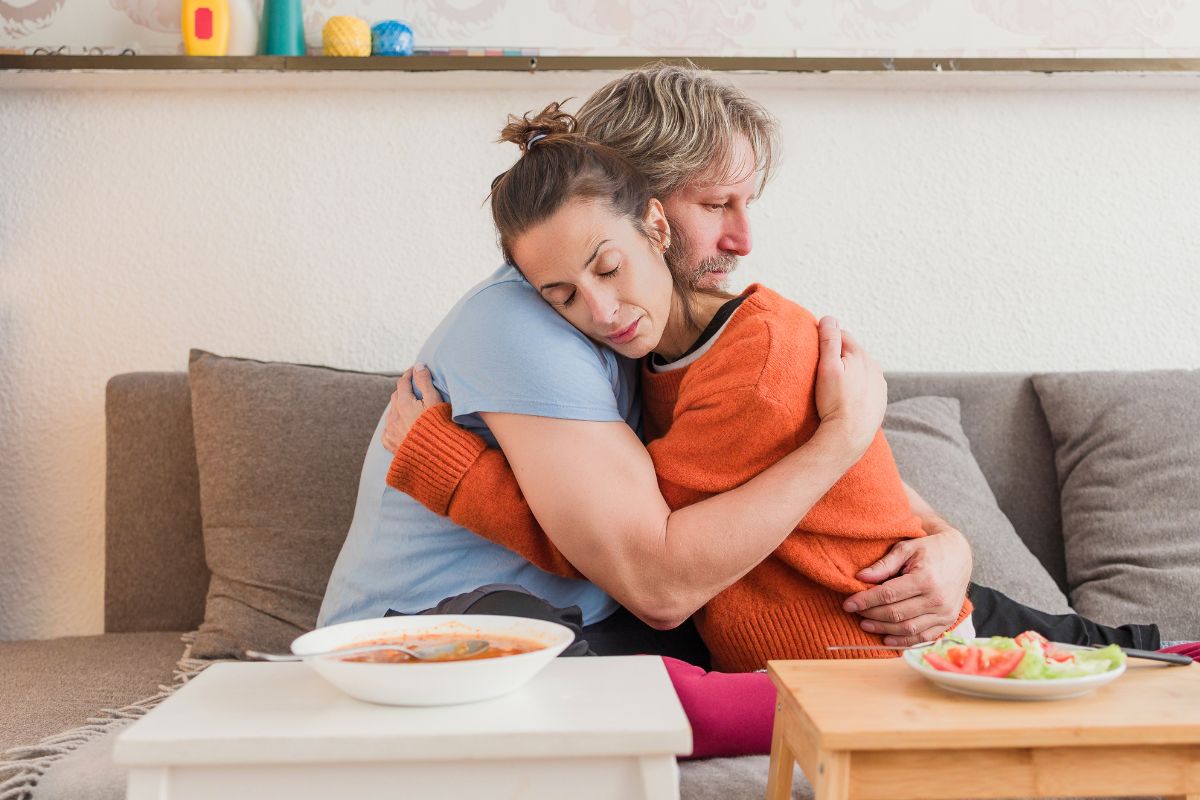
During an anxiety attack, the most effective support is often simple presence and grounding. A hand on the shoulder, a reassuring hug if welcomed, or calmly guiding someone through slow breathing exercises can be remarkably helpful. Gentle statements such as “I am here,” “You are safe,” and “We will get through this together” validate the person’s experience without reinforcing the fear itself.
Experts emphasize that empathy alone does not cure anxiety. However, supportive communication can significantly reduce distress and strengthen emotional connection. By avoiding dismissive comments, comparisons, pressure, and control, partners can create a safer environment where both people feel respected, understood, and emotionally secure.
