
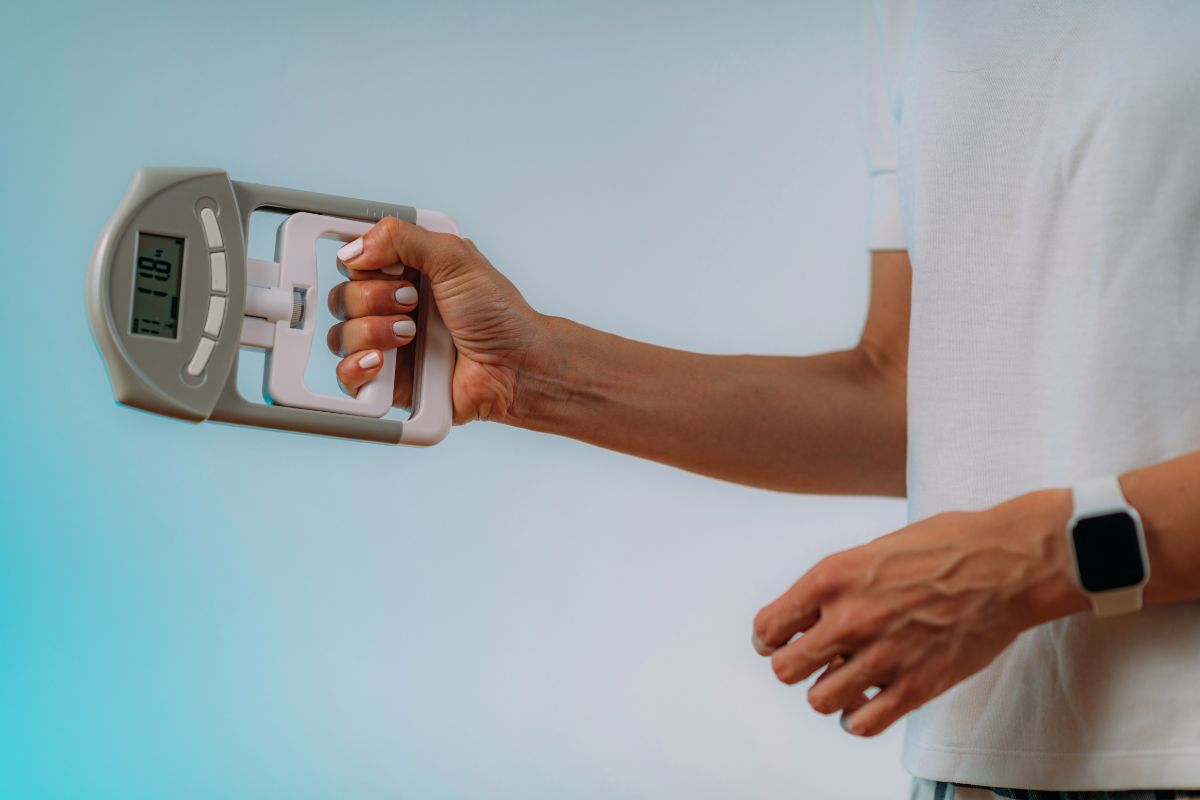
Claims that hand grip strength can predict how long you will live are spreading rapidly across social media wellness feeds. The idea sounds simplistic, but it is rooted in a solid body of scientific research. The problem arises when this nuanced evidence is turned into oversimplified health promises.
Influencers and even mainstream media outlets often blur the line between what grip strength can signal and what it can actually change. As a result, a useful medical marker is being rebranded as a supposed shortcut to a longer life. Understanding the difference is essential for anyone seeking reliable health advice.
What grip strength really measures
Grip strength is typically measured with a handheld device called a dynamometer, which records how forcefully a person can squeeze. Researchers have used this simple test in large population studies and followed participants over many years. Their goal is to determine who develops disease and who dies earlier.
Across multiple studies, people with lower grip strength tend to have higher rates of illness and premature death. In one major study of about 500,000 adults in the United Kingdom aged 40 to 69, every 5 kg drop in grip strength was linked to roughly a 20% higher risk of death over the following decade.
Low grip strength, often defined as less than 26 kg for men and 16 kg for women, has been associated with a greater risk of cardiovascular disease, respiratory disease, chronic obstructive pulmonary disease, and several cancers. In older adults, it is also linked to a higher risk of falls and fractures.
The reason is that grip strength reflects far more than hand muscles alone. It serves as a proxy for overall muscle mass, nerve function, cardiovascular health, and how efficiently the body uses energy. Some researchers have argued that it should be treated as a new vital sign, alongside blood pressure, pulse, breathing rate, and temperature.
Why age changes the picture
Grip strength appears to be a much stronger predictor of health outcomes in older people than in younger adults. Among younger individuals, most are near the peak of their physical capacity, so differences in health are small compared with normal measurement noise.
As people age, health status becomes more varied, while the accuracy of the grip test remains about the same. That means the signal from grip strength stands out more clearly against background variation. In later life, weaker grip strength often signals sarcopenia, the age-related loss of muscle mass and power, and a general decline in resilience.
This does not mean every older person with a weaker grip is destined for poor health. It does suggest that, in large groups, lower average grip strength reliably points to higher rates of serious illness and mortality. Clinicians can therefore use the test to help identify people who may benefit from closer monitoring or broader health assessments.
From useful marker to online hype
On social media platforms, this nuanced evidence is frequently compressed into catchier claims that grip strength can predict your lifespan or even unlock extra years of life. The leap from correlation to causation is where the science is repeatedly misrepresented.
Research shows that grip strength and longevity move together, but it does not show that training your grip alone will extend your life. The strength of your hands does not directly cause better health. Instead, it mirrors the condition of your entire body, from muscles and bones to the heart, lungs, and metabolic systems.
Despite this, many influencers present targeted grip exercises as a longevity hack, promising benefits that are not backed by clinical trials. Some even explain that grip strength is only a proxy, then immediately recommend routines focused on squeezing tools or hanging from bars, undermining their own message.
Part of the issue is the demand for quick, actionable tips. Simply explaining a marker is less marketable than offering a regimen that claims to improve it. This can push content creators and headline writers toward overreach, turning a diagnostic clue into a supposed cure.
What actually improves longevity
Improving grip strength as part of a general strength-training program can be beneficial, but not because the hands are magical. Whole-body resistance training supports muscle mass, bone density, balance, and metabolic health, especially in older adults. Grip strength tends to rise along with these broader gains.
The most robust evidence for longer, healthier lives points to a familiar set of habits. Regular physical activity, including both aerobic and strength training, a balanced diet, consistent sleep, strong social ties, and effective stress management remain the cornerstones of healthy aging.
Doctors may use grip strength tests to identify people who might be at higher risk, then investigate underlying problems such as malnutrition, chronic disease, or physical inactivity. Addressing these root causes is where health improvements come from, not from hand exercises alone.
For individuals, grip strength can be a helpful data point rather than a destiny. It is one piece of a larger puzzle that includes medical history, lifestyle, genetic factors, and environmental influences. Viewing it in that context can prevent false hope and keep attention on the proven drivers of longevity.
The growing interest in simple longevity metrics shows how eager people are for clear guidance on health. To serve that need responsibly, both media outlets and influencers must draw a firm line between what the evidence clearly supports and what remains speculation.
