
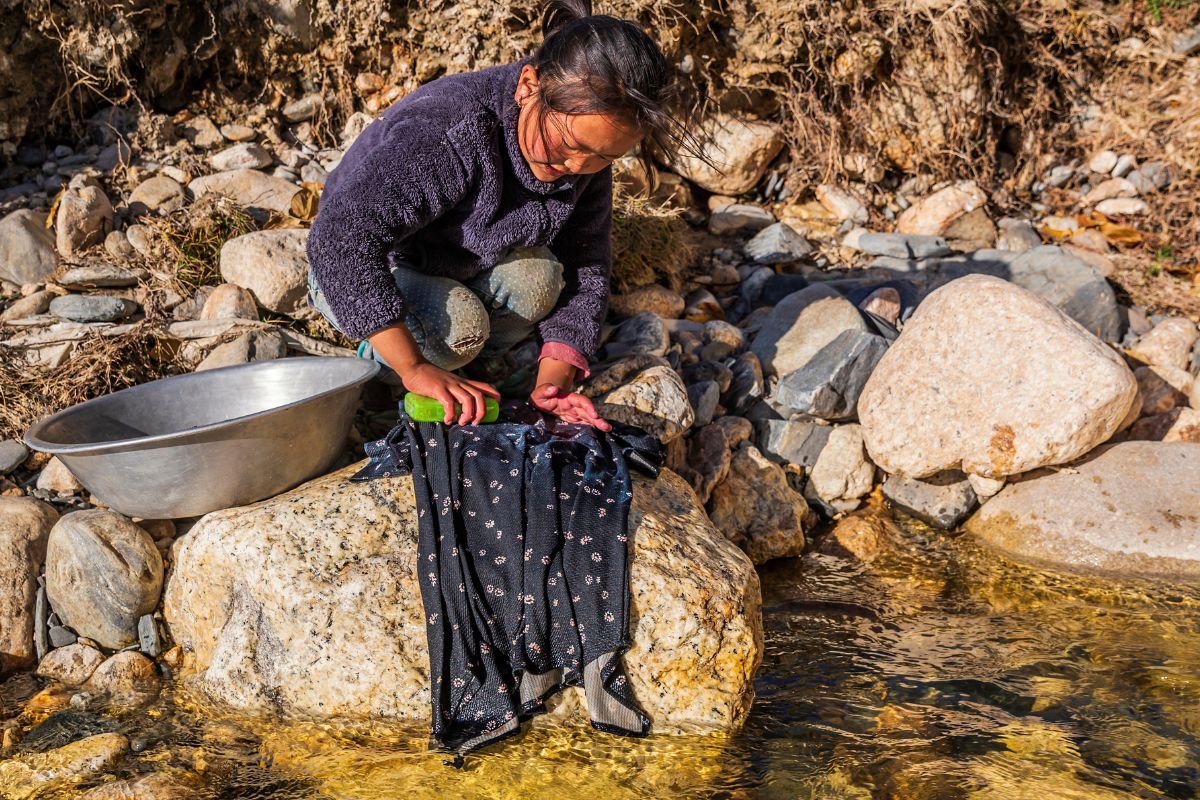
Human evolution is often viewed as something that happened in the distant past, but scientists say it is still unfolding today. Some of the clearest evidence comes from populations living high in the mountains of Asia, where thin air and low oxygen levels create one of the most challenging environments on Earth.
On the Tibetan Plateau, reduced atmospheric pressure means less oxygen enters the lungs with every breath. For most visitors, prolonged exposure can lead to altitude sickness and chronic hypoxia, a condition in which organs and tissues receive too little oxygen. Yet local populations have not only adapted to these conditions but have successfully raised families there for generations.
How High-Altitude Adaptation Works
Researchers have long considered high-altitude communities a natural laboratory for studying human evolution. The effects of oxygen deprivation are strong, measurable, and affect nearly everyone living at the same elevation, making it easier to observe how natural selection operates over time.
Unlike the temporary acclimatization experienced by climbers and travelers, these adaptations are inherited. Over thousands of years, individuals whose bodies were better able to use oxygen efficiently were more likely to remain healthy, have children, and pass on those beneficial traits to future generations.
Inside The Nepalese Women Study
Anthropologist Cynthia Beall and her colleagues focused on 417 Nepalese women who had spent their entire lives living above 3,500 meters. The women were between 46 and 86 years old and had already completed their reproductive years, allowing researchers to examine how physiological characteristics influenced lifetime reproductive success.
The number of live births ranged from zero to fourteen, with an average of 5.2 children per woman. Researchers measured hemoglobin levels, oxygen saturation, heart structure, and pulmonary blood flow, then compared these factors with the number of children each participant had given birth to.
Oxygen Delivery Without Thick Blood
One of the most striking findings was that the most reproductively successful women did not have unusually high hemoglobin levels. Instead, their hemoglobin values tended to be moderate, while the oxygen saturation of that hemoglobin was higher than average.
This suggests that natural selection may favor women whose blood transports oxygen efficiently without becoming excessively thick. Very high hemoglobin levels can increase blood viscosity, placing additional strain on the heart and raising the risk of cardiovascular complications at high altitude.
The study also identified other beneficial traits. Women with the highest numbers of live births tended to have stronger blood flow through the lungs and slightly larger left ventricles, the chamber of the heart responsible for pumping oxygen-rich blood throughout the body.
Natural Selection In Action
Together, these characteristics improve the body’s ability to transport and deliver oxygen in low-oxygen environments. More importantly, they are associated with greater reproductive success, one of the strongest indicators that natural selection is actively shaping a population.
Social and cultural factors still played a role. Women who married earlier and remained in long-term relationships generally had more opportunities to have children. However, even after accounting for these influences, physiological differences remained strongly linked to the number of live births.
Interestingly, the women with the greatest reproductive success often displayed oxygen-transport characteristics that resembled those seen in people living at lower elevations, while still maintaining adaptations that supported efficient circulation in high-altitude conditions. This highlights how subtle biological changes can help humans thrive in extreme environments.
What This Reveals About Human Evolution
Previous genetic studies have linked Tibetan highlanders to variants of genes such as EPAS1 and EGLN1, both of which influence how the body responds to low oxygen levels and regulates hemoglobin production. Scientists believe these genetic adaptations spread rapidly through the population over the past several thousand years.
The new research adds an important piece to the puzzle by connecting specific physical traits with real-life reproductive outcomes. It demonstrates that natural selection is not simply altering gene frequencies in theory but is actively favoring individuals whose bodies function more effectively in their environment.
Research in other high-altitude populations, including communities in the Andes and the Ethiopian Highlands, has uncovered different biological solutions to the same challenge. Some groups rely on higher hemoglobin levels, while others have developed larger lung capacity or alternative cardiovascular adaptations.
Together, these findings show that there is more than one evolutionary path to surviving in oxygen-poor environments.
Why It Matters Beyond The Mountains
For scientists, high-altitude populations offer a rare opportunity to observe human evolution as it happens. Understanding how these communities adapt to chronic low-oxygen conditions may eventually help researchers develop better treatments for heart disease, lung disorders, anemia, and complications associated with oxygen deprivation.
The study also reinforces a broader lesson: human evolution did not stop thousands of years ago. It continues wherever environmental pressures influence survival and reproduction, whether those pressures involve disease, climate, nutrition, or altitude.
As researchers uncover more examples of these ongoing adaptations, they continue to reveal how the human body responds to extreme conditions—and how evolution remains an active force shaping our species today.