
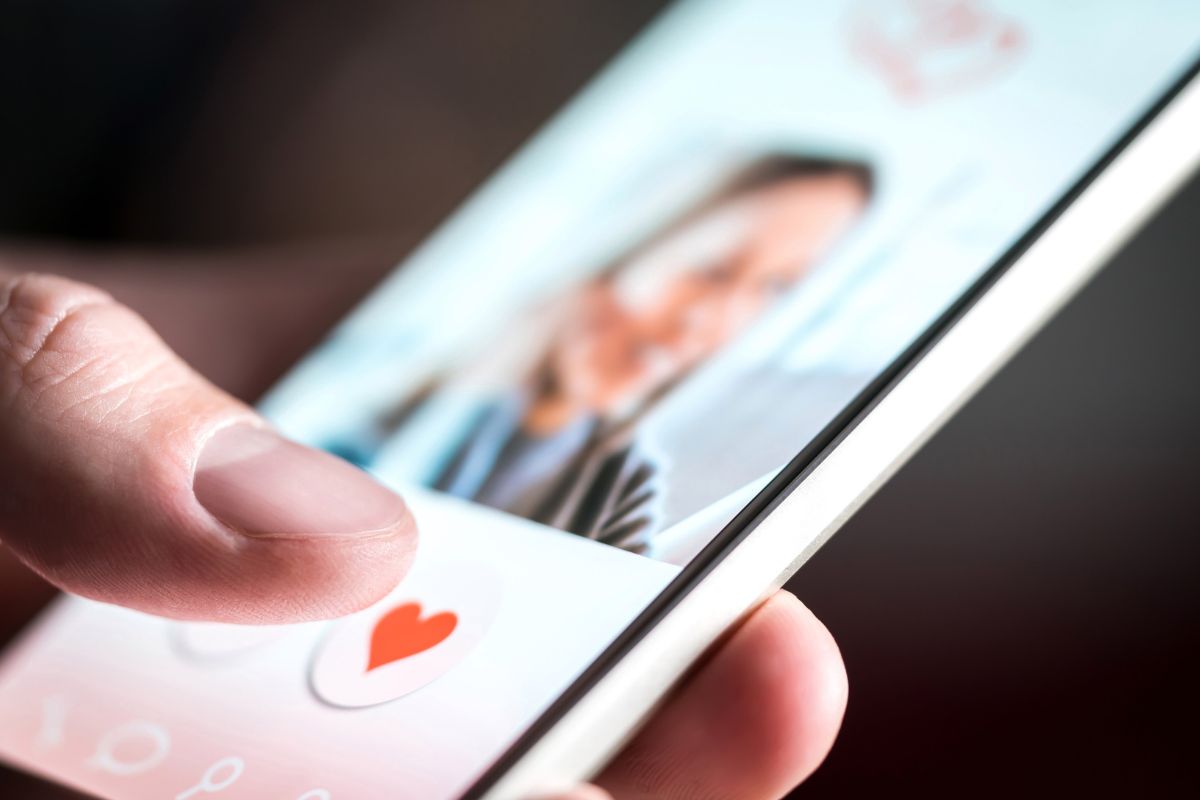
Relying on quick, gut-level swipes on dating apps can leave users feeling worse about themselves than taking a slower, more deliberate approach. New research in Media Psychology indicates that intuitive swiping lowers self-esteem and perceived mate value, even more than facing a large pool of potential partners.
The study suggests that the rapid-fire design of modern dating platforms carries psychological costs that depend heavily on how people interact with them. While traditional matchmaking sites use detailed questionnaires and algorithms, mobile apps present a virtually endless stream of faces to be judged in seconds.
These apps are built to encourage continuous browsing, rewarding users with matches and notifications that nudge them to keep swiping. Earlier work in consumer psychology shows that too many choices can create dissatisfaction, a pattern often described as a tyranny of choice.
How The Experiment Was Designed
To examine these dynamics, researchers led by Marina F. Thomas of Karl Landsteiner University of Health Sciences recruited 401 undergraduates. Participants used a mock dating app and were randomly assigned to view either 11, 31, or 91 profiles during the experiment.
The team drew on regulatory mode theory, which distinguishes between an assessment mode, focused on careful comparison, and a locomotion mode, centered on quick, action-oriented decisions. They wanted to see how these modes interact with the number of choices to affect well-being.
Before swiping, some participants completed a writing task designed to prime either a critical, self-comparing mindset or a fast, decisive mindset. A control group skipped this priming step and received no special mental cues.
Researchers then gave explicit instructions to shape how people evaluated profiles. One group was told to judge carefully based on visible traits, clothing, and perceived status, while another was urged to swipe intuitively and rely purely on first impressions and gut feelings.
What The Researchers Found
After reviewing the profiles, participants completed questionnaires measuring self-esteem, fear of being single, perceived desirability as a partner, and feelings of overload. The system also tracked how many profiles each person accepted.
Viewing more profiles did increase feelings of being overwhelmed, and participants became more selective as options grew. Those who saw 91 profiles accepted a smaller share of potential partners compared with those who viewed 11 or 31.
However, the number of profiles alone did not significantly damage self-esteem or increase fears about remaining single. Instead, the style of decision-making proved more important for psychological outcomes than the sheer volume of choices.
Participants instructed to swipe intuitively experienced a clear drop in self-esteem and rated their own mate value lower than both the criteria-based group and the control group. This outcome ran counter to expectations that strict, evaluative decision-making would be more stressful.
Why Fast Swiping May Feel Worse
The authors suggest that intuitive swiping places the full weight of each decision on a person’s internal feelings, which are hard to justify or explain. When preferences are vague, this can prompt users to question their instincts and, by extension, their self-worth.
By contrast, relying on concrete criteria creates an external reference point that may shield the ego from doubt. If a match does not feel right, users can point to obvious factors rather than blaming their own judgment or inherent appeal.
Another factor may be a mismatch between the static nature of profiles and the push for rapid, impulsive reactions. Dating profiles highlight still images and brief text, which naturally invite evaluation rather than snap decisions, potentially creating subtle cognitive friction.
The study also showed that decision style shapes when people start to feel overloaded. For intuitive swipers, feelings of overwhelm spiked quickly, with 31 profiles feeling almost as taxing as 91. Those using criteria or swiping naturally tolerated moderate numbers of profiles more easily.
Limits And Next Steps For Research
The experiment took place in a controlled setting, and participants knew their choices would not lead to real dates. In live apps, where rejections and matches carry social consequences, people might behave differently or invest more effort in each decision.
The sample consisted mainly of young college students reviewing profiles tailored to their age group. Because university environments often reward analytical thinking, intuitive swiping may have felt particularly unnatural or uncomfortable for this population.
Future research could follow actual app users over longer periods to see how decision styles play out in real-world dating. Tools such as eye-tracking could reveal which parts of profiles naturally attract attention without relying solely on self-report.
The findings add nuance to debates about the mental health impact of dating apps. They suggest that not just how much people swipe, but how they swipe, may quietly shape how users see themselves as romantic partners.
