
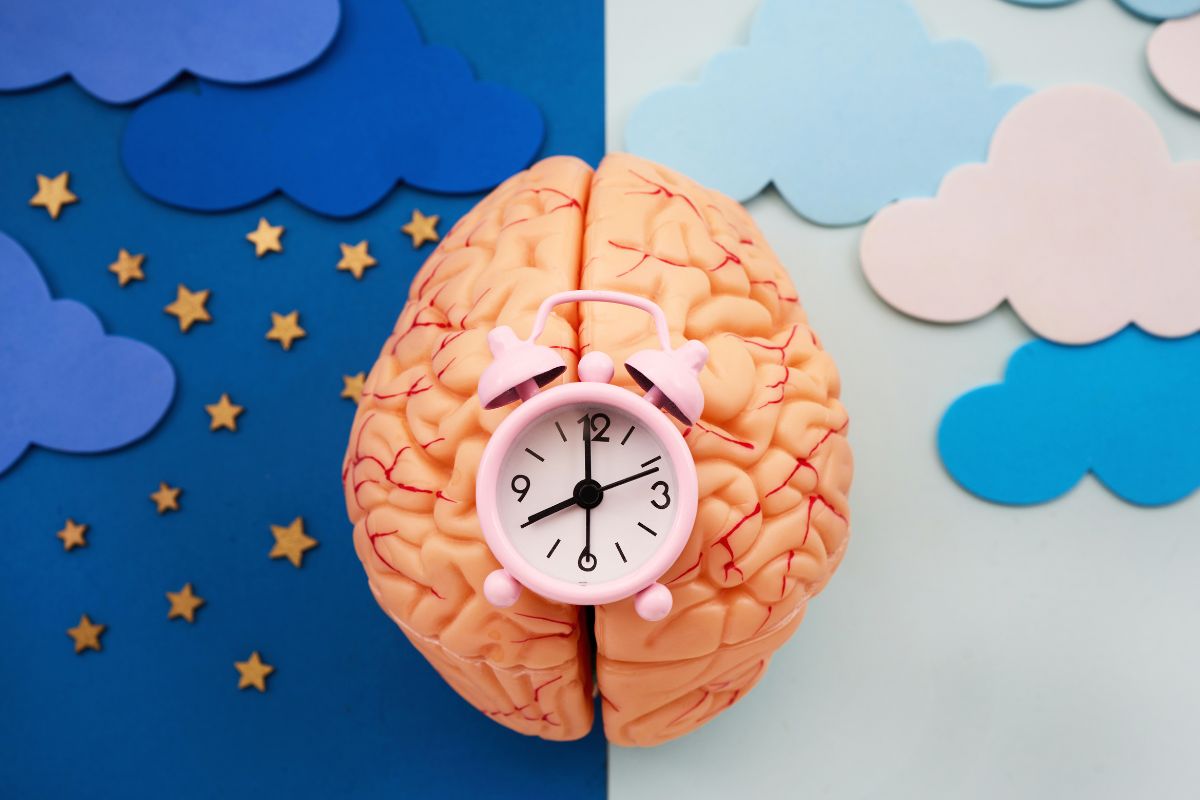
Researchers are taking the idea of “sleeping on it” into the laboratory, showing that it may be possible to gently steer the content of dreams to support creative thinking. A new study from Northwestern University suggests that influencing dreams during REM sleep can help people solve stubborn puzzles.
The work adds to growing evidence that sleep, and REM sleep in particular, is closely linked to memory, insight and problem-solving. By using carefully timed sound cues, scientists were able to reactivate specific memories during sleep and increase the chances that related material would appear in dreams.
How Targeted Memory Reactivation Works
The team relied on a technique known as targeted memory reactivation, or TMR. Before going to sleep in the lab, 20 volunteers attempted to solve a series of challenging brainteaser-style puzzles, each paired with a unique sound or short piece of music.
Most puzzles remained unsolved within the three-minute time limit, giving researchers a pool of problems to revisit later during sleep. As participants drifted off, polysomnography tracked their brain waves, eye movements and muscle activity to identify the REM stage, when vivid dreams are most likely to occur.
During REM sleep, scientists quietly replayed the audio cues linked to only half of the unsolved puzzles. The goal was not to wake participants, but to subtly guide their minds toward the specific tasks they had previously encountered, effectively “tagging” certain memories for reactivation within dreams.
Dreams Linked To Better Puzzle Solving
The next morning, participants described their dreams and then attempted to solve the same puzzles again. Three-quarters of the group reported dreams that included ideas, imagery or themes related to the cued puzzles.
Puzzles that appeared in dreams were solved at much higher rates than those that did not. Across all participants, success increased from about 17 percent for uncued puzzles to roughly 42 percent for puzzles whose memories had been reactivated during sleep.
Among a subgroup of 12 participants who showed especially clear dream references to the cued problems, performance on those puzzles doubled after sleep, rising from 20 percent to 40 percent.
While the study does not prove that dreams directly caused the breakthroughs, it strongly suggests that targeted memory reactivation during REM sleep can support creative problem-solving.
Lucid Dreamers And Interactive Sleep
All volunteers had prior experience with lucid dreaming, a state in which people recognize they are dreaming and can sometimes influence the dream narrative. Some participants used prearranged breathing patterns, such as specific sniffing sequences, to signal during REM sleep that they heard the cues and were thinking about the puzzles.
Even so, the most striking results did not always depend on lucidity. Lead author Karen Konkoly noted that several volunteers who were not clearly lucid still responded to the cues in sophisticated ways, sometimes even asking dream characters for help solving the targeted puzzles.
One participant who had been cued with a tree-related puzzle later reported dreaming about walking through a dense forest, while another with a jungle-themed puzzle described dreaming about fishing in a jungle while actively thinking about the task. These examples suggest that sounds can shape dream content even without deliberate control.
Potential Uses And Ethical Questions
The study, published in the journal Neuroscience of Consciousness in February 2024, is part of a broader effort to understand how sleep and dreams contribute to creativity, learning and emotional health.
Senior author Ken Paller said the findings highlight a possible role for “sleep engineering” in helping people generate new ideas.
Researchers are now exploring whether similar techniques could help process traumatic memories, support language learning or improve emotional regulation. Earlier work from other laboratories has suggested that TMR can strengthen certain types of memories and even reduce fear responses linked to specific cues.
At the same time, the emerging field of dream engineering raises ethical concerns related to consent, privacy and potential commercial uses of subconscious influence. Experts argue that any future applications will require clear safeguards to prevent misuse, especially if consumer devices begin offering dream-targeting features.
For now, the Northwestern team stresses that these findings are an early step rather than a finished tool. The experiment was small, involved highly selected participants, and focused on short, abstract puzzles. Larger and more diverse studies will be needed to determine how reliable and broadly applicable dream-based problem-solving may be.
Still, the research adds scientific support to the long-held intuition that sleep can foster insight. As scientists learn more about how to guide and interpret dreams, they hope to transform nighttime rest into a more intentional ally for creativity and mental well-being.
