
Most people grow up believing humans have just five senses, but modern science paints a much more complex picture. Researchers now argue that everyday experience is shaped by dozens of distinct sensory systems working together behind the scenes.
From the warmth of a hot shower to the comfort of morning coffee, the brain constantly combines signals from the body and the outside world. Much of this sensory activity happens automatically and goes unnoticed unless we deliberately pay attention to it.
Beyond The Classic Five Senses
Aristotle’s five-sense model provided an important foundation, but neuroscience has shown that it is incomplete. Modern researchers suggest humans may possess anywhere from 22 to 33 distinct senses, depending on how they are categorized and defined.
These include proprioception, the ability to sense the position of our limbs without looking at them, and the vestibular sense, which helps maintain balance and detect movement. Both are essential for walking, driving, or simply standing upright without conscious effort.
Another increasingly important area of study is interoception—the ability to sense internal bodily states. This system allows people to feel hunger, detect a racing heartbeat, or notice subtle physical changes linked to emotions such as anxiety or calmness.
Agency, Ownership, And The Body
Scientists also distinguish between the sense of agency and the sense of ownership over the body. Agency refers to the feeling that we are actively controlling our movements, such as reaching for a cup or typing on a keyboard.
Ownership, by contrast, is the feeling that our body parts actually belong to us. After certain strokes or neurological injuries, some patients report that an arm no longer feels like their own, even though they can still sense touch or temperature.
In other rare cases, people may feel that a limb moves without their control or that another person is somehow moving it. These unusual neurological conditions reveal how separate and fragile the senses of agency and body ownership can be.
Taste, Smell, And The Flavor Illusion
Many traditional senses also turn out to consist of multiple sensory systems working together. Touch, for example, includes separate systems for pain, temperature, pressure, and itch, each relying on different nerve fibers and receptors.
What people commonly call taste is actually a combination of taste, smell, and touch. Taste receptors on the tongue detect basic sensations such as sweet, sour, salty, bitter, and umami—the savory taste found in foods like tomatoes, soy sauce, and aged cheese.
However, flavors such as raspberry, mango, or mint are not generated by the tongue itself. Instead, aroma molecules travel from the mouth into the nasal cavity while chewing and swallowing, allowing smell receptors to create most of the flavor experience.
Texture also strongly shapes food perception. The creaminess of chocolate, the firmness of eggs, or the thickness of yogurt can significantly alter how flavor is judged, even when the chemical taste compounds remain identical.
How The Senses Influence One Another
Research in multisensory perception shows that the senses rarely operate independently. What people see can alter what they hear, while smells can influence how textures or sweetness are perceived.
Experiments with scented shampoos, for instance, suggest floral fragrances can make hair feel softer and silkier even when the physical texture has not changed. Similarly, certain aromas can make low-fat yogurts seem richer and creamier without adding extra fat.
Liquid texture also changes flavor perception. Thicker drinks can intensify some aromas, while thinner textures may weaken the impression of flavor.
When Balance Changes Vision
Vision is closely connected to the vestibular system located in the inner ear, which detects gravity, acceleration, and head movement. Together, these systems help the brain construct a stable understanding of the surrounding environment.
During airplane takeoff, passengers often feel as though the cabin is tilting upward sharply even though visually the interior remains unchanged. The brain combines information from the eyes and inner ear, creating a distorted sense of orientation.
This interaction also contributes to motion sickness when visual signals conflict with balance-related information. Researchers studying virtual reality are actively investigating how to reduce these sensory mismatches and prevent nausea in immersive environments.
What Scientists Learned In The Laboratory
The Centre for the Study of the Senses at the University of London has become a leading hub for multisensory research. Its Rethinking the Senses project, launched in 2013, brought together philosophers, psychologists, and neuroscientists to study how sensory systems interact.
One experiment found that changing the sound of a person’s footsteps altered how heavy or light participants felt. Sharper or louder footsteps made people report feeling heavier even though their actual weight remained unchanged.
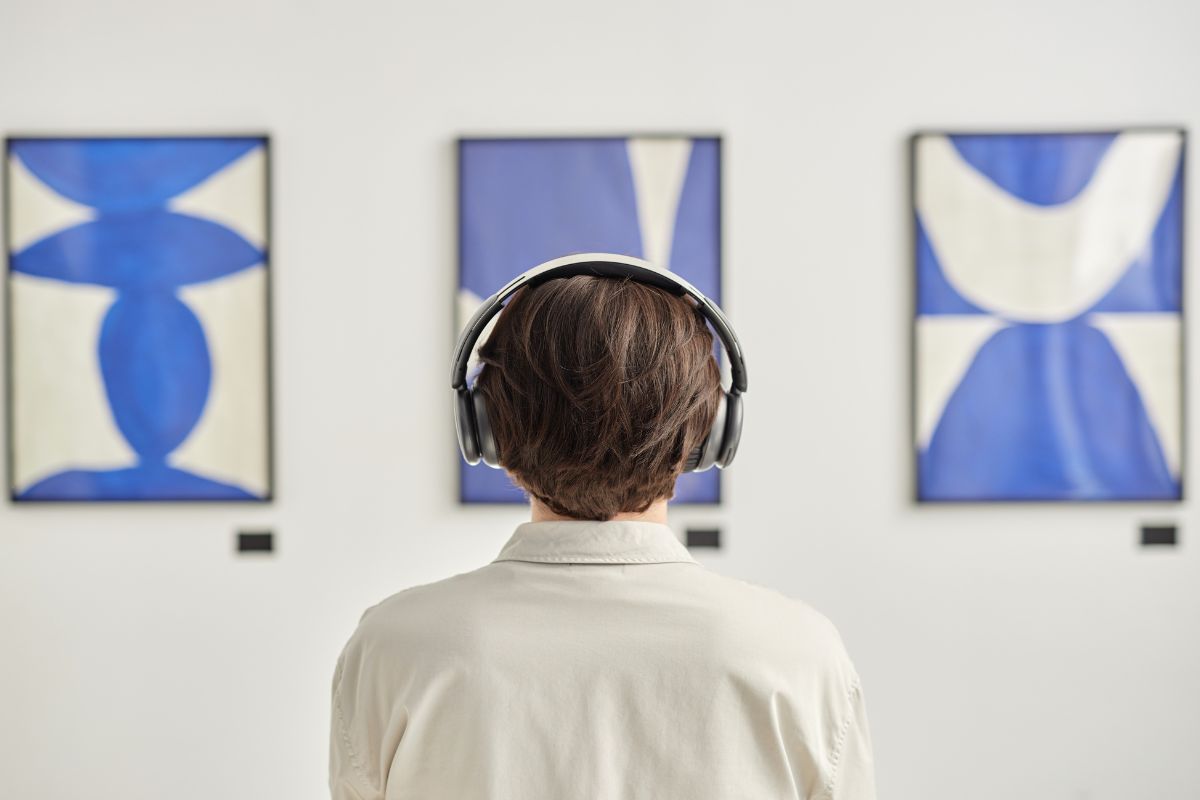
Another study examined audio guides in art galleries. When recordings were designed as if the portrait subjects themselves were speaking directly to visitors, participants later remembered more visual details from the artwork. Researchers concluded that sound-based storytelling may strengthen visual memory.
Why Tomato Juice Tastes Better On Airplanes
Air travel provides another striking example of multisensory interaction. Studies have shown that aircraft cabin noise reduces sensitivity to sweet and salty flavors.
Umami taste, however, appears much more resistant to this effect. Because tomatoes and tomato juice contain high levels of umami compounds, their savory qualities can become more noticeable during flights.
Researchers believe this explains why many passengers find tomato juice unusually enjoyable on airplanes compared with on the ground. Airlines and food companies are increasingly using such findings to design meals better suited to inflight environments.
Everyday Sensory Illusions
Public exhibitions such as Senses Unwrapped in London allow visitors to experience these effects firsthand. Interactive demonstrations reveal how the senses can both cooperate and mislead us.
One famous example is the size-weight illusion, in which people lift objects of different sizes that actually weigh the same. Smaller objects are often perceived as heavier despite identical mass.
Scientists believe the illusion occurs because the brain automatically predicts weight based on size. When those expectations are violated, the mismatch between prediction and reality creates a persistent illusion that can be surprisingly difficult to overcome.
Rethinking Human Perception
Together, these discoveries challenge the simplified five-sense framework commonly taught in schools. Human perception is instead built from a complex network of sensory systems that continuously integrate, interpret, and recalibrate information.
Paying closer attention to these processes can transform ordinary experiences. Walking outdoors, eating a meal, or listening to background sounds can all reveal how vision, touch, hearing, smell, taste, and internal bodily sensations constantly interact.
As research continues, scientists expect our understanding of the senses to evolve even further. What is already clear is that human perception is far richer, more interconnected, and more surprising than most people ever realize.
