
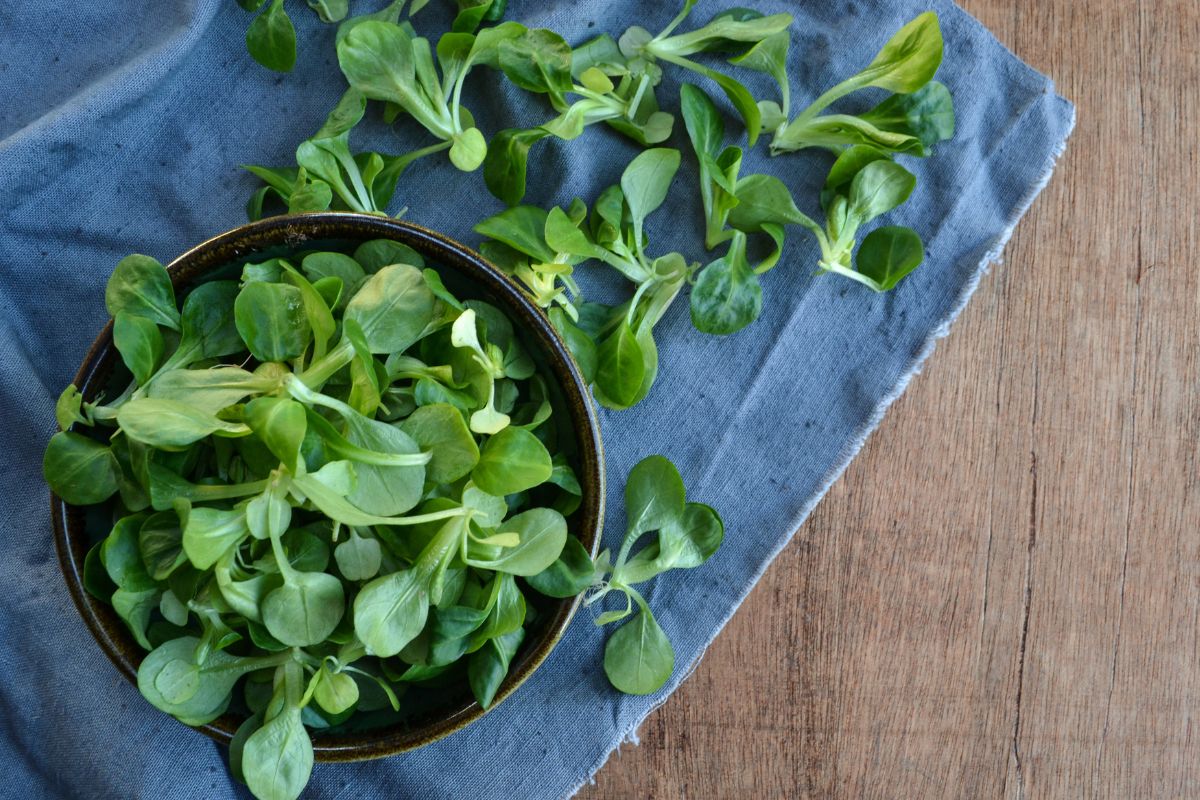
Lamb’s lettuce, also known as corn salad or winter lettuce, has small, delicate leaves but an impressive nutritional profile. It provides plenty of vitamin C to support immunity, vitamin A for healthy vision and skin, and B vitamins that help the nervous system function properly. Thanks to its potassium content and antioxidant compounds, it may also support heart health and help maintain normal blood pressure.
It is also a good source of folate, which supports concentration and is especially important during pregnancy. Calcium and vitamin K contribute to bone health. At the same time, lamb’s lettuce is light, low in calories, and easy to digest, making it a great choice for those looking to manage their weight.
Its antioxidant properties help protect cells from damage, which may slow certain processes associated with ageing. In the kitchen, it is highly versatile—use it in salads, on sandwiches, in smoothies, or as a fresh side dish for a variety of meals.
Compared with many other leafy greens, lamb’s lettuce contains a notable amount of vitamin C. In addition to being a powerful antioxidant, vitamin C supports the body’s defenses against bacterial and viral infections, plays a role in collagen production, contributes to fat metabolism, and helps the body absorb iron—another nutrient found in these leaves.
Eating lamb’s lettuce regularly, partly due to its vitamin A content, may benefit skin condition, immune function, and eyesight. Some research also suggests that consuming about one serving of leafy green vegetables per day may help slow age-related cognitive decline.
Leafy greens such as lamb’s lettuce are also linked to better cardiovascular health. Regular intake has been associated with a lower risk of events such as heart attack and stroke.
Lamb’s lettuce is also a valuable source of vitamin K, which is essential for proper blood clotting and supports bone metabolism. Studies indicate that compounds found in leafy greens may also help protect against non-alcoholic fatty liver disease.
For maximum benefit, it is best eaten raw. Add the leaves to salads, slaws, and sandwiches, or try replacing your usual lettuce with lamb’s lettuce.
It also works well in green smoothies and makes a nutritious addition to wraps or omelets. Some people use it in soups or serve it as a fresh side dish with lunch or dinner, including alongside meat-based meals.
