
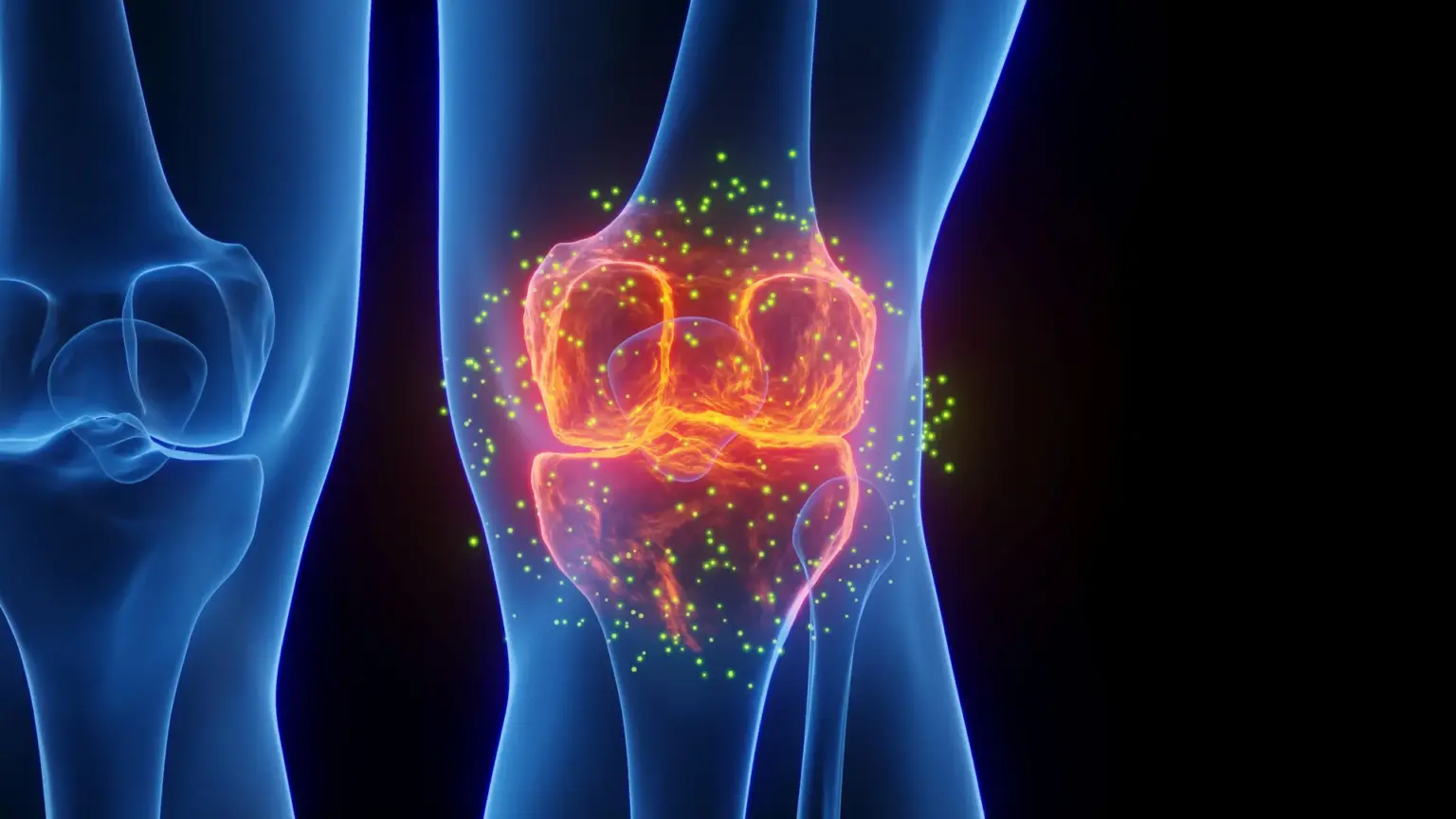
A new study published in Science suggests that blocking an age-related protein may restore damaged joint cartilage and help prevent osteoarthritis. Researchers at Stanford Medicine found that an experimental treatment regenerated cartilage lost through aging in mice and also protected injured joints from developing arthritis after ACL-like knee injuries.
The researchers also tested the approach on cartilage obtained from people undergoing knee replacement surgery. Under laboratory conditions, the human tissue showed early signs of regenerating healthy cartilage, suggesting the strategy could eventually lead to treatments aimed at repairing damaged joints rather than replacing them. Although the findings remain preclinical, they point to a promising new direction for osteoarthritis therapy.
Targeting the biological cause of osteoarthritis
Osteoarthritis is the most common form of arthritis and affects roughly one in five adults in the United States. The progressive condition gradually destroys the smooth cartilage that cushions joints, leading to pain, stiffness, and reduced mobility. Current treatments primarily focus on relieving symptoms through pain medication, exercise, physical therapy, and, in severe cases, joint replacement surgery.
Unlike existing therapies, the Stanford researchers aimed to intervene in the biological mechanisms responsible for cartilage deterioration rather than simply managing its symptoms.
The aging-related protein behind the study
The research focused on a protein called 15-PGDH, which the scientists describe as a “gerozyme” because its activity increases with age and contributes to declining tissue function.
Previous work by the same research team showed that blocking 15-PGDH improved muscle strength and endurance in older mice by reducing age-related muscle decline.
The protein normally breaks down prostaglandin E2, a signaling molecule involved in tissue repair and regeneration. Earlier studies suggested that increasing prostaglandin E2 activity—either directly or by blocking 15-PGDH—could stimulate regeneration in several tissues, including muscle, bone, nerves, liver, colon, and blood-forming systems.
Cartilage regenerated without stem cells
Unlike many tissues that rely on stem cells for repair, cartilage appears to regenerate differently.
The researchers found evidence that existing cartilage cells, known as chondrocytes, could shift toward a younger, cartilage-producing state after 15-PGDH was inhibited. Rather than activating stem cells, the treatment appeared to reprogram mature cartilage cells to resume building healthy joint tissue.
The study was led by senior authors Helen Blau and Nidhi Bhutani.
Older mice regrew healthy cartilage
When researchers compared knee cartilage from young and older mice, they found that levels of 15-PGDH were approximately twice as high in the older animals.
The researchers then treated older mice using a small-molecule inhibitor of 15-PGDH. Some animals received injections affecting the whole body, while others received injections directly into the knee joint.
Both treatment approaches produced similar results. Cartilage that had thinned with age became thicker and healthier across the joint surface.
Importantly, analyses suggested the regenerated tissue more closely resembled hyaline cartilage—the smooth, low-friction cartilage that naturally covers healthy joints—rather than fibrocartilage, which is mechanically stronger but less suitable for supporting normal joint movement.
The treatment also protected injured knees
The researchers also investigated whether blocking 15-PGDH could protect joints after traumatic injury.
To do this, they created knee injuries in mice resembling anterior cruciate ligament (ACL) tears, which commonly lead to osteoarthritis years later even after surgical reconstruction in humans.
Mice received injections of the inhibitor twice a week for four weeks following injury. Compared with untreated animals, treated mice were far less likely to develop osteoarthritis during the study period. They also walked more normally and placed more weight on their injured legs, suggesting improved joint function.
Cartilage cells shifted into repair mode
Further analysis showed that the treatment altered the behavior of cartilage cells in ways consistent with tissue regeneration.
Blocking 15-PGDH reduced populations of chondrocytes associated with inflammation, cartilage breakdown, and fibrocartilage formation. At the same time, it increased the number of cells expressing genes involved in maintaining hyaline cartilage and rebuilding the extracellular matrix that supports healthy joint tissue.
Overall, the researchers describe the changes as resembling a broad rejuvenation of cartilage cells without requiring activation of new stem cells.
Human cartilage showed encouraging early results
To explore whether the findings might extend to humans, the researchers treated cartilage samples collected during knee replacement surgeries performed for osteoarthritis.
After one week in the laboratory, the treated tissue showed reduced activity of 15-PGDH, lower expression of genes associated with cartilage degeneration and fibrocartilage formation, and early biological changes consistent with regeneration of healthy articular cartilage.
Although these experiments were conducted outside the human body, they suggest the underlying mechanism may also operate in human cartilage.
What comes next
The researchers note that an oral version of a 15-PGDH inhibitor is already being evaluated in early-stage clinical trials as a potential treatment for age-related muscle weakness. Initial Phase 1 results suggest the drug has been biologically active and appears safe in healthy volunteers, providing a foundation for future studies involving osteoarthritis.
The team hopes future clinical trials will determine whether the cartilage regeneration observed in mice and laboratory-grown human tissue can also occur in people with joint disease.
The authors also disclose that several members of the research team are listed on patent applications involving 15-PGDH inhibition for cartilage regeneration and other tissue rejuvenation therapies, and that the intellectual property has been licensed to a biotechnology company.
While much more research is needed before the treatment reaches clinical practice, the findings offer encouraging evidence that damaged joint cartilage may not be as irreversible as previously believed. If future human studies confirm these results, therapies that restore cartilage rather than replace entire joints could eventually transform the treatment of osteoarthritis.