
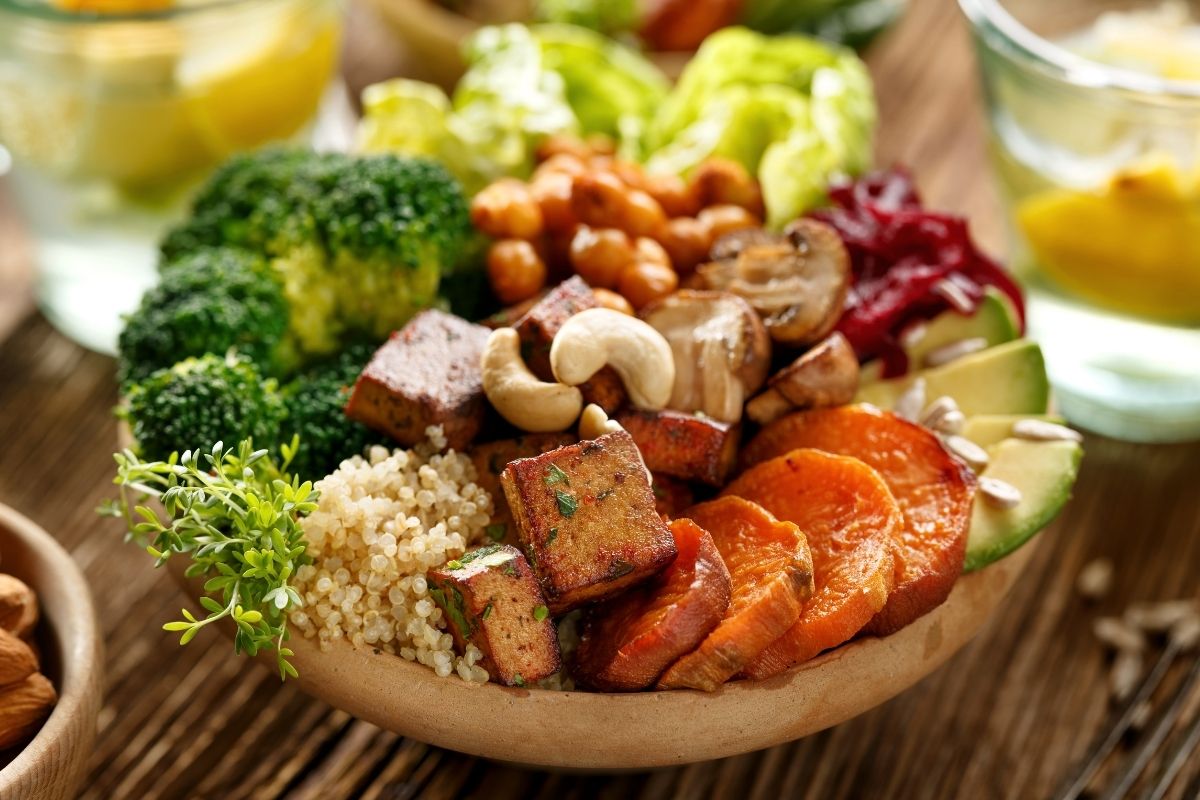
A low-fat vegan diet may help people lose weight without eating less food overall, according to a randomized clinical trial published in JAMA Network Open. By lowering the energy density of participants’ diets by about 30%, the eating pattern reduced calorie intake while still allowing generous portion sizes.
Researchers found that adults with overweight who followed an ad libitum low-fat vegan diet, meaning they could eat as much as they wanted, lost weight without receiving specific instructions to cut calories. The key factor was that the foods they consumed contained fewer calories per gram.
How the trial was designed
The 16-week study enrolled adults with excess body weight and randomly assigned them to either a low-fat vegan diet or a control group that continued their usual eating habits. The vegan group focused on fruits, vegetables, whole grains and legumes while avoiding meat, dairy products and eggs.
Neither group was instructed to restrict portions or count calories, allowing researchers to examine how changing the types of food consumed would affect energy intake and body weight. Diet diaries and food records were used to calculate each participant’s daily energy density and total calorie intake.
Energy density was defined as total daily energy intake in kilocalories divided by the total weight of food consumed in grams. This allowed researchers to compare how many calories participants consumed for each gram of food they ate.
Energy density and weight loss
Over the 16 weeks, the total weight of food consumed each day remained roughly the same in both groups, meaning participants did not begin eating less food by volume. However, calorie intake declined in both groups, with a much larger reduction in the vegan group of approximately 357 kcal per day.
Energy density remained almost unchanged in the control group, while it fell by around 30% among participants following the vegan diet. Those who achieved greater reductions in energy density tended to lose more weight, even after researchers adjusted the analysis for overall changes in calorie intake.
Lead author Hana Kahleova of the Physicians Committee for Responsible Medicine said the results show how plant-based eating can support weight loss without hunger. She explained that plant foods rich in water and fiber can fill the stomach with fewer calories than animal-based foods that are high in fat.
Why plant foods change the math
By removing calorie-dense foods such as meat, cheese and eggs and replacing them with vegetables, fruits and legumes, participants shifted toward meals containing fewer calories per bite. This allowed them to feel full while consuming less energy throughout the day.
Kahleova emphasized that the effect is not about relying on willpower or reducing portion sizes. Instead, it reflects how the composition of food can influence appetite signals, satiety and total energy intake over time.
Previous research has shown that when people are served meals with lower energy density, they often consume similar amounts of food by weight while taking in fewer calories. The new findings extend this evidence to a practical low-fat vegan eating pattern followed outside a tightly controlled laboratory environment.
Implications for weight management
Traditional weight-loss strategies often focus on counting calories and restricting portion sizes, approaches that some people find difficult to maintain. The study suggests that focusing instead on food quality and energy density may provide another approach to weight management.
Choosing more water-rich, high-fiber foods such as vegetables, fruits, whole grains and beans can naturally reduce dietary energy density. In practice, this can mean eating larger portions of food that still contain fewer calories, potentially reducing feelings of deprivation.
The authors note that further research involving larger and more diverse populations is needed, along with longer-term follow-up to determine how well the approach works over many months or years. However, they suggest that clinicians can consider energy density as a useful concept when advising patients with overweight or obesity.
For now, the findings support the idea that eating patterns centered on minimally processed plant foods, particularly when kept low in added fats, can promote weight loss while allowing people to eat until comfortably full. As Kahleova explained, relying on foods naturally lower in energy density may allow appetite to work with, rather than against, long-term health goals.
