
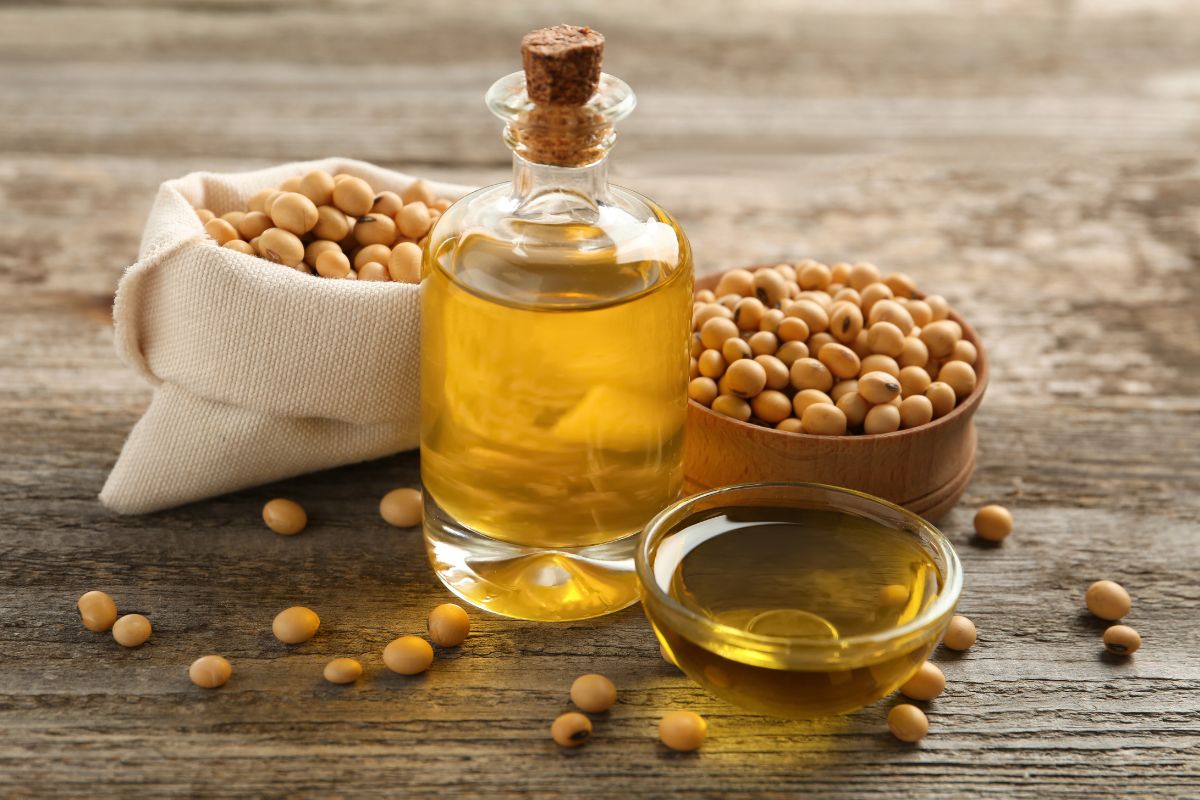
Soybean oil has become one of the most widely consumed oils in the United States, appearing in cooking oils, restaurant foods and many processed products. Its consumption has risen dramatically over the past century, prompting researchers to investigate how its major fatty acids are metabolized and whether those pathways influence metabolic health.
Research from the University of California, Riverside examines how components of soybean oil may affect weight gain and metabolism in mice. The study, published in Journal of Lipid Research, focuses partly on linoleic acid, an essential omega-6 polyunsaturated fatty acid that is abundant in soybean oil.
Mouse study reveals differences in weight gain
Researchers fed mice different diets for several months, including a high-fat diet rich in soybean oil, a high-fat diet containing coconut oil and a low-fat control diet. They then examined differences in body weight and metabolic processes.
Some mice were genetically engineered to express an altered form of the liver transcription factor HNF4α, which regulates numerous genes involved in metabolism. This allowed researchers to investigate whether changing HNF4α activity affected the metabolic response to a soybean oil-rich diet.
Normal mice consuming the high-fat soybean oil diet gained substantial weight, consistent with the research group’s earlier findings comparing soybean oil with other dietary fats. In contrast, mice expressing the modified form of HNF4α were protected against much of the weight gain despite consuming the soybean oil-rich diet.
The results indicate that HNF4α-related pathways influence how mice respond metabolically to this particular diet. However, describing HNF4α as a simple molecular “switch” for soybean oil-induced obesity would overstate the evidence, because body-weight regulation involves numerous interacting biological and environmental processes.
The role of linoleic acid and oxylipins
The researchers also investigated the metabolism of linoleic acid and molecules known as oxylipins, bioactive lipid mediators produced from polyunsaturated fatty acids.
Differences in oxylipin profiles were associated with differences in fat accumulation among the mice, suggesting that downstream lipid metabolism may be relevant to the effects observed. However, the study does not establish that particular oxylipins directly caused obesity.
An important complication was that mice consuming the low-fat diet showed some oxylipin patterns resembling those observed in mice that became obese on the soybean oil-rich diet, without experiencing comparable weight gain.
This suggests that oxylipins alone cannot explain the observed obesity phenotype. Overall dietary composition, energy intake and interactions between metabolic pathways may all contribute.
The researchers also examined mitochondrial processes as a possible part of the mechanism. Because mitochondria play central roles in cellular energy metabolism and fatty-acid oxidation, changes in their function could potentially influence metabolic responses, although the precise pathways remain under investigation.
What HNF4α findings mean for humans
HNF4α also exists in humans and can occur in different isoforms, making the mouse findings potentially relevant for understanding human metabolism. However, the genetically altered mice do not demonstrate that some people are naturally protected from weight gain caused by soybean oil.
The findings therefore should not be interpreted as evidence that soybean oil has dramatically different effects on body weight depending on an individual’s HNF4α profile. Human studies would be needed to establish whether comparable mechanisms meaningfully influence obesity risk.
The research group previously reported in 2015 that mice fed a soybean oil-rich diet gained more weight than those consuming a diet rich in coconut oil. The newer work investigates biological pathways that might help explain those animal findings.
Importantly, neither study establishes that soybean oil causes greater weight gain than other dietary fats in humans.
What the study does not show about seed oils
The findings come amid widespread debate about seed oils and omega-6 fatty acids, but a mouse experiment cannot resolve questions about their effects on human health.
Linoleic acid is an essential fatty acid that humans must obtain from food. Evidence from human studies has generally not established that normal dietary intake of linoleic acid promotes inflammation or obesity simply because it is an omega-6 fatty acid.
Similarly, the study does not demonstrate that humans need to achieve a particular omega-6-to-omega-3 ratio. Both omega-6 and omega-3 fatty acids have physiological roles, and recommendations are better based on adequate intake and the overall dietary pattern than on treating the ratio itself as a universal target.
The dramatic historical increase in soybean oil consumption also does not establish that soybean oil caused the parallel rise in obesity. During the same period, many aspects of diet, food production, physical activity and the broader environment changed.
Comparisons with tobacco are particularly problematic. The evidence establishing smoking as a major cause of disease is extensive and directly demonstrated in humans, whereas the current study examines dietary mechanisms primarily in genetically modified mice.
Implications for everyday diets
The study does not provide evidence that people should eliminate soybean oil from their diets, nor does it establish a safe or harmful threshold for human consumption. It instead offers clues about how dietary fats may interact with genetic regulation and lipid metabolism in animal models.
No human clinical trials from this work have shown that modifying HNF4α or oxylipin production can prevent obesity. Whether these pathways eventually become useful therapeutic targets remains an open research question.
Obesity itself is influenced by numerous biological, behavioral, environmental and social factors. Individual foods or fatty acids can contribute to overall energy and nutrient intake, but they should not generally be treated as single explanations for the condition.
For consumers, current evidence supports focusing on overall dietary quality rather than fearing one particular seed oil. Dietary patterns emphasizing vegetables, fruits, whole grains, legumes, nuts, appropriate protein sources and predominantly unsaturated fats are consistently recommended in evidence-based nutrition guidance.
The University of California, Riverside research provides a potentially useful window into the molecular biology of dietary fat metabolism. But for now, its most important implications concern future laboratory and human research rather than a reason to substantially change dietary recommendations based on soybean oil alone.
