
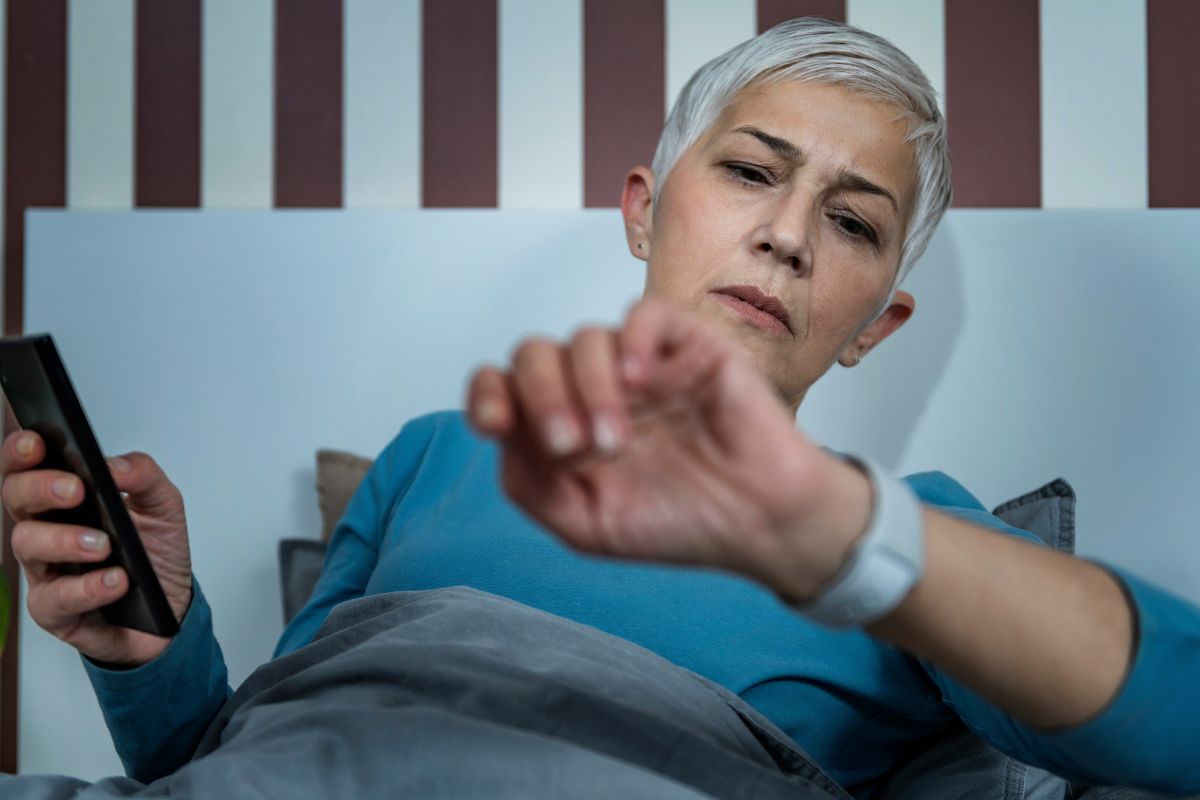
Wrist-worn sleep trackers such as Fitbit and Apple Watch can provide useful estimates of sleep patterns, but their readings may not closely reflect how well a person feels they actually slept. A review of existing research suggests that wearable measurements explain only a relatively small proportion of differences in people’s subjective sleep quality.
The analysis, published in Sleep Medicine, examined the relationship between consumer wearable data and self-reported sleep quality. This distinction is particularly important in insomnia, where diagnosis depends substantially on reported sleep difficulties, associated distress and daytime impairment rather than wearable measurements alone.
What the review found
Researchers from Duke University and the Mayo Clinic examined five previous studies involving approximately 2,000 participants. They compared consumer wearable measurements with participants’ reports of their sleep and, in some studies, with laboratory measurements such as polysomnography.
Across the included studies, wearable measures accounted for approximately 2.5% to 16.2% of the variation in subjective sleep quality. This indicates relatively limited correspondence between what the devices measured and how participants evaluated their own sleep.
In one study, Fitbit measurements showed closer agreement with laboratory measures among healthy sleepers than among people with insomnia, with figures of 82% and 39%, respectively. Among participants with insomnia, the devices also tended to overestimate total sleep time by approximately 30 minutes and sleep efficiency by about 8%.
These findings suggest that consumer trackers may have particular difficulty distinguishing quiet wakefulness from sleep, an issue that becomes especially relevant when someone spends substantial periods awake but relatively still in bed.
Why devices can miss insomnia symptoms
Most wrist-worn consumer trackers estimate sleep using signals such as movement and heart rate. Algorithms then use these signals to infer periods of sleep and wakefulness and, depending on the device, estimates of sleep stages.
Such measurements are not equivalent to a clinical assessment of insomnia. Insomnia involves persistent difficulties with sleep initiation, sleep maintenance or early awakening together with associated daytime consequences and occurs despite adequate opportunity for sleep.
Objective and subjective sleep measures can also diverge. Some people may perceive their sleep as considerably worse than objective measurements suggest, while others may report acceptable sleep despite measurable fragmentation.
Depression and other psychological factors can also be associated with both sleep complaints and differences between subjective and objective sleep measures. However, such discrepancies should not be interpreted as evidence that a person’s sleep difficulties are unreal simply because a wearable or laboratory measure appears relatively normal.
Implications for patients and doctors
Consumer sleep trackers can be useful for observing broad patterns, including approximate sleep duration, bedtime schedules and changes in routine. They should not, however, be treated as diagnostic tests for insomnia.
For someone reporting persistent sleep difficulties, apparently reassuring wearable data should not automatically override symptoms, daytime functioning or clinical assessment. Validated questionnaires, sleep diaries and medical evaluation can provide information that consumer devices do not capture.
A Norwegian survey involving 461 wearable users also found limited evidence that users perceived substantial improvements in their sleep from tracking. For some people, particularly those already worried about sleep, repeated attention to nightly measurements may contribute to greater concern about whether they have slept “correctly.”
This phenomenon is sometimes discussed in relation to orthosomnia, in which excessive concern about achieving ideal sleep-tracker measurements can itself become counterproductive. A disappointing sleep score does not necessarily mean that a person had clinically poor or unhealthy sleep.
What consumers should know
An important limitation of the review is that much of the available evidence involved Fitbit devices, while only one included study assessed Apple Watch data. The results therefore should not be assumed to apply equally to every brand, algorithm or newer device generation.
Wearable technology also continues to evolve, meaning validation findings for one model cannot automatically be generalized to later devices. Performance can additionally vary according to the population and the particular sleep measure being estimated.
For everyday use, trackers may therefore be most useful for identifying broad patterns rather than determining whether an individual night was objectively “good” or “bad.” A sleep diary recording bedtime, estimated sleep, awakenings and next-day functioning can provide complementary information, particularly when discussing persistent problems with a healthcare professional.
The central distinction is between measuring aspects of sleep and diagnosing a sleep disorder. Wearables can estimate some behavioral and physiological patterns associated with sleep, but they cannot fully capture subjective distress, daytime impairment or the clinical context required to diagnose insomnia.
For people who find tracking useful without becoming preoccupied with the numbers, wearable devices can remain practical wellness tools. But their nightly scores should be interpreted as estimates rather than definitive judgments about how well someone slept.
