
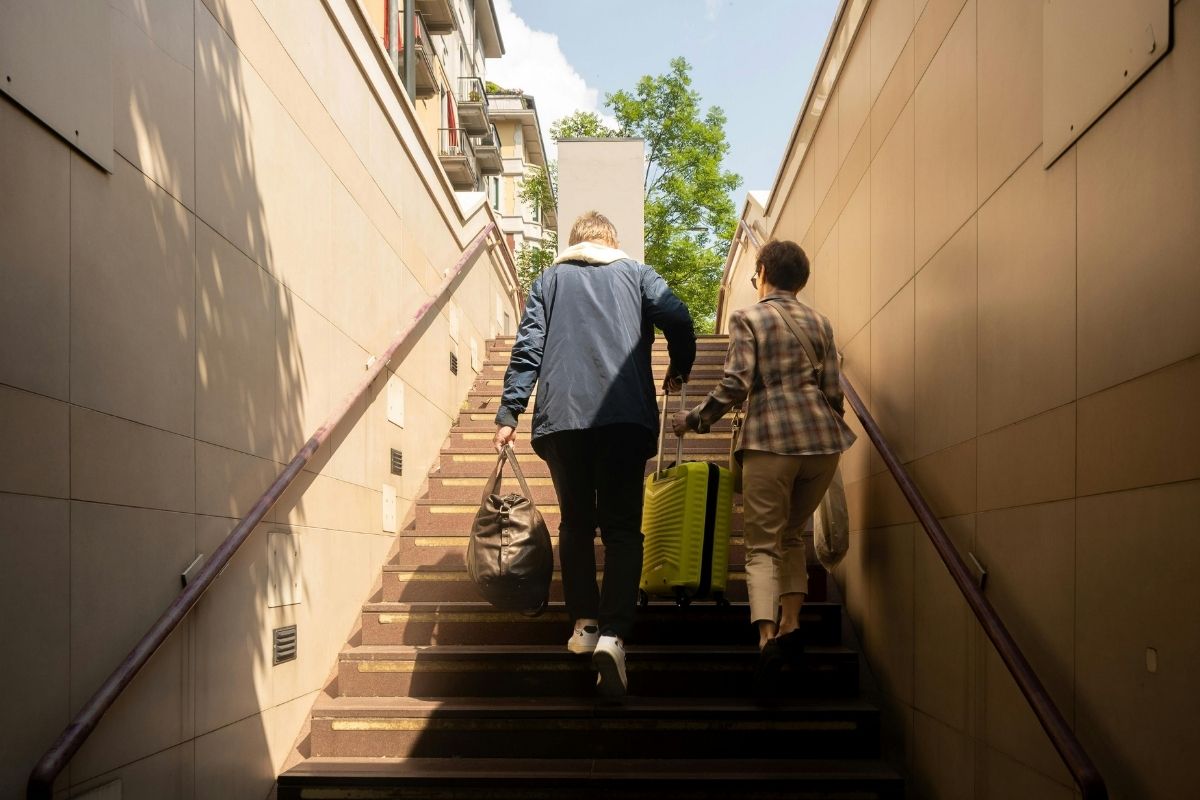
People are more inclined to help strangers who appear agreeable or conscientious, according to new research published in Evolutionary Psychological Science. These traits appear to act as quick social signals that someone could be a safe and cooperative partner, even when very little is known about them.
Cooperation in everyday life often requires snap judgments about other people. Because we cannot directly know how a stranger will behave in the future, we rely on subtle cues, including perceived personality. Previous studies have suggested that broad personality traits can provide clues about relatively stable patterns of behavior over time.
Why certain traits invite help
Agreeableness is associated with empathy, trust and concern for others and has repeatedly been linked with cooperative behavior. A highly agreeable person is expected to be kind and non-threatening, which can make others more comfortable investing their time or resources to help them.
Conscientiousness signals a different set of qualities, including reliability, self-control and consistency. Although it does not primarily communicate warmth, it suggests that a person keeps commitments and behaves predictably, potentially making them appear to be a dependable partner.
Psychologist Ryo Oda set out to examine whether people actually use these personality signals when deciding whom to help. The research also explored whether individuals’ own personality traits influence how strongly they respond to agreeableness and conscientiousness in others.
How the study was designed
Oda first created 40 brief personality profiles in Japanese representing high or low levels of four traits: openness, conscientiousness, extraversion and agreeableness. A separate group of 61 adults confirmed that the profiles clearly conveyed the intended personality differences.
The main experiment involved 120 Japanese adults, evenly divided by sex and distributed across age groups from 20 to 59. Each participant read all 40 profiles in random order and then rated how willing they would be to help each person in several specific situations.
Participants evaluated their helping intentions across four scenarios: providing financial assistance, rescuing someone lying on a railway crossing as a train approached, helping with heavy luggage and listening to someone who wanted to talk. The ratings were then combined into an overall helping score for each profile.
Participants also reported how much they liked each target using measures of liking and perceived friendliness. After completing the profile evaluations, they filled out a short Japanese Big Five questionnaire to assess their own personality traits.
Who attracts more help and why
Agreeableness and conscientiousness emerged as the strongest predictors of willingness to help. People described as more conscientious received higher helping scores, and this association was particularly pronounced among participants who were themselves more conscientious.
Similarly, highly agreeable targets were more likely to receive help. Participants who scored higher in agreeableness were also more willing to help overall and showed greater sensitivity to agreeableness in others, favoring people who shared that trait.
By contrast, openness and extraversion did not significantly predict helping intentions in the study. Although extroverted or imaginative people may stand out socially, these characteristics did not appear to influence decisions about whether to step in and offer assistance.
A similar pattern emerged for likeability. More agreeable and conscientious targets were rated as more likable, particularly by participants who themselves scored highly on the corresponding traits. However, the findings suggested that this effect was not simply a preference for people who resemble us.
The role of liking and limitations
Further statistical analyses showed that liking largely explained the relationship between trait similarity and willingness to help. Once researchers accounted for how much participants liked each target, the additional influence of matching levels of agreeableness or conscientiousness disappeared.
This suggests that personality cues may shape helping decisions primarily by influencing how positively people perceive a potential partner. Agreeable and conscientious individuals may appear more trustworthy and easier to cooperate with, leading others to feel more positively toward them and become more willing to offer assistance.
The study examined hypothetical responses rather than actual helping behavior, which represents an important limitation. It remains unclear whether the same patterns would emerge when providing help involves genuine financial costs, physical danger or substantial time commitments.
The sample consisted entirely of Japanese adults, also limiting how broadly the findings can be generalized. Cultural norms surrounding cooperation, politeness and group harmony may influence which traits are considered desirable and how strongly they affect helping decisions.
Despite these limitations, the research adds to evidence that personality traits can function as rapid social signals in everyday interactions. Agreeableness and conscientiousness appear to influence not only how people behave but also how others respond to them, potentially shaping who receives support and who is overlooked.
As societies confront challenges such as social isolation and community resilience, understanding these subtle decision-making patterns could prove valuable. If people naturally favor those who appear reliable and kind, interventions that foster or highlight these traits could help encourage broader cooperation.
