
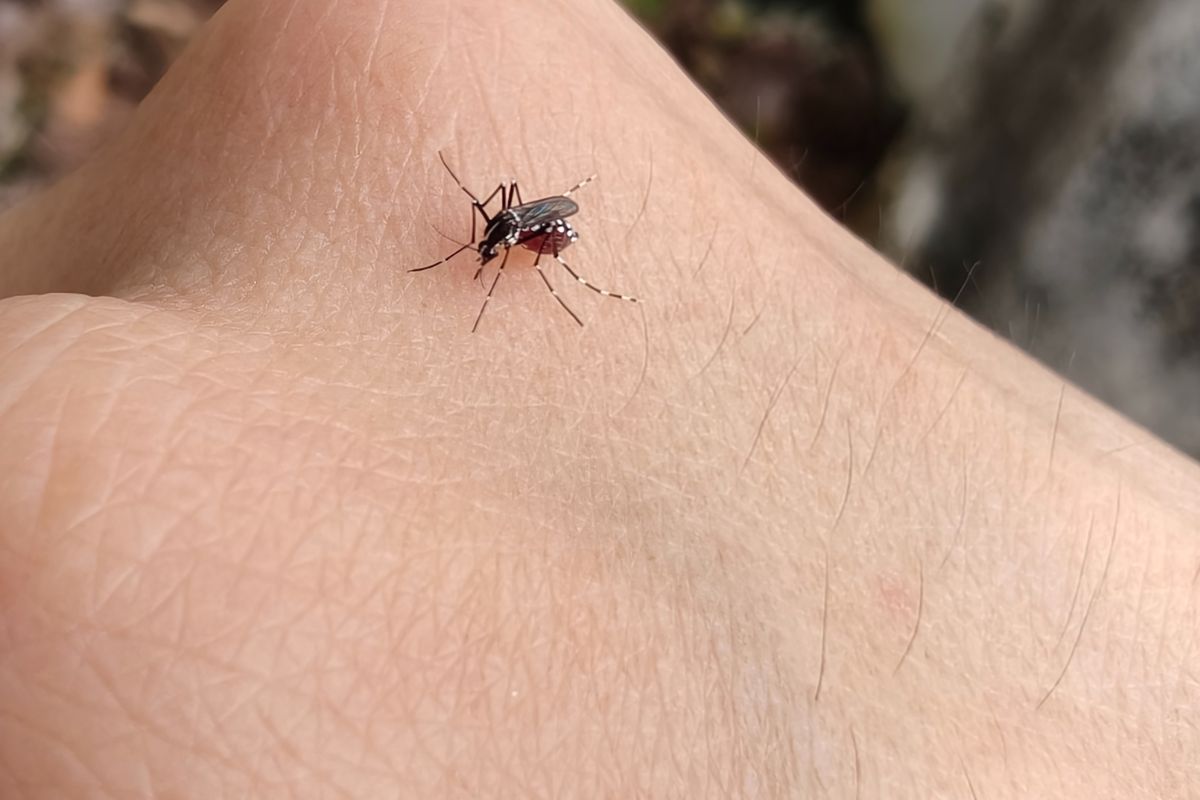
Mosquitoes may be a summertime nuisance, but they are also the deadliest animals on Earth, transmitting diseases such as malaria, dengue, and West Nile virus. Scientists estimate they contribute to more than 1,000,000 deaths every year worldwide. That makes understanding how mosquitoes choose their human targets a critical public health priority.
A new study, published in the journal iScience, sheds fresh light on why some people seem irresistible to mosquitoes while others are largely ignored. The research, led by scientists at Florida International University, suggests that differences in skin bacteria and body odor may play a key role in shaping mosquito preferences.
How scientists tested human attractiveness
The team recruited 119 volunteers in Miami and asked each participant to place an arm into a long tube known as an olfactometer. At the opposite end, researchers released three medically important mosquito species: Aedes aegypti, Aedes albopictus, and Culex quinquefasciatus. They then measured which participants attracted the greatest number of insects.
This setup allowed the researchers to compare, under controlled conditions, how strongly each mosquito species was attracted to different individuals. The study is among the first to compare several mosquito species against both the chemical composition of human body odor and the skin microbiome of the same group of volunteers.
The role of body odor and bacteria
Human body odor develops when naturally odorless skin secretions are broken down by bacteria into volatile organic compounds (VOCs). Scientists estimate that more than 1,000 different VOCs can be produced on human skin, creating a unique scent profile that mosquitoes can detect from a distance.
The researchers collected VOC samples from participants’ arms and sequenced bacteria from the same areas of skin. They identified 246 distinct bacterial taxa across all volunteers, yet only a single bacterial species was shared by every participant, highlighting just how individualized each person’s skin microbiome is.
Different mosquitoes prefer different hosts
When the researchers examined mosquito behavior, they found that Aedes aegypti showed a slight preference for male volunteers over females. However, Aedes albopictus and Culex quinquefasciatus displayed no clear preference based on sex, suggesting that host gender is not a universal factor influencing mosquito attraction.
The study also revealed that people who were highly attractive to one mosquito species were not necessarily attractive to the others. Although weak correlations emerged between the individuals preferred by Aedes aegypti and Aedes albopictus, each mosquito species generally favored a different subgroup of participants.
The odors mosquitoes seek—and avoid
Analysis of VOCs suggested that Aedes aegypti and Culex quinquefasciatus may actually avoid certain chemical signatures. These species were more attracted to volunteers with lower levels of volatile compounds associated with low-attraction profiles, suggesting that the absence of particular odors may influence host selection.
By contrast, Aedes albopictus appeared to be attracted to specific desirable scent compounds. Although the precise identities and mechanisms of these attractive odors remain under investigation, the findings support the idea that some VOCs signal an appealing host, while others may discourage mosquitoes from landing.
Three bacterial clues to higher mosquito attraction
When the researchers compared the skin microbiomes of highly attractive and less attractive participants, they identified three bacterial taxa that consistently appeared in those who attracted more mosquitoes: Corynebacterium kefirresidentii, Cutibacterium granulosum, and Staphylococcus epidermidis.
These bacteria were not commonly found among participants who attracted fewer mosquitoes, suggesting they may serve as general indicators of an attractive host across multiple mosquito species. The authors emphasize that the findings are correlational, but the consistent association across species makes these bacteria promising targets for future research.
Implications for mosquito control
Understanding how skin bacteria and VOCs influence mosquito behavior could eventually lead to new approaches for reducing bites and limiting disease transmission. One possibility is the development of next-generation repellents that mimic or enhance odor profiles mosquitoes naturally avoid.
Another emerging idea is modifying the skin microbiome itself through topical products or probiotic-based approaches to make people less attractive to mosquitoes. Although these strategies remain theoretical, growing microbiome research is beginning to identify bacterial targets that could one day be used for this purpose.
What remains unknown
The study included only 119 participants from a single city and examined just three mosquito species out of more than 3,600 known worldwide. Environmental factors, diet, genetics, and personal care products may also influence body odor and were not fully controlled during the experiment.
The researchers caution that much remains to be learned about how mosquitoes combine odor cues with body heat, carbon dioxide, and visual signals when selecting a host. Nevertheless, the findings provide further evidence that the microorganisms living on our skin can significantly influence how attractive we are to mosquitoes.
As mosquito-borne diseases continue to spread into new regions due to climate change and urbanization, understanding these subtle biological interactions could help public health officials develop more effective, evidence-based strategies to protect vulnerable populations.
